

In This Article
A left-handed golf driver is a 1-wood built with a mirrored head, hosel, and weighting so a lefty can swing it naturally. Under the USGA’s equipment rules, the head can’t exceed 460cc plus a 10cc tolerance, so the real differences come from face tech, weighting, loft, and shaft.

If you swing from the port side, you already know the drill. You walk into a demo day, scan the tents, and discover the left-handed golf driver you came to test is “on order.” One lefty golfer’s write-up of a recent demo event made the same point: manufacturers often “forget” to bring left-handed clubs, so seeing a decent lefty lineup was newsworthy. That’s the quiet tax of being left-handed. It’s less about talent and more about logistics.
The good news is that 2026 is a better year to be a lefty. Major brands now publish left-hand versions of their mainstream driver models on the conforming list, often from day one. The Ping G440 family, for example, showed up on the USGA list already in left-handed options, according to Golf.com’s coverage of the conforming list.
This guide sorts through seven real, lefty-available drivers across budget, mid-range, and premium tiers. It also covers driver loft for lefties, left-handed swing fitting, lefty club availability, and how to round out your bag with hybrids and wedges. Everything here is based on published specs, retailer listings, and aggregated review commentary. No fake test sessions.
Quick Comparison: Best Left-Handed Golf Drivers at a Glance
| Driver | Tier | Standout Trait | Price Range (check current price) | Best For |
|---|---|---|---|---|
| Ping G440 Max | Premium | High-MOI, all-rounder stability | Around $550-$600 | Mid handicappers wanting one dependable driver |
| Callaway Elyte Max Fast | Premium | Light, draw-leaning, Ai-designed face | Around $550-$600 | Moderate swing speeds, slicers |
| TaylorMade Qi10 Max | Mid-range | Maximum forgiveness | Roughly $350-$500 | Players who miss all over the face |
| Cobra Darkspeed Max | Mid-range | Adjustable draw bias via weights | Roughly $300-$400 | Fade-fighters on a budget |
| Mizuno ST-MAX 230 | Mid-range | Premium feel, forgiving head | Roughly $400-$500 | Feel-first golfers |
| Callaway Paradym Ai Smoke Max | Value | Last-gen tech at a discount | Around $350-$450 | Smart-money buyers |
| Powerbilt TPS Supertech | Budget | Big face, low cost | Under $200 | Beginners and tight budgets |
Look at the table and one pattern jumps out. The “Max” label dominates, and that’s no accident. Max-style heads push weight low and back, which raises forgiveness, and most lefties shopping for a first or second driver benefit more from forgiveness than from workability.
If distance per dollar is your priority, the Cobra Darkspeed Max and Callaway Paradym Ai Smoke Max are the likeliest sweet spots. If you want a driver you can buy once and live with for years, the Ping G440 Max is the safest bet in this group. The Powerbilt TPS Supertech exists for one purpose: getting a lefty into a modern-sized head without a big bill.
💬 Just one click — help others make better buying decisions too!😊
Top 7 Left-Handed Golf Drivers: Expert Analysis
1. Ping G440 Max — the dependable all-rounder
The Ping G440 Max earns its spot by being the club you stop thinking about. Ping’s MAX line has traditionally been aimed at the widest slice of golfers, and MyGolfSpy described it as the “middle of the bell curve” driver for the masses. Left-handed versions were on the conforming list from the start.
Why does that matter? In practice, high MOI means the head resists twisting on off-center hits. If your strikes wander toward the toe or heel, the ball keeps its direction better instead of peeling off into the trees. Retailer listings show lefty examples in 9° and other lofts with heavier shafts like the Tensei 1K Black 75, so stiffer-swinging lefties aren’t forced into a whippy stock option.
Based on the spec profile, this is the pick for the player who wants one driver for the next three seasons. Aggregated review commentary on the G430 generation, which shares the platform, consistently praises stability, though verified lefty-specific reviews of the G440 are thinner than for right-handed models.
Pros:
- ✅ High MOI keeps off-center hits playable
- ✅ Left-hand versions available at launch
- ✅ Wide range of shaft and loft options
Cons:
- ❌ Premium price tier
- ❌ Less draw help than dedicated draw models
Price range: around $550-$600 — check current price. Verdict: worth it if you value consistency over flash.
2. Callaway Elyte Max Fast — lightest swing, easiest speed
The Callaway Elyte Max Fast is built for golfers who feel their driver is working against them. Callaway positions it for moderate swing speeds, and the lighter build shows in listings that run closer to 43.5 inches in the right-hand version. A shorter, lighter club is easier to control and easier to swing fast.
The Elyte family features the Ai10x face, a thermoforged carbon crown, and neutral and draw weight ports on the Max Fast. In plain English, the face is shaped by machine learning to preserve ball speed across more of its surface, while the crown saves weight so the engineers can move mass where it adds stability. The draw setting is a real help if a left-to-right fade (a slice for a lefty) is your usual miss.
Callaway’s own marketing is enthusiastic, so treat it with caution. Still, retailer listings do carry left-handed versions, and the combination of light weight and draw bias is exactly what slower-swinging lefties often need.
Pros:
- ✅ Lightweight build helps moderate swing speeds
- ✅ Draw weight setting fights the slice
- ✅ Ai-designed face aimed at consistency
Cons:
- ❌ Pricey versus last-generation Callaway options
- ❌ Faster swingers may find it too light
Price range: around $550-$600 — check current price. Verdict: a strong buy for slicers and moderate-speed swingers.
3. TaylorMade Qi10 Max — forgiveness first
The TaylorMade Qi10 Max is the driver you pick when your goal is to hit more fairways, full stop. One buyer’s guide ranking left-handed drivers by forgiveness named it the best overall for that quality, calling it unbelievably forgiving. That’s one reviewer’s view, but it matches the design intent of the Max head.
Forgiveness here means a larger, higher-MOI head with a draw-friendly center of gravity. Translated: when you strike it a little thin or a little off the toe, the ball loses less speed and stays closer to your target line. TaylorMade’s loft sleeve lets you adjust loft by a degree or two either way, which matters for anyone working through driver loft for lefties.
Since the Qi10 has been superseded by the Qi35 and Qi4D families, Qi10 Max stock is often discounted. That’s a quiet advantage: you get a proven head at a friendlier price, though lefty inventory can be patchy, so stock tends to come and go.
Pros:
- ✅ Very high forgiveness on mis-hits
- ✅ Adjustable loft sleeve for fine-tuning
- ✅ Often discounted as newer models arrive
Cons:
- ❌ Lefty stock can be inconsistent
- ❌ Not a workable shot-shaper’s club
Price range: roughly $350-$500 — check current price. Verdict: great value for forgiveness-hungry golfers.
4. Cobra Darkspeed Max — draw bias you can dial in
The Cobra Darkspeed Max is the tinkerer’s budget pick. Cobra describes the Max as its most forgiving Darkspeed head, with back and heel weights you can move to increase draw bias. That’s useful: if your ball flight leaks right, you can lean the weighting toward a draw instead of buying a whole new club.
Cobra built the Darkspeed family around an aerodynamic shape and internal PWR-BRIDGE construction. The real-world translation is a head designed to cut through air a little more efficiently while keeping a high, forgiving launch. Left-handed versions show up regularly in both new and pre-owned listings, which is a small miracle in this market.
The Darkspeed generation is now a few years old, and used and discounted examples are common. If you’re comfortable buying pre-owned, check the face for wear and confirm shaft flex before purchase. Review coverage from retailers’ video tests is favorable, but lefty-specific data is limited.
Pros:
- ✅ Movable weights tune draw bias
- ✅ Frequently discounted or available pre-owned
- ✅ Forgiving, high-launch head
Cons:
- ❌ Older generation, fewer new-stock options
- ❌ Stock shafts may not suit faster swingers
Price range: roughly $300-$400 — check current price. Verdict: excellent bang-for-buck if you want adjustability.
5. Mizuno ST-MAX 230 — feel and forgiveness together
The Mizuno ST-MAX 230 is the driver for golfers who care how impact sounds and feels. Mizuno has a reputation for feel in irons, and its metalwoods try to carry some of that into a forgiving head. A left-handed ST-MAX 230 in 9.5° with a HZRDUS Smoke shaft turns up in retailer listings, so it’s available in real configurations.
Why would that matter to you? A club that feels good tends to be a club you commit to swinging. Confidence at address is a real performance variable, and Mizuno’s more muted, classic look appeals to players who dislike flashy crowns.
Given the Max head, forgiveness is the priority, but expect less aggressive draw bias than Callaway’s Max Fast or Cobra’s Max. If you’re a straight-to-slight-fade hitter, that’s a benefit rather than a drawback.
Reviewer sentiment on Mizuno drivers generally centers on feel and sound, though lefty-specific review volume is small. Treat any specific claim cautiously and, if possible, hit one at a demo.
Pros:
- ✅ Refined feel and sound at impact
- ✅ Forgiving Max head with premium shaft options
- ✅ Understated, confidence-inspiring look
Cons:
- ❌ Lefty inventory is limited in some lofts
- ❌ Less built-in draw help
Price range: roughly $400-$500 — check current price. Verdict: a thoughtful pick for feel-driven golfers.

6. Callaway Paradym Ai Smoke Max — last-gen tech at a discount
The Callaway Paradym Ai Smoke Max is the “smart shopper” driver. MyGolfSpy observed that the Elyte lineup commands roughly $200 more than the sneaky-popular Paradym Ai Smoke options, so the previous generation is where the savings live. A golf buyer’s guide specifically recommends it for technology and adjustability among lefty options.
Ai-designed faces were the headline Paradym tech: the face is shaped to maximize speed on a broader area. You also get adjustable hosel and weighting on this generation, so you can tune launch and draw bias. The trade-off is simple. You give up the newest crown and face refinements, but you keep most of the real-world performance.
This is the club for golfers who read the spec sheet and ask, “How much better is the new one, really?” For many players, the honest answer is “not enough to justify the price difference.”
Pros:
- ✅ Strong tech and adjustability for the money
- ✅ Left-handed availability documented
- ✅ Previous-generation discounts are common
Cons:
- ❌ Not the newest face and crown technology
- ❌ Some configurations hard to find in lefty
Price range: around $350-$450 — check current price. Verdict: one of the best value plays for lefties.
7. Powerbilt TPS Supertech — the lefty-friendly budget entry
The Powerbilt TPS Supertech serves one audience: beginners and golfers who just want a big, confident head without a big bill. A forgiveness-focused buyer’s guide named it the most affordable option for beginners, citing a large face area at 10.5°.
Here’s the analytical read. A 10.5° loft is the most beginner-friendly starting point, since it launches the ball higher and adds a touch of backspin that keeps drives from diving. A large face gives new golfers a bigger target to hit. What you won’t get is the adjustability, the refined shaft options, or the aerodynamic engineering of the premium models.
That’s perfectly fine for a first driver. If you’re still figuring out whether you like golf enough to spend $500 on a club, this is a rational way to find out. Upgrade later when your swing is consistent enough to benefit from fitting.
Pros:
- ✅ Very low price of entry
- ✅ Large face suits new players
- ✅ 10.5° loft is beginner-friendly
Cons:
- ❌ Limited adjustability and shaft choice
- ❌ Not built for faster swing speeds
Price range: under $200 — check current price. Verdict: a sensible starter, not a long-term driver.
Top 7 Comparison: Specs, Strengths, and Who Wins Where
| Driver | Forgiveness | Draw Help | Adjustability | Value Tier | Best For |
|---|---|---|---|---|---|
| Ping G440 Max | Very high | Moderate | Yes | Premium | Long-term all-rounder |
| Callaway Elyte Max Fast | High | High | Weights + hosel | Premium | Slicers, moderate speeds |
| TaylorMade Qi10 Max | Very high | Moderate | Loft sleeve | Mid | Fairway-finders |
| Cobra Darkspeed Max | High | High (movable) | Weights | Mid | Budget tinkerers |
| Mizuno ST-MAX 230 | High | Low-moderate | Varies | Mid | Feel-first players |
| Callaway Paradym Ai Smoke Max | High | Moderate | Hosel + weights | Value | Smart-money buyers |
| Powerbilt TPS Supertech | Moderate | Low | Minimal | Budget | Beginners |
Ratings here reflect spec-sheet design intent and the general direction of published review commentary rather than lab testing. The Ping G440 Max and TaylorMade Qi10 Max top the forgiveness column, while the Callaway Elyte Max Fast and Cobra Darkspeed Max are the natural picks if a right-side miss is your nemesis. The Mizuno ST-MAX 230 wins on feel, but that column isn’t in the table because feel is personal.
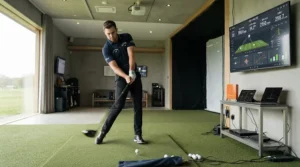
Left-Handed Swing Fitting: A Practical Guide
A good fitting changes more than you’d expect, and left-handed swing fitting has a few extra wrinkles. Here’s how to run it intelligently.
Step 1: Call ahead. The single biggest lefty problem is that fitting carts often lack left-handed heads. Phone the shop and ask which left-handed demo heads they stock before driving over. If they don’t have the model you care about, ask which they can get.
Step 2: Bring your own data. Know your typical carry distance, your usual miss, and your driver’s current loft. Fitters work faster when you tell them, “I hit a fade that costs me 15 yards of carry.”
Step 3: Test loft, then shaft, then head. Start with loft because it changes launch and spin the most. Next adjust shaft weight and flex. Only then compare head models.
Step 4: Check the numbers that matter. Ball speed, launch angle, spin rate, and dispersion tell the real story. A driver that feels amazing but spins 3,500 rpm may cost you distance.
Step 5: Don’t skip the first 30 days. After purchase, hit the new driver on the range with the same ball you play. Common first-month mistakes include changing swing mechanics to chase the new club and cranking adjustable settings every other round. Pick a setting, stick with it for several rounds, then adjust.
Maintenance is simple. Wipe the face after use, store the head with its cover, and check the hosel screw occasionally if your model is adjustable.
How to Choose a Left-Handed Golf Driver
Start with a direct answer: choose forgiveness first, then loft, then shaft, then adjustability, and buy only what your swing can use. Here are the steps with reasoning.
- Be honest about your handicap. If you break 100 on a good day, a Max-style head helps more than a low-spin player’s head.
- Match loft to swing speed and launch. Slower swings usually need more loft to get the ball airborne. Faster swings with high launch can go lower.
- Pick a shaft by tempo, not ego. A shaft that’s too stiff produces low, right-leaking shots for many players.
- Decide whether you need adjustability. Movable weights and loft sleeves are useful, but only if you’ll actually use them.
- Check lefty availability in your exact spec. A great driver in only the wrong loft is the wrong driver.
- Budget for a fitting or at least a demo. Even a short session beats buying blind.
- Compare total cost. Include shipping, returns, and a shaft change if needed.
Driver Loft for Lefties: Which Number Actually Fits You?
Driver loft for lefties follows the same physics as any golfer’s, but lefty buyers have fewer loft choices in stock, so it matters more to understand what you need. Think of loft as your trajectory dial: lower loft reduces spin and launches lower, higher loft raises launch and adds spin.
General guidance from fitting resources suggests that slower swing speeds often benefit from around 12°, while faster swingers may prefer around 9°. Many popular mid-range lefties land on 10.5° as a sensible middle ground, which is also why beginner-targeted drivers like the Powerbilt TPS Supertech default to it.
Adjustable hosels (as on several Callaway, TaylorMade, and Ping models) give you some wiggle room, typically one to two degrees in either direction. A caution: changing loft on many adjustable drivers also changes face angle, so a loft increase may close the face slightly and a decrease may open it. For a golfer fighting a slice, that can help or hurt depending on direction.
The practical rule for lefties: if the exact loft you want isn’t in stock, buy the closest loft in a head with an adjustable hosel rather than compromising on the head itself.
Lefty Club Availability: What You Can Actually Find
Lefty club availability has improved, but it isn’t equal. Per Golf.com’s reading of the conforming list, some models, like Callaway’s Elyte Max Fast and Triple Diamond, showed up in left-handed form early, while others lagged. In another case, MyGolfSpy noted the Elyte Triple Diamond Max first appeared on the list only in its left-handed version, which is a funny reversal of the usual pattern. For a deeper rundown, see MyGolfSpy’s list of the best clubs available for lefties.
A few practical tips:
- Check pre-owned retailers. Sites such as 2nd Swing and GlobalGolf maintain dedicated lefty sections with drivers, hybrids, and wedges.
- Watch the shaft and length. Lefty listings often show particular combinations (like a 9° with a stiff shaft), so options may be narrower than right-handed ones.
- Order early for new releases. Lefty stock for brand-new models can lag by weeks.
- Ask about custom builds. Many shops can order a head and build it with your preferred shaft, even when no stock model exists.
Left-Handed Hybrid Golf Clubs Review: Filling the Gap
A left-handed hybrids review has to start with a reality check: hybrids matter more for lefties precisely because iron availability can be spotty. A hybrid replaces a hard-to-hit long iron with a forgiving, higher-launching club.
The Ping G440 Hybrid shows up in lefty listings, including a 4-hybrid at 23° with a graphite shaft. It’s a natural pairing if you already play a Ping G440 Max driver, since the family shares forgiving design priorities. The Callaway Elyte X Hybrid also appears in left-handed form, including an 18° 3-hybrid, aimed at golfers who want help with long approach shots. The Srixon ZXi Hybrid is another real lefty option, in 19° with a heavier tour-style shaft, for players with faster swings who dislike a draw-biased club.
How do you choose? Pick hybrid loft to fill the gap between your longest iron and your fairway wood. Use a lighter graphite shaft if you struggle to launch the ball, and a heavier one if you tend to hook it.
Review sentiment around hybrids generally praises their versatility from rough and fairway lies. Lefty-specific review volume is thin, so verify with a demo or generous return policy.
Left-Handed Golf Wedges Review: Where Lefties Lose Out
A left-handed golf wedges review reveals one of the biggest availability gaps. Forum threads from lefty golfers describe years of searching for specific lofts and bounces, with some recommending niche brands or older models. That frustration is real, but the situation has improved.
The Ping G440 Wedge appears in left-handed gap wedge listings (52°). That’s useful if you play Ping irons, since set-matched wedges often carry consistent offset and sole design. Tour players use brands like Titleist Vokey, Callaway Opus, and TaylorMade MG, and these lines are commonly offered in left-handed versions in core lofts, but specific loft-and-bounce combos can be scarce, so confirm before you buy.
Here’s how to think about it:
- Gap, sand, lob: Most lefties need at least a gap wedge around 50°-52°, a sand wedge around 54°-56°, and optionally a lob wedge around 58°-60°.
- Bounce matters: Higher bounce suits soft turf and steep swings; lower bounce suits firm turf and shallow swings.
- Don’t force it: A slightly different loft that you can actually get beats waiting months for the perfect spec.
Used markets and custom shops can fill gaps, especially for lob wedges.
Real-World Scenarios: Matching Lefties to the Right Driver
The college student on a tight budget. Imagine a lefty golfer who plays nine holes twice a week and shoots in the mid-100s. The Powerbilt TPS Supertech or a discounted Cobra Darkspeed Max gives them a forgiving head without overspending. Reasoning: they’ll gain more from range time than from a premium shaft.
The 55-year-old with a slowing swing. This golfer carries the ball around 200 yards and fights a fade. The Callaway Elyte Max Fast is a logical fit: lighter weight, draw setting, and an easier-to-swing build. Pair it with 10.5° or 12° loft.
The established mid-handicapper. Someone who shoots in the low 90s and wants one driver for years should lean toward the Ping G440 Max or TaylorMade Qi10 Max. Both emphasize stability. Budget roughly $400-$600 plus a short fitting.
The feel-driven low-70s golfer. This player might gravitate toward the Mizuno ST-MAX 230 for its refined impact character, accepting a bit less automatic draw help in exchange.
In every case, the logic is the same: match the head’s forgiveness and bias to your typical miss, then tune loft and shaft.

Problem → Solution Guide for Lefty Drivers
Problem 1: “I slice everything.” Start with a draw-biased head such as the Callaway Elyte Max Fast or Cobra Darkspeed Max, move weight to the draw position, and check that your grip isn’t too weak.
Problem 2: “I hit it low and it dives.” Try more loft. Moving from 9° to 10.5° or 12° often raises launch and carry. This is where adjustable hosels shine.
Problem 3: “I can’t find my spec in left-hand.” Order a head and have a shop build it, or accept a nearby loft and adjust with the hosel.
Problem 4: “My driver feels harsh.” Compare heads at a demo. Feel is subjective, and models like the Mizuno ST-MAX 230 are often described as more muted.
Problem 5: “My new driver went shorter.” Check shaft weight and flex first. A shaft that’s too stiff or too heavy is a common culprit.
Common Mistakes When Buying a Left-Handed Golf Driver
- Buying the lowest loft because pros do. Tour players have swing speeds most amateurs don’t.
- Ignoring shaft flex. A stiff shaft doesn’t make you stronger.
- Overpaying for the newest model. The previous generation, like the Callaway Paradym Ai Smoke Max, often delivers most of the benefit.
- Skipping the return policy. Lefty buyers can’t always demo first, so a return window is your safety net.
- Buying a non-conforming head by accident. More on that next.
Rules, Safety, and Conformity: Know the Limits
If you play under the Rules of Golf, your driver must conform. The USGA caps head volume at 460cc plus a 10cc tolerance, and drivers must also meet limits on spring-like effect and dimensions. MyGolfSpy’s breakdown of what makes a golf club non-conforming notes that a head labeled above the limit can be ruled non-conforming regardless of measurement.
Why does this matter for lefties? Budget lefty drivers on marketplaces sometimes advertise oversized heads. Roundup articles even highlight non-conforming “cheat code” drivers under $100. They’re fine for casual play, but they can’t be used in tournaments or handicap-posted rounds in many cases. Always check the conforming list, updated regularly by the R&A and USGA, before buying if you play competitively. When in doubt, ask your local golf association.
Long-Term Cost and Value: Where Your Money Goes
| Option | Upfront Cost | Longevity | Value Verdict |
|---|---|---|---|
| New premium (Ping G440 Max, Callaway Elyte Max Fast) | Around $550-$600 | 3-5 years | Best if you want the newest tech |
| Previous-gen (Callaway Paradym Ai Smoke Max, Cobra Darkspeed Max) | Around $300-$450 | 3-5 years | Best value overall |
| Pre-owned lefty | Often $150-$300 | Varies | Great if condition is verified |
| Budget new (Powerbilt TPS Supertech) | Under $200 | 1-3 years | Good for beginners |
The table makes the economics clear. Driver technology improves incrementally, so buying the previous generation typically costs far less than the performance gap justifies. Fitting, at a modest fee, can be worth more than a $100 jump in sticker price. And if you’re stuck between two similarly priced options, pick the one with the better lefty return policy.
Left-Handed Golf Driver vs. Playing Right-Handed Clubs
Some lefties wonder whether to just play right-handed clubs. A forum comment from a right-handed player who plays left-handed shows the debate is old. The bottom line is that a club built for the other hand has the wrong face angle, offset, and weighting for your swing. A dedicated left-handed golf driver lines up the geometry with how you actually swing.
Switching hands can make sense for a total beginner who naturally favors right-handed sports, but for anyone with an established lefty swing, buy lefty. The extra effort of finding stock pays off in consistency.

FAQ: Left-Handed Golf Driver Questions
❓ What is the best left-handed golf driver for beginners?
❓ What loft should a lefty use on a driver?
❓ Are left-handed drivers more expensive than right-handed ones?
❓ Can I use a right-handed driver if I'm left-handed?
❓ Where can I find left-handed drivers in stock?
Conclusion: Pick the Head That Fits Your Miss
The best left-handed golf driver isn’t the newest or the priciest. It’s the one whose weighting, loft, and shaft fit how you actually miss. For most lefties, that means leaning toward forgiveness, choosing the right loft, and getting at least a basic fitting.
If you want one dependable premium driver, the Ping G440 Max is a safe call. Slicers and moderate-speed swingers should look hard at the Callaway Elyte Max Fast. Value hunters can save real money on the Callaway Paradym Ai Smoke Max or Cobra Darkspeed Max, forgiveness-lovers have the TaylorMade Qi10 Max, and the Mizuno ST-MAX 230 suits feel-first players. Beginners can start with the Powerbilt TPS Supertech and upgrade later.
Be a little skeptical of marketing, confirm lefty availability before you commit, and check return policies. Pair your driver with a forgiving hybrid and wedges you can actually find in left-hand.
✨ Ready to upgrade your tee game?
🔍 Click any highlighted driver above to check current pricing and availability, then lock in the club that finally fits your swing!
Recommended for You
- Senior Golf Irons For Arthritis-Friendly Grip: 7 Proven Picks 2026
- Senior Golf Driver For More Distance: 7 Proven Picks For 2026
- Senior Golf Hybrid Clubs: 7 Best Picks For Effortless Launch (2026)
Disclaimer: This article contains affiliate links. As an Amazon Associate, I earn from qualifying purchases. If you purchase products through these links, we may earn a small commission at no additional cost to you.
✨ Found this helpful? Share it with your friends! 💬🤗
