In This Article
There’s a particular kind of quiet confidence that comes from pulling a blade out of the bag on a tight par 4. No forgiveness net underneath you. No chunky cavity whispering “it’s fine, we’ll bail you out.” Just you, a thin slab of forged steel, and whatever you brought to the range that week. That’s the entire appeal — and the entire risk — of muscle back irons workability, and it’s why this category refuses to die even as the rest of the industry chases forgiveness like it’s the last bus home.
muscle back irons workability, in plain terms, describes how much control a golfer has over trajectory, curvature, and distance with a traditional one-piece forged blade — the tradeoff being that this control is earned through precise, centered strikes rather than handed out by perimeter weighting. A muscle back’s compact head and low moment of inertia mean the clubface behaves honestly: hit it flush and it rewards you with piercing, shapeable ball flight; miss the center and it tells you immediately, sometimes painfully. That honesty is exactly what low-handicap players are chasing.
This guide walks through seven real muscle back irons currently available in the U.S. market, spanning budget-conscious options through hand-forged Japanese blades, and breaks down what actually separates them — not marketing copy, but real specs, real aggregated review sentiment, and honest analysis of who each iron actually suits. We’ll cover compact muscle back heads and why smaller isn’t always better, how muscle back irons shot shaping actually works at impact, what reviewers consistently say about muscle back irons feel, and the safety and regulatory context (via the USGA’s official groove rules) that quietly shapes how workable these clubs are allowed to be.
Quick Comparison Table
| Iron | Best For | Price Range | Workability |
|---|---|---|---|
| Ben Hogan Icon | Budget-minded strong ball-strikers | Roughly $700-$850/set | High |
| Wilson Staff Model Blade | Classic feel on a value budget | Roughly $900-$1,100/set | High |
| Mizuno Pro 221 | Best all-around forged feel | Roughly $1,300-$1,500/set | Very High |
| Titleist 620 MB | Elite ball-strikers wanting purity | Roughly $1,200-$1,400/set | Very High |
| Cobra King MB | Consistency-seekers, modern look | Roughly $1,000-$1,200/set | High |
| Cobra 3DP MB | Blade players who still want a safety net | Roughly $1,900-$2,300/set | High (most forgiving MB) |
| Miura MB-101 | Purists who want hand-forged perfection | Roughly $2,000-$2,400/set | Very High |
Look closely and a pattern jumps out: workability doesn’t scale neatly with price the way distance-focused irons often do. The Ben Hogan Icon delivers feedback and shape-shaping ability that genuinely competes with irons costing twice as much, while the Cobra 3DP MB commands premium pricing not because it’s more workable in the traditional sense, but because it adds a rare second thing — some forgiveness — without sacrificing the shot-shaping DNA of a true blade. If your budget tops out in the four figures but you still want tour-level feel, the Mizuno Pro 221 and Titleist 620 MB occupy the sweet spot most low-handicap buyers actually land on.
💬 Just one click — help others make better buying decisions too!😊
Top 7 Muscle Back Irons: Expert Analysis
Coverage below spans budget, mid-range, and premium price points, plus one hollow-body hybrid design that blurs the muscle back line on purpose. Every product mention keeps the name bolded so you can scan the whole roundup at a glance.
1. Ben Hogan Icon — best value blade feel per dollar
The standout here isn’t a spec sheet number — it’s that a company can still sell a genuine forged blade for roughly a third of what the big brands charge and have it hold its own on a launch monitor. The Ben Hogan Icon is forged from soft carbon steel with a high-bounce leading edge paired to a lower-bounce trailing edge, a small but clever detail that lets the sole glide through slightly imperfect lies instead of digging and killing your shot shape mid-swing. Based on the spec comparison with pricier blades, the minimal offset and thin topline put it in the same visual family as irons costing far more, and the compact head keeps spin and trajectory in your hands rather than the club’s. Reviewers consistently report that the Icon feels “as good as any blade on the market,” with one long-term tester calling it the best performance-per-dollar blade he’d hit after years of testing equipment professionally. What most buyers overlook about this model is the shaft selection — Ben Hogan includes premium options like KBS Tour and Dynamic Gold at no upcharge, which is unusual at this price tier and matters enormously for consistent trajectory control. This is the set for a strong ball-striker who refuses to pay a “prestige tax” for feel they can get elsewhere.
Pros:
- ✅ Exceptional feel-to-price ratio among true blades
- ✅ Sole design aids turf interaction from tricky lies
- ✅ Premium shaft options included at no extra cost
Cons:
- ❌ Smaller aftermarket and fitting network than majors
- ❌ Limited grip and cosmetic customization choices
Priced around $700-$850 for a chrome set, the Icon is arguably the easiest entry point into serious blade golf — check current price before buying, as availability shifts by finish and shaft combination.
2. Wilson Staff Model Blade — classic shape, surprisingly composed feedback
Wilson leaned all the way into tradition here, and the standout feature is just how uncomplicated the head looks at address — no gimmicks, no visible tech, just a clean forged blade shape that hasn’t been chasing trends. Key specs point to a traditional forged construction with a thin topline and minimal offset, and here’s what that means practically: there’s nowhere for mis-hits to hide, so every swing flaw shows up instantly in ball flight. On paper this means less margin than almost any iron in this roundup, but that’s precisely the appeal for committed ball-strikers. Aggregated reviewer sentiment is notably positive on sound and feel specifically — testers have called the feel and impact “sensational” for the price, with one prominent reviewer naming it among the best-performing blades tested in 2026. A common theme in user reviews is that once golfers switch to the Staff Model, going back to a “clicky,” forgiving iron feels like a downgrade in feedback quality, even if it’s an upgrade in forgiveness. Budget-conscious players who’ve outgrown cavity backs and want an honest test of their ball-striking should shortlist this one early.
Pros:
- ✅ Sound and feel rated among the best in its class
- ✅ Traditional shaping appeals to classic-blade purists
- ✅ Strong cost-to-performance ratio versus flagship blades
Cons:
- ❌ Among the least forgiving irons on the market
- ❌ Fewer stock shaft options than major OEM competitors
Expect a set to land in the $900-$1,100 range depending on shaft upgrades — solid value for a blade this well-regarded among testers.
3. Mizuno Pro 221 — most complete forged feel in the category
Mizuno’s standout move with the Pro 221 was tightening the CG/shaft axis so it stays consistent from the 3-iron down to the pitching wedge — a detail that sounds technical but translates directly into muscle back irons shot shaping you can actually repeat swing after swing. Forged from a single billet of 1025E mild carbon steel via Mizuno’s Grain Flow Forged HD process, the head concentrates metallic grain density directly behind the impact zone, and here’s what that buys you: an unusually dense, muted feel at contact paired with slightly more liveliness on center strikes than the outgoing MP-20 MB. The compact, tapered blade shape is bevelled for a shorter face profile and narrower topline without losing mass up top, which keeps the look classic while quietly making the scoring irons even more compact. Reviewers who tested it on launch monitors noted ball speed, launch, and carry distance held steady versus its predecessor, while spin dropped slightly — evidence this is built for faster swingers who rarely miss the center. What most buyers overlook is the soft copper underlay beneath the chrome, a small manufacturing step that’s existed since the MP-20 specifically to replicate the feel of Mizuno’s most beloved irons from the 1980s. This is the set for players who want maximum trajectory manipulation without gambling on an unproven brand.
Pros:
- ✅ Grain Flow Forged HD delivers exceptional, dense feel
- ✅ Shortest CG/shaft axis aids consistent shot shaping
- ✅ Compact scoring irons without extra offset creep
Cons:
- ❌ Not remotely a distance-oriented iron by design
- ❌ Feel and distance both drop noticeably on off-center hits
At roughly $1,300-$1,500 for a set, the Pro 221 sits mid-pack in price but consistently tops “best muscleback” roundups for overall quality — check current price, as Mizuno’s custom-fit model means totals vary by shaft.
4. Titleist 620 MB — purest workability for elite ball-strikers
The 620 MB’s standout is restraint — Titleist stripped away everything technology usually adds to a modern iron and left a single-piece forged blade that trusts the golfer entirely. Forged from one piece of 1025 carbon steel with a razor-thin topline and reduced offset (trimmed further after tour player feedback on the previous 718 MB), the head carries zero perimeter weighting and zero tungsten sole inserts. Here’s what that means in practice: on centered strikes, testers describe a dense, muted softness that communicates exactly where the ball left the face, but toward the toe that feedback shifts from informative to genuinely punishing within a few millimeters. Based on the spec comparison with cavity-back siblings like the 620 CB, the MB’s classic, weaker lofts and consistent 4-degree gapping let better players mix and match sets without disrupting yardage gaps — a detail serious fitters appreciate. Aggregated review sentiment across multiple outlets is remarkably consistent: this is not a club for players still building consistency, but for genuinely low single-figure golfers who already strike the center reliably and want total command over trajectory and shape, it remains a benchmark. What the spec sheet won’t tell you, but reviewers note repeatedly, is that even most Titleist tour pros don’t actually play the MB — a small, honest detail that says everything about how demanding this iron really is.
Pros:
- ✅ Best-in-class feedback and feel on centered strikes
- ✅ Minimal offset and thin topline appeal to purists
- ✅ Consistent gapping simplifies mixing with 620 CB
Cons:
- ❌ Toe and heel mis-hits are punished aggressively
- ❌ Zero forgiveness technology of any kind in the head
Set pricing typically runs $1,200-$1,400 depending on shaft, putting it squarely mid-premium — check current price, since individual iron and set pricing can vary by retailer.
5. Cobra King MB — classic shape with tour-tested consistency
Cobra’s standout claim to fame with the King MB is dispersion consistency — independent launch monitor testing found its performance attributes grouped unusually tightly compared to other blades in its class, which for a category built on subjective feel is a genuinely useful data point. The head blends a classic blade silhouette with sharper, more modern edge detailing around the perimeter, and branding stays visible without becoming obtrusive at address. Based on the spec comparison with older Cobra blades, the King MB’s shaping reflects incremental refinement rather than reinvention — this is Cobra playing it straight rather than chasing a gimmick. Reviewers at outlets that test dozens of irons side by side each year have specifically praised the King MB’s consistency, noting they “always expect” reliable numbers from Cobra’s muscleback line, which speaks to manufacturing tolerance as much as design. What most buyers overlook here is that this consistency actually matters more for shot control precision than raw workability numbers — a blade that curves shots predictably every time is more useful on the course than one capable of extreme shape but inconsistent from swing to swing. This is a strong pick for a player upgrading from a cavity back who wants blade feedback without stepping into ultra-premium pricing.
Pros:
- ✅ Unusually tight consistency in independent testing
- ✅ Modern edge detailing without sacrificing blade purity
- ✅ More accessible pricing than several flagship rivals
Cons:
- ❌ Smaller aftermarket community than Titleist or Mizuno
- ❌ Fewer premium shaft bundles offered at retail
Expect roughly $1,000-$1,200 for a set — genuinely competitive value for the consistency data behind it, though prices may vary by retailer and shaft selection.
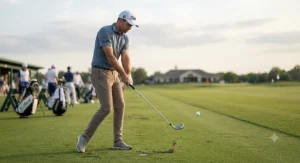
6. Cobra 3DP MB — most forgiving muscle back ever built
This is the iron in the lineup that breaks the category’s own rules, and that’s precisely the standout feature: a true muscle back silhouette hiding an internal 3D-printed lattice structure where a solid blade would normally sit. That lattice frees up roughly 100 grams of discretionary weight for Cobra’s engineers to redistribute — more than 40 grams of it repositioned into high-density tungsten components — which lowers and centralizes the center of gravity in a way a traditionally forged blade simply cannot replicate. Here’s what that means practically: mis-hits that would sting badly on a 620 MB or Miura MB-101 stay noticeably more playable here, without the compact blade shape or thin topline giving away that any forgiveness technology is hiding inside. The shape itself was revised from the earlier King MB based on direct feedback from PGA Tour player Max Homa, resulting in a thinned topline and slightly enhanced offset versus its sibling. Reviewers have been almost universally struck by this combination, with more than one outlet calling it the most forgiving blade currently on the market — while also flagging that the sound and vibration-dampening (achieved without a face insert) genuinely deliver the dense feel purists expect. What the spec sheet won’t tell you is that this manufacturing complexity is exactly why the price sits well above traditional forged blades; you’re paying for 3D-printing precision most competitors can’t yet match.
Pros:
- ✅ Meaningfully more forgiving than any true muscle back
- ✅ Internal lattice preserves classic blade look and sound
- ✅ Tour-informed shape revisions from real player feedback
Cons:
- ❌ Premium, tour-level pricing well above traditional blades
- ❌ Limited retail availability versus mainstream Cobra irons
Budget roughly $1,900-$2,300 for a set — a genuine premium, but justified if you want blade feedback with a real safety net; always check current price given limited production runs.
7. Miura MB-101 — hand-forged perfection for the committed purist
Miura’s standout with the MB-101 is simplicity taken to an art form — the company’s first new blade since 2013 changes remarkably little from its predecessor, and that restraint is the entire point. Forged from premium S25C soft carbon steel in the Miura family’s Himeji factory and finished in satin chrome (or a newer black QPQ finish for added corrosion resistance), the head carries zero offset, a dead-straight leading edge, and the same blade length as Miura’s other tour-preferred models but with a wider, more refined sole for smoother turf interaction. Based on the spec comparison with the outgoing MB-001, the grooved area of the face is noticeably smaller while sole width increased slightly, a tradeoff Miura made specifically to improve how the club travels through turf without sacrificing feedback on contact. Aggregated review sentiment is glowing almost without exception, with independent testers rating it 4.75 out of 5 across dozens of reviews and users describing it as among the best irons they’ve ever struck, though several also note it demands total commitment — this is not a forgiving stepping-stone blade. What most buyers overlook is the longer hosel, added specifically for stability, which very slightly shifts the sweet spot toward the heel — a deliberate, disclosed design choice rather than a flaw. If money isn’t the constraint and you already strike the center reliably, this is as close to a hand-crafted instrument as the category gets.
Pros:
- ✅ Hand-forged Himeji craftsmanship with elite reputation
- ✅ Refined sole improves turf interaction over predecessor
- ✅ Extremely high aggregated review ratings from testers
Cons:
- ❌ Among the highest price points in the entire category
- ❌ Zero forgiveness — punishes anything but centered strikes
Expect roughly $2,000-$2,400 for a typical 3-iron-through-PW set — a serious investment, so check current pricing and custom-fit options directly, as build specs affect final cost significantly.
Top 7 Products Comparison
| Iron | Construction | Handicap Range Suited | Standout Trait | Best For |
|---|---|---|---|---|
| Ben Hogan Icon | Forged soft carbon steel | Low single-digit to mid | Value-per-dollar feel | Budget blade buyers |
| Wilson Staff Model Blade | Forged, traditional shape | Scratch to low single-digit | Classic sound/feel | Purist on a budget |
| Mizuno Pro 221 | Grain Flow Forged HD, 1025E | Scratch to +2 | Consistent shot shaping | All-around low handicap |
| Titleist 620 MB | One-piece forged 1025 | Scratch to +3 | Pure feedback | Elite ball-strikers |
| Cobra King MB | Forged, modern edges | Low single-digit | Tight consistency | Consistency-focused buyers |
| Cobra 3DP MB | Forged shell, 3D-printed lattice | Low single-digit to 10 | Forgiveness in a blade | Blade fans wanting a net |
| Miura MB-101 | Forged S25C, hand-finished | Scratch and better | Craftsmanship | Purists, no budget limit |
The clearest takeaway from this table is that “muscle back” no longer means one rigid thing — the Cobra 3DP MB proves a blade can carry real forgiveness without abandoning its shape or feel, while the Miura MB-101 and Titleist 620 MB represent the opposite philosophy of zero compensation for anything but a pure strike. If you’re deciding primarily on handicap range, note that only the Cobra 3DP MB comfortably extends its recommended range up toward a 10-handicap; every other iron here genuinely expects scratch-or-close ball-striking to unlock its full value.
✨ Don’t Miss These Exclusive Deals!
🔍 Take your muscle back irons workability search to the next level with these carefully selected models. Click on any highlighted iron to check current pricing and availability. These blades will help you shape the exact shots your game demands.
Practical Usage Guide: Your First 30 Days With Muscle Back Irons
Switching into muscle back irons workability from a game-improvement or cavity-back set is less like a club change and more like a small technical reset, so treat the first month accordingly. Start every session on the range, not the course — mis-hits with a compact muscle back head sting in ways cavity backs simply don’t, and course pressure amplifies bad habits before you’ve built new ones. A common mistake in the first 30 days is gripping harder to “control” the smaller head; this actually reduces feel and worsens contact, so keep grip pressure light and let the forged face do its job.
Maintenance is minimal but matters: wipe grooves after every shot from rough or wet turf, since debris in the grooves directly reduces the spin control that makes shot shaping possible in the first place, and inspect the USGA’s groove specifications if you play in rated competitions, since altered or worn grooves can affect conformity. For optimization, spend early sessions hitting deliberately low, punched shots before attempting full trajectory manipulation — this teaches you where the compact muscle back head’s true center actually is, which varies slightly by model and shaft length. Most golfers find real command over shot shape emerges gradually between weeks two and four, not instantly, so resist the urge to judge the switch after a single rocky round.
Which Muscle Back Iron Fits Your Game? Three Real-World Player Profiles
The Budget-Conscious Grinder: A 3-handicap playing three rounds a week on a tight club budget wants blade feedback without blade pricing. The Ben Hogan Icon or Wilson Staff Model Blade deliver genuinely comparable feel to flagship options at a fraction of the cost, making either an easy recommendation for this profile.
The Consistency-Obsessed Low Single-Digit: A scratch golfer who plays competitively and values shot control precision above all else should look at the Mizuno Pro 221 or Titleist 620 MB — both prioritize repeatable feedback and consistent CG placement over any distance gimmick, rewarding a player who already strikes the center reliably.
The Blade Fan Who Occasionally Misses Center: A strong 6-handicapper who loves blade aesthetics but mishits just often enough to worry should strongly consider the Cobra 3DP MB — its internal lattice offers a genuine forgiveness buffer while keeping the classic look and dense feedback intact.
Buyer’s Decision Framework for Muscle Back Irons Workability
If shot-shaping ability matters more to you than forgiveness, choose a traditional one-piece forged blade like the Titleist 620 MB or Miura MB-101, because their low MOI and compact heads transmit swing input directly into ball flight with minimal technological interference. If you want blade feel but occasionally miss center under pressure, choose the Cobra 3DP MB, because its internal weight redistribution adds real forgiveness without changing the shape or feedback you’re used to. If budget is the deciding factor, choose the Ben Hogan Icon or Wilson Staff Model Blade, because both deliver comparable feel and workability to pricier options at meaningfully lower cost. And if you’re still building consistency toward scratch, consider holding off on true muscle backs entirely until your center-face contact rate improves — a players’ cavity back may serve your development better in the meantime.
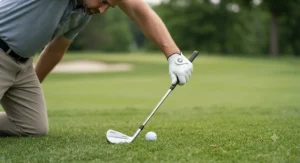
How to Choose Muscle Back Irons for Workability
- Assess your center-face strike consistency first. Muscle backs punish off-center hits disproportionately, so an honest self-assessment on a launch monitor should come before any purchase.
- Match blade length to your typical lies. Compact muscle back heads with wider soles (like the Ben Hogan Icon) interact better with tighter or firmer turf than razor-thin soles.
- Prioritize feedback quality over marketing claims. Aggregated reviewer sentiment on sound and feel is often more reliable than spec sheets alone.
- Consider gapping consistency across the set. Models like the Titleist 620 MB maintain uniform loft gaps, simplifying future set combinations.
- Decide how much forgiveness buffer you actually need. The Cobra 3DP MB exists specifically for golfers who want blade feel with a small safety net.
- Factor in shaft and fitting costs, not just head price. Custom fitting materially affects how workable any muscle back iron feels in your hands.
- Weigh long-term durability of forged carbon steel. As Titleist’s own forged-vs-cast educational resource explains, forging removes impurities and produces a denser, more consistent grain structure than casting — directly influencing long-term feel retention.
Common Mistakes When Buying Muscle Back Irons
The single most common mistake is buying based on how a blade looks in a tour bag rather than how it fits an actual swing speed and strike pattern — aspirational purchasing is the fastest way to end up frustrated on the course. A second frequent error is ignoring shaft fitting entirely, assuming stock options are “good enough” for a category this demanding; shaft flex and weight materially change how muscle back irons shot shaping actually performs in your hands. Buyers also regularly underestimate maintenance — grooves clogged with turf debris quietly erase the spin consistency that makes workability possible. Finally, many golfers buy a full 3-PW muscle back set when a combo set (blended with a cavity back in the long irons) would serve their actual scoring needs far better; the Ben Hogan Icon, for instance, is commonly sold in combo configurations for exactly this reason.
Muscle Back Irons vs Cavity Back Irons: The Real Workability Difference
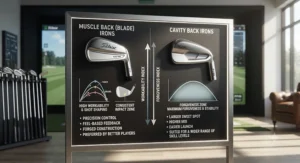
The core distinction isn’t marketing language, it’s physics: a muscle back concentrates mass directly behind the sweet spot, producing low forgiveness but exceptionally responsive feedback, while a cavity back redistributes that same mass around the perimeter, raising moment of inertia and stabilizing mis-hits at the cost of some feel and shot-shaping precision.
| Category | Forgiveness | Workability | Feedback Quality | Typical Handicap Fit |
|---|---|---|---|---|
| Muscle Back (e.g. Titleist 620 MB) | Low | Very High | Extremely direct | Scratch to +3 |
| Cavity Back (players’) | Moderate | Moderate-High | Muted but forgiving | 0-10 |
| Game Improvement | High | Low | Minimal | 10-25+ |
What the table doesn’t fully capture is that the gap has narrowed in recent years — hybrid designs like the Cobra 3DP MB deliberately blur this line by hiding cavity-back-style weight redistribution inside a muscle back shell. For most golfers genuinely torn between the categories, the honest answer is that cavity backs like the models covered in broader players’-iron roundups offer 80% of the feel with meaningfully more forgiveness — muscle backs remain the right call only when total shot-shaping command outweighs consistency concerns.
What to Expect: Real-World Performance and Feedback on Contact
Specs on paper rarely capture what feedback on contact actually feels like mid-round, so here’s the translation: on a flush strike with something like the Mizuno Pro 221 or Miura MB-101, you’ll feel almost nothing through the hands — a dense, muted “thud” rather than a sharp vibration, which is precisely why players describe forged blade feel as addictive. Miss the center by even a few millimeters, though, and that sensation flips into a harsh, buzzing sting that travels straight up the shaft — an unmistakable, immediate signal that something went wrong, well before you’ve even looked up at ball flight. Reviewers consistently describe this duality as the entire point of playing blades: the clarity of feedback teaches you things a forgiving iron simply won’t tell you. Expect a genuine adjustment period of several rounds before you can reliably interpret feedback fast enough to make in-swing corrections, and expect scores to occasionally suffer short-term while your strike consistency catches up to the demands of a compact muscle back head.
Muscle Back Irons for Shot Shaping: Trajectory Manipulation and Shot Control Precision
This is where muscle back irons earn their reputation. Because compact muscle back heads carry minimal offset and low MOI, they respond almost linearly to small changes in face angle and path — which is exactly the mechanism behind muscle back irons shot shaping. Closing the face fractionally at impact with a model like the Titleist 620 MB produces a draw with none of the “correction” that higher-MOI cavity backs quietly apply to mis-struck fades. Trajectory manipulation works similarly: because there’s little tungsten or perimeter weighting altering launch conditions, ball flight height responds directly to strike location on the face and hand position at impact, giving skilled players genuine control over apex height shot-to-shot. Reviewers testing models like the Mizuno Pro 221 and Cobra King MB on launch monitors have specifically noted tight dispersion numbers when struck consistently — direct evidence of real shot control precision rather than marketing language. The tradeoff, worth repeating honestly, is that this same responsiveness works against you the moment contact quality drops, which is why this category remains reserved for players who already own repeatable, centered strikes.
Long-Term Cost & Maintenance
| Cost Factor | Muscle Back Irons | Cavity Back / Game Improvement |
|---|---|---|
| Initial set price | Moderate to premium | Moderate |
| Reshafting frequency | Similar across categories | Similar across categories |
| Groove maintenance importance | Very high (spin-dependent) | Moderate |
| Resale value (premium brands) | Strong, especially forged Japanese blades | Variable |
Total cost of ownership on a muscle back set isn’t dramatically different from a comparable cavity back once you account for reshafting and regripping over several years, but the analysis shifts meaningfully around resale: hand-forged models like the Miura MB-101 and Titleist 620 MB tend to hold value unusually well in the used market precisely because demand from committed ball-strikers stays consistent year over year. Where cost genuinely diverges is groove maintenance — because spin consistency does so much of the work in trajectory manipulation, neglecting groove cleaning degrades performance on a muscle back faster and more noticeably than it does on a forgiving game-improvement iron.
Features That Actually Matter (And Those That Don’t)
What actually matters: forging quality and grain structure (directly tied to feel longevity), consistent CG placement across the set (critical for repeatable shot shaping), and groove conformity under USGA and R&A equipment rules if you play competitively. What matters far less than marketing suggests: cosmetic finish options, since satin, chrome, and black finishes affect looks and durability slightly but do nothing for performance; and headcover or box packaging, which some brands use to justify higher pricing without any on-course benefit. As Mizuno’s own forging process documentation explains, a true one-piece Grain Flow Forged head — where the neck and clubface share continuous grain structure — differs meaningfully from competitor designs using welded necks, and that distinction genuinely affects feel in a way surface cosmetics never will.
Muscle Back Irons for Elite and Aspiring Ball-Strikers
Players’ irons in this category are typically built for low-handicap golfers, and understanding how the World Handicap System actually calculates demonstrated ability helps explain why: your Handicap Index reflects potential scoring ability under standardized conditions, and muscle backs simply demand a consistency level most mid-to-high handicappers haven’t yet reached. That doesn’t mean a 10-handicapper can’t play them — plenty do, often for the aspirational challenge — but honest self-assessment against your actual index, rather than your best-ever round, should guide the decision.
Frequently Asked Questions
❓ Are muscle back irons more workable than cavity back irons?
❓ What handicap do you need for muscle back irons workability?
❓ Do muscle back irons help with shot shaping?
❓ Why do muscle back irons feel different at impact?
❓ Are muscle back irons worth the price for casual golfers?
Conclusion
muscle back irons workability isn’t really about one magic spec — it’s about an entire philosophy of trusting the golfer over the technology. Across every model here, from the value-driven Ben Hogan Icon to the hand-forged Miura MB-101, the common thread is honest, direct feedback that rewards centered contact and punishes anything else without apology. If you’re weighing compact muscle back heads for shot shaping ability, remember that trajectory manipulation and shot control precision only reveal themselves once your strike pattern is consistent enough to unlock them — buy for where your game actually is, not where you hope it will be next season. Whether that means starting with the accessible Wilson Staff Model Blade or committing fully to the Titleist 620 MB, the right muscle back iron is simply the one whose feedback teaches you something useful every single round.
Recommended for You
- 7 Best cavity back irons high handicap Picks for 2026 (Real Data)
- Perimeter Weighted Cavity Back Irons: 7 Best Picks for 2026
- 7 Best Driving Hybrid Accuracy Clubs of 2026
Disclaimer: This article contains affiliate links. As an Amazon Associate, I earn from qualifying purchases. If you purchase products through these links, we may earn a small commission at no additional cost to you.
✨ Found this helpful? Share it with your friends! 💬🤗
