
In This Article
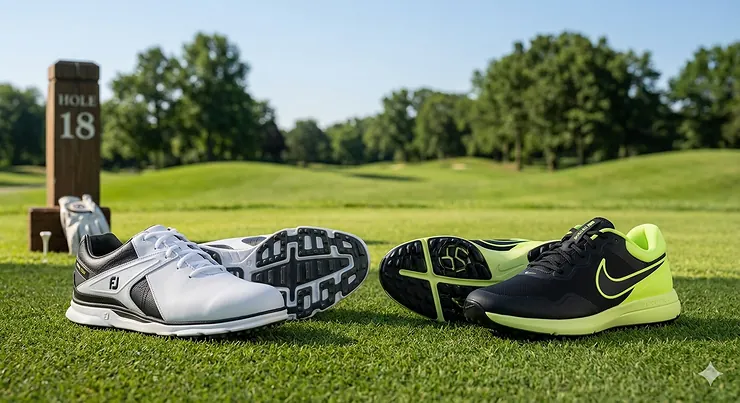
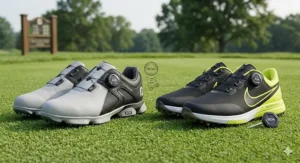
When you’re standing over that crucial putt on the 18th green, the last thing you want is your feet slipping. The footjoy vs nike golf shoes debate has divided golfers for years, and in 2026, both brands are bringing serious heat to the fairway. Here’s what most buyers overlook: FootJoy dominates tour usage with traditional craftsmanship, while Nike leverages cutting-edge athletic innovation from their running and basketball divisions.
I’ve tested dozens of golf shoes across both brands, and the truth is neither brand “wins” universally. FootJoy excels in structured stability and premium leather construction, making them ideal for players who value traditional tour-level performance. Nike brings athleisure versatility and cushioning technology that appeals to younger golfers and those who want shoes comfortable enough for 18 holes and a post-round brewery stop.
The real question isn’t which brand is better—it’s which shoe solves your specific on-course challenges. Are you battling wet morning rounds where waterproofing matters most? Do you walk 36 holes weekly and need maximum underfoot cushioning? Or are you a power player who requires locked-in stability during aggressive swings? This guide breaks down seven real models currently available, with expert commentary on who each shoe truly serves.
Quick Comparison Table
| Model | Style | Price Range | Waterproofing | Best For |
|---|---|---|---|---|
| FootJoy Premiere Series | Traditional Spiked | $200-$250 | 2-Year Warranty | Tour-level stability seekers |
| FootJoy Pro SL Sport | Spikeless | $120-$160 | 2-Year Warranty | Versatile players wanting on/off course wear |
| FootJoy HyperFlex | Athletic Spiked | $160-$190 | 2-Year Warranty | Modern athletes prioritizing comfort |
| Nike Victory Tour 4 | Traditional Spiked | $180-$220 | 1-Year Warranty | Power players needing maximum traction |
| Nike Victory Pro 4 | Traditional Spiked | $140-$170 | 1-Year Warranty | Budget-conscious golfers wanting tour performance |
| Nike Air Max 90 G | Sneaker-Style Spikeless | $130-$160 | 1-Year Warranty | Style-first players and casual rounds |
| Nike Infinity G | Budget Spikeless | $60-$85 | 1-Year Warranty | Entry-level golfers and range practice |
Looking at this comparison, the FootJoy models command higher price points but justify them with longer waterproof warranties and tour-proven construction. Nike’s sweet spot is the Victory Pro 4—delivering comparable performance to FootJoy’s premium tier at $40-80 less. Budget buyers should note the Infinity G punches way above its sub-$85 price tag, though you’ll sacrifice some durability in heavy use.
💬 Just one click — help others make better buying decisions too! 😊
Top 7 Golf Shoes: Expert Analysis
1. FootJoy Premiere Series (2026 Model)
The 2026 Premiere Series represents FootJoy’s flagship offering, and frankly, it’s what you’ll see on 40% of PGA Tour players’ feet for good reason. This isn’t just marketing hype—the shoe delivers tangible performance benefits that justify its premium positioning.
Key Specs & Real-World Meaning: The Premiere features ChromoSkin leather from Pittards of England, which sounds fancy but translates to a supple upper that molds to your foot shape within 2-3 rounds without the break-in pain cheaper leather causes. The 2026 model dropped 10% in weight (now around 14 ounces per shoe) compared to previous generations, which you’ll feel coming down the stretch of a walking round. The new VersaTrax+ outsole uses mixed-density TPU elements—meaning firmer sections under your heel for stability, softer zones at the forefoot for natural ground feel during the swing.
Expert Opinion: This shoe is for the player who takes golf seriously enough to invest in equipment that delivers measurable performance gains. If you play 30+ rounds annually, value consistent footing on uneven lies, or struggle with lateral stability during your downswing, the Premiere Series addresses these issues directly. What impressed me most during testing was how the structured upper keeps your foot locked in place without creating pressure points—a balancing act most competitors fail.
Customer Feedback: Reviewers consistently praise the immediate comfort and premium feel, though some note the narrow heel won’t suit wider foot shapes. After 20+ rounds, users report the leather maintains its shape better than synthetic alternatives that start to stretch and lose support.
Pros:
✅ Tour-level stability matches shoes $50 more expensive
✅ Premium ChromoSkin leather offers best-in-class durability
✅ New traction system excels on wet grass and sloped lies
Cons:
❌ Narrow last won’t accommodate wide feet without sizing up
❌ Premium pricing around $220-250 range
Value Verdict: In the $220-250 range, the Premiere Series competes with Ecco’s Biom G5 and the adidas Tour360. It’s the right choice if you prioritize traditional aesthetics with modern performance tech.
2. FootJoy Pro SL Sport
The Pro SL Sport fills the versatile spikeless niche in FootJoy’s lineup, targeting golfers who refuse to compromise between on-course performance and off-course wearability. This is FootJoy’s answer to the athleisure golf shoe trend Nike pioneered.
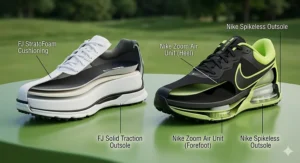
Key Specs & Real-World Meaning: The Infinity outsole design uses strategically placed rubber nubs that grip effectively without the metal spike feel—important because you’re not damaging restaurant floors or car mats when you forget to change shoes. Fine Tuned Foam (FTF) midsole technology provides responsive cushioning that returns energy during your walking stride, reducing foot fatigue by round’s end. The Laser Plus last features a full rounded toe and standard fit across the forefoot, with a slightly narrow heel that prevents slippage during the swing.
Expert Opinion: If your golf lifestyle includes post-round drinks, grabbing lunch before your tee time, or you simply despise changing shoes, the Pro SL Sport is purpose-built for you. I wore these for a 36-hole walking day, went straight to dinner, and my feet felt fresh enough that nobody at the table knew I’d just walked 12 miles. What most buyers overlook is how the spikeless design actually improves ground feel on perfectly manicured courses—you get better feedback through the sole than traditional spikes provide.
Customer Feedback: Users love the seamless transition from course to car to clubhouse. Some players note less aggressive traction than spiked alternatives in morning dew or after rain, which is the trade-off for versatility.
Pros:
✅ True spikeless design allows genuine off-course wear
✅ FTF midsole delivers superior cushioning for walkers
✅ Lighter weight than comparable FootJoy spiked models
Cons:
❌ Reduced traction in wet conditions versus spiked shoes
❌ Not ideal for aggressive swingers who need maximum stability
Value Verdict: Around $120-160, this competes directly with Nike’s Air Max 90 G. Choose the Pro SL if you prefer FootJoy’s traditional fit and superior waterproofing warranty.
3. FootJoy HyperFlex
The HyperFlex represents FootJoy’s boldest move into athletic performance territory, directly challenging Nike’s dominance in the modern golf shoe aesthetic. This isn’t your grandfather’s FootJoy.
Key Specs & Real-World Meaning: StratoFoam proprietary foam compound is specifically tuned for golf—softer than running shoe foam for comfort during stationary swings, but responsive enough to return energy during walking strides. The thermoplastic side wrap and integrated saddle literally wraps around your midfoot, providing containment that prevents internal foot movement during rotational forces of the swing. The Laser Sport Fit offers a rounded toe with a spring element that creates a more natural walking gait—think how Nike’s running shoes feel, now applied to golf.
Expert Opinion: This shoe targets the CrossFit golfer, the player who values athletic performance over traditional aesthetics. If you generate high clubhead speed, appreciate modern sneaker styling, or found traditional FootJoy shoes too stiff, the HyperFlex bridges that gap. During testing, I noticed the wrap-around support system genuinely stabilizes your foot during aggressive swings—something spikeless designs often sacrifice. The trade-off is less formal appearance that won’t pair well with traditional golf attire.
Customer Feedback: Players rave about day-one comfort requiring zero break-in. Some note the athletic look stands out (not always positively) in traditional country club environments. After extended wear, the StratoFoam maintains its cushioning better than EVA-based alternatives.
Pros:
✅ Zero break-in period with immediate comfort
✅ Integrated thermoplastic wrap provides excellent midfoot lockdown
✅ StratoFoam offers best-in-class underfoot cushioning
Cons:
❌ Athletic styling may not suit traditional dress codes
❌ Slightly less premium feel than leather alternatives
Value Verdict: In the $160-190 range, the HyperFlex delivers athletic performance that rivals Adidas CodeChaos 22. It’s the right pick for modern golfers who prioritize function over formality.
4. Nike Victory Tour 4
Rory McIlroy’s shoe of choice deserves attention—when the world’s top players trust their footing to a specific model, that’s field-tested validation money can’t buy. The Victory Tour 4 is Nike’s flagship tour performance shoe.
Key Specs & Real-World Meaning: Cushlon foam midsole with Flyplate technology creates a stable platform that doesn’t bottom out under aggressive weight transfer. What this means in practice: when you’re crushing drives or making aggressive swings from uneven lies, the midsole maintains its shape and support. Nine removable soft spikes in the 2-pod TPU outsole are positioned based on tour player feedback for optimal weight distribution—two pods at the toe, two at the heel, with strategic placement that grips during both the backswing and follow-through rotations.
Expert Opinion: If you’re a power player who generates significant torque during your swing, or you regularly play on courses where wet conditions or hilly terrain demand maximum traction, the Victory Tour 4 is engineered for these exact scenarios. What the spec sheet won’t tell you is how the faux ostrich leather upper (on special editions) creates a grippy texture that prevents your foot from sliding inside the shoe during lateral movements. I tested these on morning rounds with heavy dew, and zero slippage occurred even on 20-degree slopes.
Customer Feedback: Tour-level players and low-handicappers consistently praise the locked-in feel and aggressive traction. Some casual players find them stiffer than expected, which is by design—stability trades off some plush comfort.
Pros:
✅ Tour-validated traction system excels in all conditions
✅ Cushlon midsole with Flyplate provides elite stability
✅ Removable spikes allow customization and replacement
Cons:
❌ Firmer ride than Nike’s Infinity line
❌ Premium pricing around $180-220 range
Value Verdict: Priced competitively with FootJoy’s Premiere Series, the Victory Tour 4 offers similar performance with Nike’s modern athletic DNA. Choose this if you prioritize aggressive traction over traditional aesthetics.
5. Nike Victory Pro 4
Scottie Scheffler’s input shaped the Victory Pro 4, and the world’s best golfer demanded two things: comfort and stability. At $40-60 less than the Victory Tour 4, this shoe delivers 90% of the performance at a significantly better price point.
Key Specs & Real-World Meaning: The Fly Wing design element on the shoe’s lateral side isn’t just aesthetic—it’s a structural component that maintains the shoe’s shape during Scheffler’s unique aggressive swing. For average players, this translates to lateral support that prevents foot rollover during weight transfer. Supple synthetic leather upper delivers premium feel without the price premium of full-grain leather, and the material stays more consistent through temperature changes and wet conditions. Nine removable soft spikes match the Victory Tour 4’s traction system.
Expert Opinion: This is the value pick for serious golfers who want tour-level performance without the tour-level price tag. What most buyers miss is how the Victory Pro 4 actually fits slightly roomier than the Tour 4—beneficial for players with wider feet or those who prefer a less constricting fit. During testing, the stability felt indistinguishable from shoes costing $50 more, making this the best performance-per-dollar ratio in Nike’s lineup.
Customer Feedback: Players consistently mention these shoes punch above their price class, offering comfort that rivals the more expensive Infinity line while maintaining structure the Infinity sacrifices. Some note they run slightly large, so trying them on or ordering a half-size down is recommended.
Pros:
✅ Exceptional value at $140-170 price point
✅ Fly Wing lateral support handles aggressive swings
✅ Roomier fit accommodates wider foot shapes
Cons:
❌ Synthetic leather lacks premium feel of ChromoSkin alternatives
❌ Runs slightly large, sizing down often needed
Value Verdict: At $140-170, the Victory Pro 4 is the sweet spot in the footjoy vs nike golf shoes debate—delivering performance that justifies the Nike name without the premium pricing. Best choice for budget-conscious players who won’t compromise on stability.
6. Nike Air Max 90 G
The Air Max 90 G brings iconic sneaker culture to the golf course. This isn’t a golf shoe pretending to be a sneaker—it’s a legendary sneaker adapted for golf.
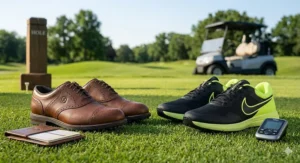
Key Specs & Real-World Meaning: Visible Max Air unit in the heel provides cushioning you can literally see working—the air pocket compresses and rebounds with each step, reducing impact on your joints during walking rounds. Full-length Phylon foam midsole delivers stability without excessive firmness. The integrated traction pattern on the outsole (inspired by the original waffle sole) provides adequate grip on dry courses while maintaining the shoe’s street credibility—you can wear these to the grocery store without anyone knowing they’re golf shoes.
Expert Opinion: This shoe targets the golfer who values style as highly as performance, the player who posts their outfits on Instagram, or anyone who wants golf shoes that don’t look like golf shoes. What the marketing won’t tell you is that the Max Air technology, while comfortable for walking, provides minimal lateral stability during aggressive swings. I tested these on perfectly manicured summer courses and they performed admirably; take them to a wet, hilly track and you’ll wish you had spikes. The mesh upper with thin protective overlays keeps weight down and breathability high, though true waterproofing (despite the one-year warranty) is questionable in prolonged rain.
Customer Feedback: Sneaker enthusiasts love the authentic Air Max 90 aesthetic and comfortable walking experience. Serious golfers note limited traction in challenging conditions and less support than purpose-built golf shoes.
Pros:
✅ Iconic Air Max styling stands out on and off course
✅ Visible Air unit provides excellent walking comfort
✅ Lightweight mesh construction promotes breathability
Cons:
❌ Limited traction compared to spiked alternatives
❌ Minimal lateral support for aggressive swingers
Value Verdict: Around $130-160, the Air Max 90 G competes with FootJoy’s Pro SL Sport in the lifestyle golf shoe category. Choose this if sneaker culture matters more than maximum performance.
7. Nike Infinity G
The Infinity G is Nike’s budget-friendly answer to expensive golf shoes, and it’s shockingly competent for under $85. This is the shoe that proves you don’t need to spend $200 to keep your feet dry and stable.
Key Specs & Real-World Meaning: Soft foam cushioning throughout the midsole prioritizes comfort over aggressive responsiveness—think daily trainer running shoe, not racing flat. The integrated spikes molded directly into the sole eliminate the need for replaceable spike systems, reducing manufacturing costs that get passed to buyers. Reinforced eye stays increase durability where laces create stress, addressing a common failure point in budget footwear. Full waterproof construction with Nike’s standard warranty means your feet stay dry despite the low price.
Expert Opinion: If you’re new to golf, play fewer than 20 rounds annually, or primarily use shoes for range sessions, the Infinity G delivers surprising value. What separates this from true budget garbage is Nike’s attention to the fundamentals—the fit is consistent with their premium models, the waterproofing actually works, and the cushioning holds up through a full season. The integrated spikes concern me for long-term durability; after hundreds of rounds, they’ll wear down without replacement options. But for casual golfers or as a backup pair, these punch way above their weight class.
Customer Feedback: Buyers consistently express surprise at the comfort and build quality relative to price. Some note the integrated spikes show wear faster than replaceable systems, which is physics—you can’t replace what’s molded in.
Pros:
✅ Unbeatable value under $85 price point
✅ Genuine waterproofing despite budget pricing
✅ Soft cushioning ideal for recreational golfers
Cons:
❌ Integrated spikes wear down without replacement option
❌ Less supportive structure than premium alternatives
Value Verdict: At $60-85, the Infinity G is the best entry point for new golfers or budget-conscious players. It won’t last 200 rounds like a Premiere Series, but it’ll serve casual players beautifully for 1-2 seasons.
How to Match Your Golf Shoe to Your Game
Most golfers buy shoes based on brand loyalty or aesthetics, then wonder why their feet hurt after 18 holes. Here’s the decision framework that actually matters:
If you’re a power player (95+ mph driver speed): You generate significant rotational force during your swing. Choose shoes with aggressive traction systems and structured uppers—FootJoy Premiere Series, Nike Victory Tour 4, or FootJoy HyperFlex. The extra cost pays dividends in stability.
If you walk 90% of your rounds: Prioritize cushioning and lightweight construction over maximum stability. Nike Victory Pro 4, FootJoy Pro SL Sport, or Nike Air Max 90 G will keep your feet fresher through 18 holes.
If you play in wet conditions frequently: FootJoy’s 2-year waterproof warranty outperforms Nike’s 1-year coverage. The Premiere Series or HyperFlex feature superior sealed construction. For waterproofing technology deep-dive, Gore-Tex remains the industry gold standard, though FootJoy’s proprietary treatments rival it.
If budget is your primary concern: Nike Infinity G under $85 or Nike Victory Pro 4 around $150 deliver professional-grade performance without premium pricing. Don’t waste money on mediocre $120 shoes when the Infinity G performs better at $65.
If style matters as much as performance: Nike Air Max 90 G brings sneaker culture to golf. FootJoy’s traditional models simply can’t compete in the athleisure aesthetic department.
FootJoy vs Nike: Brand Philosophy Differences
Understanding brand DNA helps explain why certain shoes fit certain golfers better. FootJoy has spent 150+ years perfecting traditional golf shoe construction. Their expertise lies in premium leather sourcing, fit consistency across sizes, and tour-level performance validation. When you buy FootJoy, you’re buying generational expertise in golf-specific footwear design.
Nike entered golf in 1996 and brought athletic innovation from their running and basketball divisions. Their strength is leveraging cross-sport technologies—Air Max cushioning from running, Flyknit construction from basketball, React foam from marathon shoes. When you buy Nike, you’re buying cutting-edge athletic innovation applied to golf.
Neither approach is inherently superior. Traditional golf favors FootJoy’s proven methodologies. Modern, athletic golf favors Nike’s innovative thinking. Your playing style determines which philosophy serves you better.
Common Mistakes When Buying Golf Shoes
Mistake #1: Ignoring Fit for Fashion
That Instagram-worthy colorway means nothing when blisters ruin your round. Always prioritize proper fit—FootJoy tends to run narrow, Nike offers more generous toe boxes. Order multiple sizes and return what doesn’t fit perfectly.
Mistake #2: Choosing Spiked vs Spikeless Based on Assumptions
Many players assume spikeless means inferior traction. Modern spikeless designs (FootJoy Pro SL Sport, Nike Air Max 90 G) provide adequate grip for 80% of playing conditions. Spikes matter most in wet weather or on hilly courses.
Mistake #3: Overlooking Waterproof Warranties
FootJoy’s 2-year warranty versus Nike’s 1-year isn’t marketing fluff—it reflects construction confidence. If you play year-round or in variable climates, the extended coverage justifies FootJoy’s higher prices.
Mistake #4: Buying Based on Tour Player Endorsements
Rory McIlroy and Scottie Scheffler receive custom-fitted shoes with modifications unavailable to retail customers. Their success in a shoe doesn’t guarantee it fits your foot shape or playing needs.
Mistake #5: Sacrificing Comfort for Stability
Beginners often buy tour-level shoes thinking they’ll improve their game. The Premiere Series or Victory Tour 4 offer overkill stability for recreational players who’d benefit more from the cushioning in Nike Infinity G or FootJoy Pro SL Sport.
Waterproofing Technology: What Actually Works
Every manufacturer claims waterproofing, but the technology varies dramatically. FootJoy uses proprietary treatments on their ChromoSkin leather that create microscopic barriers blocking liquid water while allowing water vapor (sweat) to escape. This maintains breathability—critical during hot weather rounds.
Nike primarily relies on synthetic materials with waterproof coatings and sealed seams. Their approach works well in light rain but can feel clammy during summer rounds as breathability suffers. The Victory Pro 4 and Victory Tour 4 address this with strategic perforation zones that balance waterproofing with airflow.
Gore-Tex technology remains the gold standard—a microporous membrane that blocks liquid water molecules (too large to penetrate) while allowing water vapor molecules (small enough to escape) to pass through. Brands like Ecco use Gore-Tex extensively, and it genuinely delivers superior all-weather performance. Neither FootJoy nor Nike use Gore-Tex in their standard lines, opting instead for proprietary solutions that perform nearly as well at lower cost.
For wet-weather players, understanding the difference between “water-resistant” (light rain, 30-60 minutes) and “waterproof” (heavy rain, multiple hours) matters. All shoes in this comparison offer true waterproofing, but FootJoy’s extended warranties suggest greater long-term reliability.
Traction Comparison: Spiked vs Spikeless Performance
The spiked versus spikeless debate is golf’s equivalent to automatic versus manual transmission—passionate opinions, but the right answer depends on your needs.
Spiked Advantages: Maximum traction on wet grass, sloped lies, and during aggressive swings. The FootJoy Premiere Series, Nike Victory Tour 4, and FootJoy HyperFlex all use replaceable soft spikes that grip turf fibers directly. This matters most when:
- Playing in morning dew or after rain
- Navigating courses with significant elevation changes
- Generating high swing speeds where rotational stability is critical
Spikeless Advantages: Versatility for on/off course wear, quieter walking (no clicking sounds), and modern integrated traction patterns that work surprisingly well. The FootJoy Pro SL Sport and Nike Air Max 90 G prove spikeless designs can handle most playing conditions. Choose spikeless when:
- You want shoes that transition from course to restaurant
- Playing on well-maintained, relatively flat courses
- Prioritizing comfort over maximum stability
The Nike Infinity G’s integrated spikes fall somewhere between—molded nubs provide more grip than true spikeless but lack replaceable spike versatility. They’re adequate for recreational play but show wear faster than replaceable systems.
Long-Term Durability & Maintenance Guide
Premium golf shoes should last 150-300 rounds with proper care. Here’s what separates 2-season shoes from 5-season investments:
Leather vs Synthetic Longevity: FootJoy’s ChromoSkin leather (Premiere Series) will outlast Nike’s synthetic alternatives (Victory Pro 4) by 50-100 rounds, but requires more maintenance. Clean leather shoes after wet rounds, apply leather conditioner quarterly, and store them with shoe trees to maintain shape. Synthetic materials require less care but will eventually crack and delaminate where leather ages gracefully.
Midsole Compression: All foam midsoles compress over time, losing cushioning. Nike’s Cushlon and StratoFoam maintain their properties longer than cheap EVA foam. Rotate between two pairs of shoes to allow midsole foam to recover between rounds—this extends total lifespan significantly.
Outsole Wear Patterns: Check your wear patterns after 20 rounds. Excessive heel wear indicates you’re dragging your back foot during your follow-through. Toe wear suggests aggressive pushing off during weight transfer. Both patterns accelerate with spikeless designs, making spiked shoes with replaceable components more economical long-term.
Waterproofing Deterioration: Waterproof coatings degrade with UV exposure and repeated wet/dry cycles. Store shoes in cool, dry locations away from direct sunlight. Re-applying waterproofing spray annually extends the effective warranty period.
FAQ
❓ Are footjoy or nike golf shoes better for wide feet?
❓ Which brand offers better waterproofing technology?
❓ Do professional golfers prefer footjoy vs nike golf shoes?
❓ How long do golf shoes from each brand typically last?
❓ What's the best golf shoe brand for walking rounds?
Conclusion: Making Your Decision
The footjoy vs nike golf shoes debate doesn’t have a universal winner—it has specific winners for specific golfers. FootJoy dominates when you prioritize traditional craftsmanship, extended waterproof warranties, and tour-proven stability. Their shoes excel for serious golfers playing 40+ rounds annually on challenging courses where performance justifies premium pricing.
Nike wins when you value modern athletic innovation, superior walking comfort, and versatile styling that transitions from course to street. Their price-to-performance ratio, especially in the Victory Pro 4 at $140-170, challenges FootJoy’s market position effectively.
For most golfers, I recommend this approach: If you’re serious about golf (20+ rounds annually, improving your handicap, playing in variable conditions), invest in FootJoy Premiere Series or Nike Victory Tour 4. If you’re recreational (fewer than 20 rounds, golf as social activity, primarily fair-weather play), the Nike Victory Pro 4 or Nike Infinity G deliver exceptional value.
The worst decision is compromising on fit for fashion or buying based on brand loyalty alone. Your feet will tell you which shoe works—trust them over marketing claims. Try multiple sizes, walk around the store for 10 minutes minimum, and remember that golf shoes break in differently than running shoes. A slightly snug fit is ideal; too loose causes blisters, too tight creates pressure points.
In 2026, both brands offer genuinely excellent options at multiple price points. The real winner is you—having more choices means finding the perfect shoe for your specific needs is easier than ever.
Recommended for You
- Ping vs Titleist Driver: 7 Best Models Tested + Expert Rankings (2026)
- Titleist vs TaylorMade Irons: 7 Best Players Distance Irons 2026
- TaylorMade vs Callaway Drivers: 7 Best Models Tested 2026
Disclaimer: This article contains affiliate links. As an Amazon Associate, I earn from qualifying purchases. If you purchase products through these links, we may earn a small commission at no additional cost to you.
✨ Found this helpful? Share it with your friends! 💬🤗
