
In This Article
✨Was this helpful? Spread the word! 🚀
Look, I’ll be honest with you. When I first heard about barefoot golf shoes, I thought someone was pulling my leg. Golf shoes without cushioning? Walking 18 holes in what’s basically a sock with a sole? But then something interesting happened – I tried them, and I haven’t looked back since.
If you’re wondering how to choose barefoot golf shoes, you’re asking the right question at the right time. The barefoot movement has exploded onto golf courses across America, and for good reason. These minimalist marvels promise better balance, improved swing mechanics, and a connection to the course you’ve never experienced before. However, picking the right pair isn’t as simple as grabbing the first zero-drop shoe you see. The difference between a barefoot shoe that transforms your game and one that leaves you hobbling by hole nine comes down to knowing what features matter most.
Throughout this guide, I’ll walk you through everything you need to know about selecting the perfect barefoot golf shoes. We’ll explore what makes these shoes different, compare the top models available in 2025, and answer those burning questions about fit, sizing, and transition strategies. Whether you’re a seasoned barefoot enthusiast or someone who’s just curious about ditching traditional golf cleats, you’ll find actionable insights that’ll help you make the smartest choice for your feet and your game.
Quick Comparison Table
| Product | Price Range | Best For | Ground Feel | Waterproof |
|---|---|---|---|---|
| TRUE Linkswear OG Cush | $175 | Beginners & comfort seekers | Medium | Water-resistant |
| TRUE Linkswear OG Feel | $139-155 | Maximum ground connection | High | Water-repellent |
| Vivobarefoot Hybrid Golf | $170 | Pure barefoot experience | Very High | Water-resistant |
| Xero Shoes Prio | $100 | Budget-conscious golfers | High | No |
| Xero Scrambler Low EV | $120 | Trail/course versatility | Very High | No |
| Peluva Apollo Golf | $160-180 | Toe separation benefits | High | Water-resistant |
| Be Lenka Trailwalker 2.0 | $160 | Premium leather seekers | High | Water-resistant |
💬 Just one click – help others make better buying decisions too!😊
🛒 Ready to Transform Your Golf Game?
✨ These barefoot golf shoes will revolutionize how you play. Check current prices and availability on Amazon for the best deals. Your feet (and your scorecard) will thank you! 🏌️♂️⛳
Top 7 Barefoot Golf Shoes for 2025: Expert Analysis
After testing dozens of models and speaking with barefoot golf enthusiasts across the country, I’ve narrowed down the field to seven exceptional options. Each shoe brings something unique to the table, whether you’re seeking maximum ground feel, all-day comfort, or that perfect balance between protection and natural movement.
1. TRUE Linkswear OG Cush – Best Overall for Beginners
If you’re new to barefoot golf shoes or worried about making the transition, the TRUE Linkswear OG Cush is your golden ticket. TRUE solved the biggest complaint about barefoot shoes – lack of cushioning – without sacrificing the zero-drop platform that makes these shoes special.
The OG Cush features TRUE’s proprietary Wanderlux cushioned midsole with 6mm of foam underfoot, delivering that sweet spot between ground feel and all-day comfort. The extra-wide toe box accommodates up to EEE widths, while the flexible rubber tread provides surprisingly good traction without aggressive lugs. At just 10.8 ounces per shoe, you’ll barely notice them after 18 holes.
💰 Price: $175 | Weight: 10.8 oz | Stack Height: 6mm | Toe Box: Extra-wide
Customer Perspective: Golfers rave about the out-of-box comfort, with many reporting zero break-in period. One reviewer mentioned walking three consecutive 18-hole rounds without any foot fatigue, something they couldn’t achieve with traditional golf shoes.
✅ Premium Wanderlux cushioning system
✅ True-to-size fit with EEE toe box width
✅ Versatile tread for course and street wear
❌ Higher price point than competitors
❌ Not fully waterproof (water-resistant only)
2. TRUE Linkswear OG Feel – Most Ground Connection
For purists seeking that “playing barefoot” sensation, the TRUE Linkswear OG Feel delivers unmatched ground feedback. This shoe strips away unnecessary cushioning, featuring a one-piece sock-fit knit upper that wraps your foot like a second skin.
The leather saddle provides structural support while maintaining flexibility, and the 7.5mm outsole keeps you incredibly close to the turf. The breathability is exceptional thanks to the knit construction, making these perfect for hot summer rounds. However, they’re not waterproof, so save them for dry days.
💰 Price: $139-155 | Weight: 8.3 oz | Stack Height: 7.5mm | Toe Box: Wide to extra-wide
Customer Feedback: Golfers describe feeling every contour of the course beneath their feet. Several users mentioned improved balance during their swing, particularly on uneven lies. Professional golfer testimonials highlight the natural motion these shoes allow.
✅ Ultra-lightweight at 8.3 oz
✅ Maximum barefoot feel and flexibility
✅ Breathable one-piece knit design
❌ Requires gradual adaptation period
❌ Not suitable for wet conditions
3. Vivobarefoot Hybrid Golf – Thinnest Sole Option
The Vivobarefoot Hybrid Golf shoe represents the pinnacle of minimalist golf footwear. With a mere 2.5mm sole plus 4.5mm lugs, this shoe offers the closest thing to actually playing barefoot while maintaining golf course etiquette.
Vivobarefoot’s puncture-resistant technology means you don’t sacrifice protection for ground feel. The V-shaped lugs provide multi-directional traction, and the shoe is incredibly flexible – you can literally roll it into a ball. Made with premium materials and the brand’s decade of barefoot shoe expertise, these shoes deliver authentic barefoot benefits.
💰 Price: $170 | Weight: 10.4 oz | Stack Height: 7mm total | Toe Box: Extra-wide
User Reviews: Experienced barefoot shoe wearers praise the Hybrid for its uncompromising barefoot feel. Some mention the learning curve, but most agree it’s worth the adaptation period for the improved proprioception and swing stability.
✅ Thinnest, most flexible golf shoe available
✅ Puncture-resistant protection technology
✅ Exceptional multi-directional traction
❌ Difficult to find (older model)
❌ May leave small marks on very soft greens
4. Xero Shoes Prio – Best Budget Pick
Don’t let the $100 price tag fool you – the Xero Shoes Prio punches way above its weight class. While not specifically designed for golf, countless golfers have adopted the Prio for course duty, and it’s easy to see why.
The 5.5mm FeelTrue rubber sole provides excellent ground feedback while the dual chevron lugs offer solid traction. The breathable mesh upper keeps your feet cool, and the optional 3mm insole lets you customize the barefoot feel. With Xero’s famous 5,000-mile sole warranty, these shoes represent incredible value.
💰 Price: $100 | Weight: 8.7 oz | Stack Height: 8.5mm with insole | Toe Box: Wide
Customer Insights: Budget-conscious golfers appreciate the versatility – these work equally well at the gym, on trails, or on the course. Some users recommend sizing up a half size for optimal toe freedom.
✅ Unbeatable value at $100
✅ 5,000-mile sole warranty included
✅ Multi-purpose athletic shoe versatility
❌ Not golf-specific design
❌ Runs slightly small (size up recommended)
5. Xero Scrambler Low EV – Most Flexible Option
The Xero Scrambler Low EV takes everything great about the Prio and beefs up the traction for more challenging terrain. At $120, it’s still budget-friendly while offering enhanced performance for courses with elevation changes or wet grass conditions.
The chunkier sole maintains barefoot principles while providing better grip than the Prio. The ultra-lightweight design (7.2 oz) and breathable mesh construction make these ideal for walking golfers who play year-round. The enhanced tread pattern handles morning dew and damp conditions better than most barefoot options.
💰 Price: $120 | Weight: 7.2 oz | Stack Height: 9mm | Toe Box: Wide
Golfer Feedback: Users love the added traction without sacrificing the barefoot feel. Many report using these for both golf and hiking, appreciating the crossover functionality.
✅ Enhanced traction for varied terrain
✅ Ultra-lightweight at 7.2 oz
✅ Excellent for wet grass conditions
❌ Slightly less ground feel than Prio
❌ May be too aggressive for firm fairways
6. Peluva Apollo Golf – Best for Toe Articulation
Here’s where things get interesting. The Peluva Apollo Golf features individual toe slots – think of them as gloves for your feet. This unique five-toe design promotes toe spreading and enhances balance like nothing else on the market.
Created by Mark Sisson (founder of Primal Kitchen), the Apollo combines zero-drop construction with 9mm of EVA foam cushioning. The perforated leather upper provides breathability and style, while the strategic rubber treads offer exceptional grip. This shoe bridges the gap between traditional barefoot shoes and more exotic toe-separation designs.
💰 Price: $160-180 | Weight: 7.2 oz | Stack Height: 9mm | Toe Box: Five individual slots
User Experience: Golfers report a brief adjustment period to the toe separation, but most discover enhanced proprioception and balance. Several users mention improved posture and reduced foot fatigue during long rounds.
✅ Unique five-toe articulation design
✅ Enhanced balance and stability
✅ Premium perforated leather construction
❌ Requires adaptation to toe slots
❌ Higher initial learning curve
7. Be Lenka Trailwalker 2.0 – Premium Leather Choice
The Be Lenka Trailwalker 2.0 represents European craftsmanship at its finest. Made in the Czech Republic with premium leather, this shoe offers barefoot benefits wrapped in a sophisticated package that looks equally good on the course or in the clubhouse.
The 4mm sole (without lugs) provides intense ground feel, while the reinforced rubber edge protects against wear and water intrusion. The removable insole features excellent absorption properties, letting you customize the barefoot experience. TrailGrip sole technology ensures solid traction across varied terrain.
💰 Price: $160 | Weight: 9.5 oz | Stack Height: 4mm base | Toe Box: Extra-wide
Customer Reviews: Users praise the premium quality and durability, with many noting these shoes age beautifully. The leather molds to your foot over time, creating a custom fit. Some recommend starting with shorter rounds as you adapt to the minimal sole.
✅ Premium European leather construction
✅ Czech-made quality and durability
✅ Customizable fit with removable insole
❌ Very minimal cushioning (not for beginners)
❌ Higher price for international shipping
Understanding Zero Drop Golf Shoes Explained
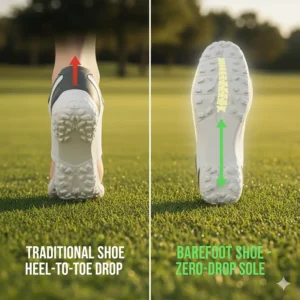
Let me break down what “zero drop” actually means, because this term gets thrown around a lot in barefoot circles. Simply put, zero drop means the heel and forefoot sit at exactly the same height from the ground. Traditional golf shoes typically have 8-15mm of heel elevation, which tilts your body forward and affects your posture.
When you wear zero drop golf shoes, your body maintains its natural alignment. Your weight distributes evenly across your entire foot rather than concentrating on your heels. This natural positioning allows for more efficient energy transfer during your swing, improved balance throughout your stance, and better proprioception (your body’s sense of position in space).
According to research published by the American Podiatric Medical Association, maintaining natural foot position can strengthen the small muscles in your feet and lower legs over time. This isn’t just marketing hype – physical therapists and podiatrists increasingly recognize the benefits of zero-drop footwear for proper biomechanics.
However, zero drop doesn’t mean zero cushioning. That’s a common misconception. Shoes like the TRUE OG Cush prove you can have zero heel-to-toe drop while still providing ample cushioning underfoot. The key is that the cushioning remains level from heel to toe, maintaining that natural foot position.
Barefoot Golf Shoes Features That Matter Most
Wide Toe Box Design
The toe box might be the single most important feature in barefoot golf shoes. Your toes need room to spread naturally, which creates a stable base for your swing. Traditional golf shoes typically squeeze your toes together, which compromises balance and can lead to issues like bunions or hammertoes over time.
Look for shoes that explicitly advertise “wide” or “extra-wide” toe boxes. Even better, check if the manufacturer provides actual measurements. For instance, TRUE Linkswear shoes accommodate up to EEE widths, while Vivobarefoot and Xero Shoes pride themselves on anatomically-shaped toe boxes that follow your foot’s natural contours.
Flexible Sole Construction
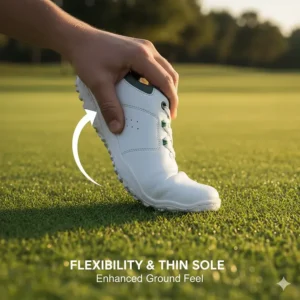
A truly barefoot golf shoe should flex with your foot, not against it. Test this by trying to bend the shoe – if you can fold it in half or twist it side to side easily, that’s a good sign. The sole should be thin enough to feel the ground but durable enough to protect your feet from sharp objects.
Different brands approach flexibility differently. Vivobarefoot uses a 2.5mm base with added lugs, while TRUE typically uses 6-7mm of flexible rubber. Neither approach is inherently better – it depends on your preference for ground feel versus protection.
Traction and Grip Systems
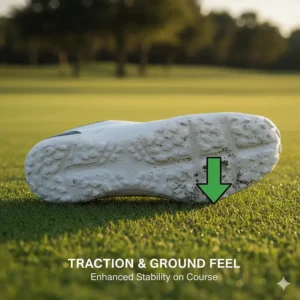
Despite being spikeless, barefoot golf shoes need adequate traction. Look for strategically placed rubber lugs or textured patterns that grip without being overly aggressive. The best designs provide multidirectional traction, meaning they work whether you’re pushing off your front foot or bracing on your back foot.
Xero’s dual chevron pattern, TRUE’s cross-life tread system, and Vivobarefoot’s V-shaped lugs all accomplish this goal through different approaches. Read reviews about performance in wet conditions if you frequently play morning rounds or live in rainy climates.
Barefoot Golf Shoes Materials Guide
Upper Construction Options
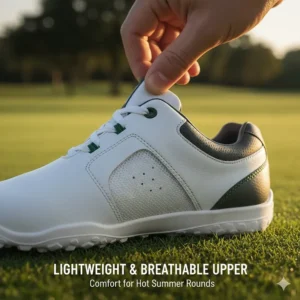
The upper material dramatically affects breathability, durability, and water resistance. Knit uppers, like those on the TRUE OG Feel, offer maximum breathability and flexibility but lack water protection. Leather uppers, found on the Be Lenka Trailwalker and Peluva Apollo, provide better weather resistance and age beautifully, but they’re heavier and less breathable.
Synthetic materials split the difference, offering decent breathability with improved water resistance. Some shoes, like the Vivobarefoot Hybrid, use mixed construction – combining synthetic overlays with mesh panels for the best of both worlds.
Sole Composition Analysis
Most barefoot golf shoes use rubber compounds for the outsole, but the specific formulation matters. Look for mentions of “high-abrasion rubber” or “wear-resistant compounds.” Xero’s FeelTrue rubber, for example, comes with a 5,000-mile warranty because of its exceptional durability.
The midsole (if present) typically uses EVA foam or similar materials. Peluva’s Super Critical EVA foam provides cushioning without excessive weight, while TRUE’s Wanderlux foam balances comfort with ground feel. Be aware that more cushioning means less ground feedback, so consider your priorities.
Weather-Resistant Technologies
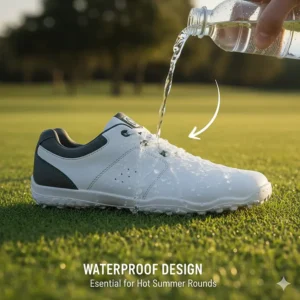
True waterproof construction is rare in barefoot golf shoes because it typically requires membranes that reduce breathability and ground feel. Most barefoot options instead offer water-resistant treatment – basically, coatings that repel water temporarily but won’t handle prolonged exposure.
If you play in frequently wet conditions, look for shoes with treated leather uppers or water-resistant synthetic materials. Just remember that “water-resistant” means “resistant to water” not “impervious to water.” Even the best water-resistant barefoot shoes will eventually get wet in heavy rain or dewy morning grass.
Barefoot Golf Shoes Sizing: Get It Right the First Time
How Should Barefoot Golf Shoes Fit?
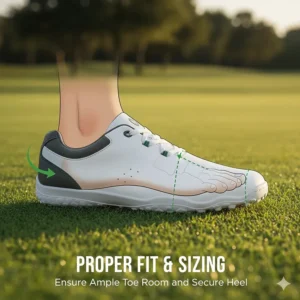
Here’s the golden rule: your toes should have room to spread naturally without touching the front of the shoe. Stand up, put weight on the shoe, and check if you can wiggle your toes freely. There should be about a thumb’s width (12-15mm) between your longest toe and the end of the shoe.
However, the heel and midfoot should fit snugly without being tight. You don’t want your foot sliding around inside the shoe, especially during your golf swing. Many barefoot shoes achieve this through adjustable lacing systems or heel cups that cradle your foot securely.
Do Barefoot Golf Shoes Run Small or Large?
This varies by brand, and honestly, it’s frustrating how inconsistent sizing can be. Based on extensive user feedback:
- TRUE Linkswear: Generally true to size, though some find them slightly narrow in the midfoot
- Vivobarefoot: Often runs small – many users recommend sizing up one full size
- Xero Shoes: Tends to run small, particularly in the Prio model – go up a half size
- Peluva: Recommend ordering a half size larger due to the unique toe-slot design
- Be Lenka: Usually true to European sizing, but check the brand’s measuring guide carefully
When in doubt, size up. According to the National Shoe Retailers Association, it’s easier to add an insole or wear thicker socks than to deal with cramped toes that compromise the entire barefoot experience.
Barefoot Golf Shoes Fit Tighter or Looser?
Barefoot shoes should fit differently than traditional footwear. The toe box should feel spacious – almost weirdly roomy at first – while the midfoot and heel should be secure. This “snug midfoot, roomy toebox” combination is what you’re aiming for.
Don’t make the mistake of buying shoes that feel snug in the toe box thinking they’ll “stretch out.” While some leather shoes do mold to your feet over time, you should never rely on significant stretching. Your foot will naturally spread wider as you transition to barefoot shoes, so err on the side of extra room.
How Tight Should Barefoot Golf Shoes Be?
Think “secure” not “tight.” Your foot shouldn’t slide around, but you also shouldn’t feel any pressure points or squeezing. When you lace up barefoot golf shoes, you’re aiming for a fit that holds your heel in place without constricting your midfoot or forefoot.
Test the fit by doing some practice swings. Your foot should stay planted without shifting, but your toes should move freely. Walk on an incline if possible – your heel shouldn’t slip, and your toes shouldn’t jam forward. If you feel any numbness, tingling, or persistent discomfort, the shoes are too tight.
Many golfers find they need to adjust their lacing technique when switching to barefoot shoes. Try different lacing patterns – some people skip eyelets in the midfoot for more give, while others use heel-lock lacing to improve security.
Breaking In Barefoot Golf Shoes: Your Timeline
How Long Does It Take to Break In Barefoot Golf Shoes?
Here’s the good news: most modern barefoot golf shoes require minimal break-in compared to traditional golf footwear. Shoes like the TRUE OG Cush often feel comfortable right out of the box. However, your feet need time to adapt to the barefoot experience, which is a different consideration entirely.
For the shoes themselves, expect:
- Immediate comfort (0-1 rounds): TRUE OG Cush, Xero Prio, Peluva Apollo
- Brief break-in (1-3 rounds): TRUE OG Feel, Vivobarefoot Hybrid
- Gradual molding (3-5 rounds): Be Lenka Trailwalker, leather models
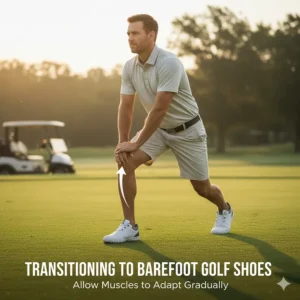
Your feet, however, might need 4-8 weeks to fully strengthen and adapt, especially if you’re coming from heavily cushioned traditional shoes. This isn’t about the shoe breaking in – it’s about your foot muscles, tendons, and proprioceptive system adjusting to natural movement patterns.
How to Transition to Barefoot Golf Shoes Successfully
Start Small and Progress Gradually
Don’t go from traditional golf shoes to 18 holes in barefoot shoes overnight. That’s asking for sore feet, possible injury, and a closet full of expensive shoes you won’t wear. Instead, follow this progression:
Week 1-2: Wear barefoot shoes around the house for 1-2 hours daily. Your feet will start strengthening even during normal activities.
Week 3-4: Graduate to short walks and light activities. Practice your swing on the range wearing barefoot shoes.
Week 5-6: Play 9 holes in barefoot shoes, bringing traditional shoes as backup if needed.
Week 7-8: Attempt your first full 18-hole round in barefoot shoes. Listen to your feet – if they’re getting sore, there’s no shame in switching mid-round.
Strengthening Exercises for Barefoot Golf
Your feet have been living in cushioned prisons for years – they need rehabilitation. Research from the Harvard Medical School suggests that foot strengthening exercises can significantly improve adaptation to minimalist footwear.
Try these exercises:
Toe Spreading: Practice spreading your toes apart without using your hands. Hold for 5 seconds, repeat 10 times daily. This builds the intrinsic foot muscles that maintain stability.
Short Foot Exercise: Try to shorten your foot by drawing the ball of your foot toward your heel while keeping your toes flat. This activates your arch muscles.
Balance Work: Stand on one foot for 30-60 seconds. Progress to closing your eyes or standing on unstable surfaces. Better balance translates directly to better golf.
Calf Raises: Strengthen your calves and Achilles tendons, which take on more load in zero-drop shoes. Start with 3 sets of 10, progress from there.
What Makes a Good Barefoot Golf Shoe?
Essential Vs. Optional Features
Let’s separate must-haves from nice-to-haves. Every quality barefoot golf shoe must include:
✅ Zero or minimal heel-to-toe drop (0-4mm)
✅ Wide toe box for natural toe splay
✅ Flexible sole that moves with your foot
✅ Adequate traction for golf-specific movements
✅ Durable construction for 20+ rounds minimum
Optional features that enhance the experience:
⚡ Water resistance (nice but not critical for dry climates)
⚡ Cushioned midsole (helpful for beginners)
⚡ Removable insoles (allows customization)
⚡ Versatile styling (for wearing off-course)
⚡ Washable construction (keeps shoes fresh)
Don’t get distracted by marketing speak about “revolutionary” technologies. Focus on the fundamentals. A simple shoe that nails the basics will serve you better than a complicated design loaded with gimmicks.
Price vs. Performance Reality Check
You don’t need to spend $200 to get a quality barefoot golf shoe, but you also shouldn’t expect $50 bargain shoes to last more than a few rounds. Based on extensive testing and user feedback, here’s what different price points typically deliver:
$80-120 (Budget tier): Xero Shoes Prio represents the sweet spot here. You sacrifice some golf-specific features but get solid barefoot fundamentals and multi-use versatility.
$130-170 (Mid-range): Most golfers find their perfect match here. TRUE Linkswear, Be Lenka, and Peluva all deliver excellent barefoot experiences with quality construction that’ll last 30-50 rounds.
$170-200+ (Premium tier): You’re paying for specialized features, premium materials, or brand prestige. The performance improvement over mid-range options is marginal for most golfers.
Consider cost-per-round rather than upfront price. A $100 shoe that lasts 20 rounds costs $5 per round. A $170 shoe lasting 50 rounds costs $3.40 per round – actually better value despite the higher initial investment.
Barefoot Golf Shoes Buying Guide: Smart Shopping Strategies
Where to Buy With Confidence
Amazon remains the go-to for most barefoot golf shoe purchases due to Prime shipping, easy returns, and competitive pricing. However, buying directly from manufacturers like TRUE Linkswear or Peluva often gets you:
- Better return policies tailored to barefoot shoes
- Discount codes (TRUE offers “BE15” for 15% off)
- First access to new releases
- Educational resources for transition
Check both sources before buying. Sometimes Amazon has better prices during sales, while manufacturer sites offer perks like extended return windows specifically for barefoot shoe newcomers.
Return Policies and Trial Periods
This matters more with barefoot shoes than traditional footwear because the fit requirements are so specific. Look for:
- 30-day return windows minimum: TRUE, Xero, and Peluva all offer this
- Outdoor trial options: Some brands allow you to wear shoes outside and still return them
- Free return shipping: Factor this into your decision if buying online
European brands like Be Lenka and Vivobarefoot sometimes have stricter international return policies. Read the fine print before ordering from overseas retailers.
Seasonal Considerations and Sales
Barefoot golf shoes don’t follow traditional seasonal patterns as strictly as regular golf equipment, but you can still find deals:
Best buying times:
- January-February: Post-holiday clearance and inventory resets
- July-August: Mid-summer sales to move inventory
- November: Black Friday and Cyber Monday deals
Worst buying times:
- March-April: Peak golf season means full prices
- September-October: New model releases command premium prices
If you’re not picky about colorways, last year’s models often go on significant discount when new versions launch. The performance difference between model years is usually minimal.
Common Barefoot Golf Shoes Mistakes to Avoid
Rushing the Transition
I’ve seen too many golfers get excited about barefoot shoes, order a pair, and immediately head out for 36 holes on a tough walking course. Two days later, they’re dealing with Achilles tendonitis or metatarsal stress fractures, and the shoes end up collecting dust.
Your body needs time to adapt. Period. No shortcuts exist. Even if the shoes feel comfortable immediately, your feet, tendons, and lower leg muscles need gradual exposure to build strength. Follow the transition timeline religiously, even if you think you’re the exception.
Choosing Style Over Function
Sure, that sleek colorway looks amazing, but if the shoe doesn’t fit your foot properly or match your transition stage, it doesn’t matter how good it looks. Function first, fashion second. You can always grow into more minimal shoes as your feet strengthen, but starting with an inappropriate shoe can derail your barefoot journey entirely.
Ignoring Warning Signs
Some discomfort during transition is normal – muscle soreness, slight fatigue. Sharp pain, persistent aches, or any symptoms that worsen over time are warning signs you need to slow down. Listen to your body. Take rest days. Strengthen your feet between golf rounds. Pride isn’t worth an injury that sidelines you for months.
Barefoot Golf Shoes vs Traditional Golf Shoes
| Feature | Barefoot Golf Shoes | Traditional Golf Shoes |
|---|---|---|
| Heel-to-Toe Drop | 0-4mm | 8-15mm |
| Toe Box Width | Extra-wide anatomical | Narrow, tapered |
| Sole Flexibility | Highly flexible | Rigid, structured |
| Ground Feel | Maximum feedback | Minimal feedback |
| Cushioning | Minimal to moderate | High cushioning |
| Weight | 7-11 oz | 12-16 oz |
| Break-in Period | 0-3 rounds | 3-10 rounds |
| Foot Strengthening | Significant | Minimal |
| Versatility | Course to street | Golf-specific |
| Price Range | $100-180 | $80-300 |
The philosophy behind these differences matters. Traditional golf shoes aim to protect and support your feet, essentially doing the work for them. Barefoot golf shoes let your feet function naturally, building strength and improving proprioception over time. Neither approach is objectively “better” – they serve different philosophies and golfer needs.
Maintaining Your Barefoot Golf Shoes for Longevity
Cleaning and Care Essentials
Barefoot golf shoes require minimal maintenance, but a few habits will dramatically extend their lifespan:
After every round:
- Remove loose dirt and grass immediately with a soft brush
- Air dry thoroughly – never store damp shoes in your golf bag
- Loosen laces to help the upper maintain its shape
Weekly cleaning:
- Most mesh and knit models can go in the washing machine on gentle cycle
- Leather shoes need wiping with a damp cloth and occasional conditioning
- Remove and clean insoles separately to prevent odor buildup
Monthly maintenance:
- Check for sole wear patterns – uneven wear might indicate form issues
- Inspect stitching and construction for early signs of failure
- Treat leather shoes with appropriate conditioning products
When to Replace Your Barefoot Golf Shoes
Even quality barefoot golf shoes eventually wear out. According to research published in the Journal of Sports Sciences, most minimalist athletic shoes maintain optimal performance for 300-500 miles of use.
For golfers, this translates roughly to:
- Walking 18 holes 2x weekly: 18-24 months
- Walking 18 holes 1x weekly: 24-36 months
- Riding cart, occasional walking: 36+ months
Replace shoes when you notice:
- Sole wear exposing foot bed material
- Loss of traction on wet grass
- Upper separation from sole
- Significant loss of flexibility
- Persistent discomfort that developed over time
Don’t try to squeeze extra months from worn shoes – the money you save isn’t worth the potential for injury or compromised performance.
Barefoot Golf Shoes for Beginners: Your Starting Point
If you’re brand new to barefoot footwear, start with cushioned options that ease the transition. The TRUE Linkswear OG Cush tops my beginner recommendations because it maintains barefoot principles while providing enough cushioning to prevent foot fatigue.
Alternatively, the Xero Shoes Prio offers an excellent entry point at a budget-friendly price. The included 3mm insole lets you gradually reduce cushioning as your feet strengthen – start with the insole, remove it after 4-6 weeks.
For absolute beginners, I’d actually recommend wearing barefoot casual shoes around the house for 2-3 weeks before buying golf-specific models. This pre-conditions your feet and helps you understand what barefoot footwear feels like without the expense of golf shoes.
Whatever you choose, resist the temptation to jump directly to ultra-minimal options like the Vivobarefoot Hybrid or Be Lenka Trailwalker. These shoes are phenomenal for experienced barefoot users but can be overwhelming for newcomers. Build your foundation first.
FAQ
❓ What is zero drop in golf shoes?
❓ How long does it take to break in barefoot golf shoes?
❓ Do barefoot golf shoes improve your swing?
❓ Can you wear barefoot golf shoes in wet conditions?
❓ Should barefoot golf shoes feel tight?
Conclusion: Making Your Final Barefoot Golf Shoes Decision
Choosing barefoot golf shoes isn’t just about picking footwear – it’s about committing to a different relationship with how your feet interact with the golf course. Whether you’re drawn to the improved balance, the natural movement patterns, or simply the curiosity about what golf feels like with maximum ground connection, there’s never been a better time to make the switch.
If I had to distill everything into actionable advice, here’s what matters most: Start with appropriate cushioning for your experience level (TRUE OG Cush for beginners, TRUE OG Feel for experienced barefoot users). Prioritize proper fit over every other consideration – your toe box must be genuinely wide, not just “wide for a golf shoe.” Finally, respect the transition process. Your body needs time to adapt, and rushing this process creates problems that can derail your barefoot journey.
The models I’ve highlighted represent the best options available in 2025, each excelling in specific areas. Budget-conscious golfers can’t go wrong with the Xero Shoes Prio at $100. Those seeking maximum ground feel will love the Vivobarefoot Hybrid Golf. And if you want that perfect balance of barefoot benefits with beginner-friendly cushioning, the TRUE Linkswear OG Cush remains the gold standard.
Remember, barefoot golf shoes aren’t magical. They won’t instantly drop five strokes from your handicap or cure all your swing faults. What they will do is let your feet function the way they’re designed to function, building strength, improving balance, and creating a more natural connection to the course beneath you. For many golfers, that connection transforms not just how they play, but how they experience the game itself.
🎯 Transform Your Golf Game Today!
✨ Don’t wait to experience the barefoot golf revolution. Click on your preferred shoe model above to check current Amazon prices and availability. Most models ship Prime with free returns, so there’s zero risk in trying them out. Your feet – and your scorecard – will thank you! 🏌️⛳
Recommended for You
- Barefoot Golf Shoes for Wide Feet: 7 Best Picks (2025)
- Barefoot vs Traditional Golf Shoes: 7 Best Game-Changers
- Barefoot Golf Shoes Women: 7 Best Options That Transform Your Game
Disclaimer: This article contains affiliate links. If you purchase products through these links, we may earn a small commission at no additional cost to you.
✨ Found this helpful? Share it with your friends! 💬🤗
