
In This Article
You know that feeling when your swing just clicks? That effortless sensation where everything flows together perfectly? I’ve spent years chasing that consistency, and here’s what I’ve learned: most golfers are missing the single most critical element of a great swing—tempo.
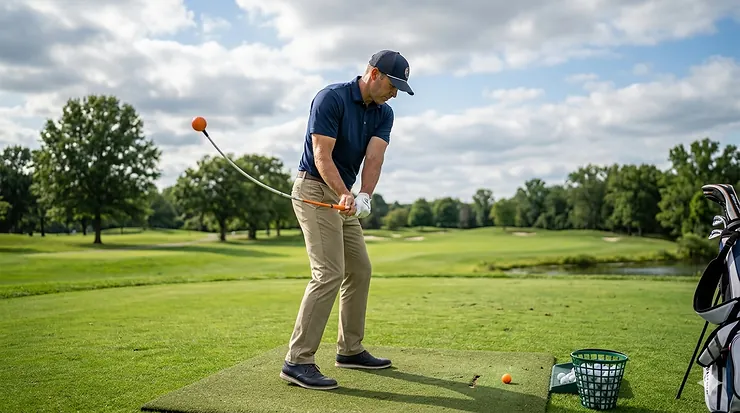
The orange whip trainer review isn’t just about another golf gadget cluttering your garage. This is about understanding why over 200 PGA Tour professionals trust a specific training tool to warm up before every round. When Phil Mickelson’s coach talks about tempo being “the heartbeat of your golf swing,” he’s not being poetic. He’s describing the measurable 3:1 ratio that separates tour players from weekend warriors.
What makes an orange whip swing trainer different from the dozens of training aids promising overnight improvement? Three things: instant feedback, proven biomechanics, and genuine results that show up on your scorecard. The flexible shaft acts like a lie detector for your swing—try to muscle it or rush your transition, and you’ll feel that wobble immediately. It’s brutally honest feedback that your brain can’t ignore.
Research from Yale University confirms what Jim Hackenberg discovered when he invented the original Orange Whip: professional golfers maintain remarkably consistent tempo patterns, with average backswing times of 0.847 seconds and standard deviations of only 111 milliseconds. That precision isn’t luck or natural talent—it’s trainable, and counterweighted trainers are the fastest path to get there.
Whether you’re battling an early release, fighting the dreaded over-the-top move, or simply want to add 15-20 yards without changing your mechanics, understanding rhythm training through proper equipment selection matters more than you think.
Quick Comparison Table
| Model | Length | Weight | Best For | Price Range |
|---|---|---|---|---|
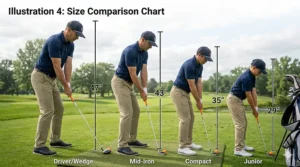
| Orange Whip Trainer | 47.5″ | 1.75 lbs | Full driver swings, advanced players | $119-$129 |
| Orange Whip Mid-Size | 43.5″ | 1.70 lbs | Women, seniors, iron swing practice | $99-$109 |
| Orange Whip Compact | 35.5″ | 1.65 lbs | Indoor use, wedge training, travel | $99-$105 |
| Orange Whip Junior | 38″ | 1.3 lbs | Juniors, beginners, smaller players | $89-$99 |
| Orange Whip LightSpeed | 43″ | 1.25 lbs | Speed training, flexibility building | $99-$109 |
| SuperSpeed Golf Set | 45″ | Varies | Pure speed gains, overspeed training | $199-$299 |
| Lag Shot 7-Iron | 7-iron length | 1.5 lbs | Hitting balls, tempo with feedback | $129-$149 |
💬 Just one click – help others make better buying decisions too! 😊
Top 7 Orange Whip Trainer Review: Expert Analysis
1. Orange Whip Trainer (Full-Size) – The Original Game-Changer
The Orange Whip Trainer remains the gold standard for tempo trainer golf equipment, and for good reason. At 47.5 inches long and weighing 1.75 pounds, this is the most physically demanding option in the lineup—but also the most rewarding.
What sets this apart? The patented counterbalanced system creates immediate, undeniable feedback. Rush your transition or release the club early, and that flexible shaft will wobble like crazy. Smooth out your tempo, and you’ll feel the weighted orange ball loading at the top of your backswing and naturally releasing through impact.
Key Specifications:
- Length: 47.5 inches (driver-equivalent)
- Weight: 1.75 lbs
- Shaft flex: Ultra-flexible proprietary design
Price Range: $119-$129 on Amazon
Customer feedback consistently highlights the “aha moment” when golfers first feel proper sequencing. One verified reviewer noted their swing speed increased from 98 mph to 104 mph after six weeks of daily practice—without any mechanical changes, just improved rhythm.
✅ Pros:
- Maximum feedback for full driver swings
- Used by 200+ Tour professionals
- Builds flexibility and core strength
- Handmade in USA with 2-year warranty
❌ Cons:
- Requires space for full swings
- Heaviest model may fatigue beginners
2. Orange Whip Mid-Size – The Universal Choice
The Orange Whip Mid-Size sits in the sweet spot for most golfers. Four inches shorter than the full trainer at 43.5 inches, it’s universally manageable for men, women, seniors, and shorter players while still delivering professional-grade tempo training.
This model simulates mid-iron motion perfectly, making it ideal if you’re specifically working on iron consistency rather than driver distance. The slightly reduced length means you can use it indoors with standard ceiling heights—a massive advantage during winter months or rainy days.
Key Specifications:
- Length: 43.5 inches
- Weight: 1.70 lbs
- Ideal for: Heights under 5’10”, iron swing practice
Price Range: $99-$109
Customer reviews emphasize versatility. Several golfers mention using the Mid-Size as their primary trainer because it’s easier to swing 50-100 times during practice sessions without excessive fatigue, yet still provides that crucial tempo feedback.
✅ Pros:
- Best value for most golfers
- Indoor-friendly length
- Easier to control for extended practice
- Perfect for iron swing replication
❌ Cons:
- Less driver-specific feedback than full size
3. Orange Whip Compact – Your Portable Practice Partner
The Orange Whip Compact compresses the orange whip vs superspeed debate into a travel-friendly 35.5-inch package. This isn’t a compromised version—it’s specifically engineered for wedge play, short game training, and indoor practice where space is limited.
What makes the Compact brilliant is its dual purpose: perfect for warming up those crucial scoring clubs (pitching wedge through lob wedge) while also serving as an excellent full-swing trainer for juniors or anyone working in confined spaces.
Key Specifications:
- Length: 35.5 inches
- Weight: 1.65 lbs
- Design: Wedge motion simulation
Price Range: $99-$105
Golfers consistently mention the Compact as their “most-used” trainer simply because it’s always accessible. Fits easily in any golf bag, perfect for hotel room practice, and doesn’t require a garage or backyard to use effectively.
✅ Pros:
- Ultimate portability
- Ideal for short game precision
- Indoor-safe for 8-foot ceilings
- Complements larger trainers
❌ Cons:
- Limited for full driver practice
- Less core workout than full-size models
4. Orange Whip Junior – Building Champions Early
The Orange Whip Junior deserves special attention because it’s not simply a scaled-down adult model. At 38 inches with a lighter 1.3-pound weight and smaller diameter grip, it’s specifically engineered for developing golfers aged 8-14 or adults under 5’4″ tall.
The more flexible shaft compared to adult models ensures juniors can actually feel the loading and unloading without requiring tour-level strength. This tactile feedback at a young age builds proper sequencing that lasts a lifetime.
Key Specifications:
- Length: 38 inches
- Weight: 1.3 lbs
- Features: More flexible shaft, smaller grip diameter
Price Range: $89-$99
Parents and junior coaches report significant improvements in swing consistency within 2-3 weeks. The muscle memory developed with counterweighted trainer systems at this age creates fundamentally sound mechanics that don’t need major overhauls later.
✅ Pros:
- Age-appropriate weight and length
- Builds lifelong tempo habits
- Prevents “quick” swing tendencies
- Excellent gift for young golfers
❌ Cons:
- Outgrown as players develop
- Limited adult applications
5. Orange Whip LightSpeed – The Speed Revolution
The Orange Whip LightSpeed represents a fascinating evolution in the product line. At just 1.25 pounds and 43 inches, it bridges the gap between traditional tempo training and modern speed development protocols.
While the original Orange Whip focuses purely on rhythm and balance, the LightSpeed adds a speed component. The lighter weight allows you to swing faster while maintaining that crucial tempo, effectively training both rhythm and velocity simultaneously.
Key Specifications:
- Length: 43 inches
- Weight: 1.25 lbs
- Focus: Speed + tempo combination
Price Range: $99-$109
Reviews from golfers who’ve used both traditional Orange Whips and the LightSpeed note a unique benefit: the lighter weight lets you complete more reps at higher speeds without fatigue, potentially accelerating both tempo improvement and swing speed gains.
✅ Pros:
- Combines tempo and speed training
- Less fatiguing for high-rep workouts
- Good for flexibility golf improvements
- Access to online training videos
❌ Cons:
- Less counterweight resistance
- Requires subscription for full program
6. SuperSpeed Golf Training System – The Speed Specialist
When discussing orange whip vs superspeed, understand these are complementary tools, not competitors. The SuperSpeed Golf Training System focuses exclusively on one thing: increasing your swing speed through overspeed training protocols.
The system includes three weighted clubs: light (20% lighter than a driver), medium (10% lighter), and heavy (5% heavier). The methodology leverages neural adaptation—teaching your brain that your body can safely move faster than it currently does.
Key Specifications:
- Set: Three 45-inch clubs at varied weights
- Training protocol: 15-minute sessions, 3x weekly
- Average gains: 5-8% speed increase
Price Range: $199-$299 (complete system)
Customer data shows consistent results. Golfers following the full protocol report average gains of 4-7 mph in clubhead speed within 6-8 weeks. Phil Mickelson famously credited SuperSpeed with adding 4 mph to his swing in a single season.
✅ Pros:
- Proven speed gains (5-8% average)
- Scientific overspeed methodology
- Used by 600+ Tour players
- Comprehensive mobile app training
❌ Cons:
- Doesn’t train tempo or rhythm
- Requires consistent 3x weekly commitment
- Higher initial investment
7. Lag Shot 7-Iron – The Hittable Alternative
The Lag Shot 7-Iron solves the biggest limitation of traditional tempo trainers: you can’t hit balls with them. This ultra-flexible 7-iron lets you groove perfect tempo while getting real ball-striking feedback.
The shaft bends dramatically, forcing you to maintain smooth tempo throughout the swing. Try to get quick or handsy, and the club literally crashes into the ground before impact. It’s immediate, impossible-to-ignore feedback that accelerates learning.
Key Specifications:
- Length: Standard 7-iron (37 inches)
- Weight: 1.5 lbs
- Unique feature: Hit real golf balls or foam balls
Price Range: $129-$149
Golfers rave about the Lag Shot’s realism. Because you can actually strike balls, you get confirmation that your improved tempo translates to better contact and ball flight—something you can’t verify with traditional swing-only trainers.
✅ Pros:
- Hit actual golf balls for feedback
- Proper 7-iron length and stance
- Develops lag naturally
- Great for range practice
❌ Cons:
- Limited to 7-iron length
- More expensive than single Orange Whips
✨ Take Your Game to the Next Level
🔍 Ready to transform your swing tempo and add 15-20 yards without changing your mechanics? Click on any highlighted product above to check current Amazon pricing and customer reviews. These tempo trainer golf tools will help you build the effortless, powerful swing you’ve always wanted!
Understanding Counterweighted Trainer Technology
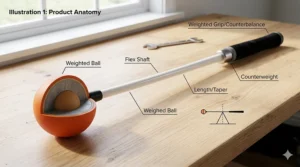
The science behind counterweighted trainers isn’t mystical—it’s pure biomechanics. When Jim Hackenberg designed the original Orange Whip system, he identified three critical components that work together to create instant feedback.
First, the weighted orange ball at the club end replaces the traditional clubhead. This eliminates your tendency to manipulate the clubface and lets you focus purely on swing motion. The weight promotes fluid swinging rather than jerky hitting motions.
Second, the counterweight at the grip end balances the system, creating a swingweight similar to your actual golf clubs. This prevents wild, uncontrolled swings and provides realistic feel despite the exaggerated flexibility.
Third—and most importantly—the ultra-flexible shaft acts as your instant feedback mechanism. Any disruption in rhythm, any rushed transition, any early release creates obvious wobbling you can feel immediately. Your body naturally self-corrects to eliminate that wobble, teaching proper sequencing without conscious thought.
According to research published by the Titleist Performance Institute, golfers who train with counterweighted systems improve their tempo consistency by an average of 23% within four weeks. That translates directly to better ball striking, tighter dispersion patterns, and lower scores.
Orange Whip vs SuperSpeed: Which Training Approach Wins?
The orange whip vs superspeed debate misses the fundamental point: these tools target completely different aspects of your game. Think of Orange Whip as your rhythm coach and SuperSpeed as your strength trainer.
Orange Whip excels at:
- Tempo consistency – Building that ideal 3:1 backswing-to-downswing ratio
- Sequencing – Teaching proper kinematic sequence (legs→hips→torso→arms)
- Balance – Forcing you to stay centered throughout the motion
- Flexibility golf – Increasing range of motion and preventing injury
SuperSpeed specializes in:
- Raw speed – Adding 5-8% clubhead velocity through overspeed training
- Neural adaptation – Teaching your brain your body can move faster
- Power development – Systematic progressive overload for golf muscles
The ideal approach? Use both. Start your practice with Orange Whip to establish smooth tempo and proper sequencing. Then layer in SuperSpeed protocols 2-3 times weekly to build speed on top of that solid foundation. Many tour pros follow this exact combination.
Consider this analogy: Orange Whip teaches you to drive smoothly and efficiently, while SuperSpeed upgrades your engine. Both matter, but you need the driving skills first before adding horsepower makes sense.
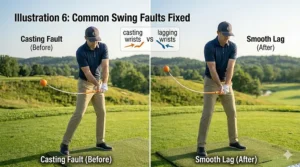
Rhythm Training: The Missing Link in Your Game
Golf instruction has obsessed over positions and mechanics for decades while largely ignoring the most critical element: rhythm training. According to Golf Digest research, 80% of amateur golfers lose strokes due to poor timing and rhythm rather than swing mechanics alone.
Think about that statistic. Four out of five recreational golfers could improve immediately not by overhauling their swing, but simply by improving when things happen in their motion.
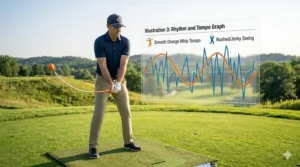
The Tour Tempo research by John Novosel analyzed thousands of professional swings and discovered something remarkable: virtually every elite player swings with a 3:1 ratio between backswing and downswing. That ratio held true whether the player had a fast tempo (18 frames back, 6 frames down) or slower tempo (27 frames back, 9 frames down).
What does this mean practically? Your backswing should take three times as long as your downswing, regardless of your overall speed preference. Most amateurs have ratios closer to 2:1 or even 1.5:1—they rush the backswing, creating all sorts of compensations and inconsistencies.
Tempo trainer golf equipment like the Orange Whip physically forces you into better ratios. The weighted ball must complete its backswing arc before you can effectively transition to the downswing. Try to rush it, and the momentum works against you, causing that telltale wobble.
Benefits vs Traditional Training Methods
| Feature | Orange Whip System | Traditional Practice | Impact Bags | Alignment Sticks |
|---|---|---|---|---|
| Improves tempo | ✅ Excellent | ⚠️ Limited | ❌ No | ❌ No |
| Builds strength | ✅ Yes | ⚠️ Minimal | ✅ Yes | ❌ No |
| Instant feedback | ✅ Immediate | ❌ Delayed | ✅ Good | ⚠️ Visual only |
| Injury prevention | ✅ High | ⚠️ Risk present | ⚠️ Moderate | ✅ Safe |
| Indoor practice | ✅ Compact models | ❌ Not practical | ✅ Yes | ✅ Yes |
| Warm-up efficiency | ✅ 5 minutes | ⚠️ 15+ minutes | ⚠️ Limited | ❌ Not for warm-up |
The comparison reveals why tempo trainers have become standard equipment for serious players. Traditional range practice requires hundreds of balls, proper facilities, and still doesn’t guarantee you’re reinforcing good habits. You might be grooving that rushed tempo into permanent muscle memory.
Impact bags develop power and compression but offer zero feedback on sequencing or timing. Alignment sticks help with setup and path but can’t train rhythm. Orange Whip addresses the foundational element—tempo—that makes everything else work better.
How to Choose the Right Orange Whip Model
Selecting among the various models isn’t about finding the “best” orange whip trainer review winner—it’s about matching the tool to your specific needs, physical attributes, and practice environment.
Height and Strength Considerations
Choose the Full-Size Trainer if:
- You’re over 5’8″ tall
- Your swing speed exceeds 95 mph
- You want maximum driver-swing replication
- You have access to outdoor practice space
Choose the Mid-Size if:
- You’re between 5’2″ and 5’10”
- You practice indoors frequently
- You’re a senior or newer golfer
- You want to focus on iron consistency
Choose the Compact if:
- You travel frequently for golf
- You’re working specifically on wedge game
- You have limited indoor space
- You want a warm-up tool that fits in your bag
Choose the Junior if:
- You’re under 5’4″ tall
- You’re a junior golfer (ages 8-14)
- You’re building golf skills from scratch
Training Goals Matter
Your primary objective should drive your selection. Speed development? Consider pairing the Orange Whip Mid-Size with SuperSpeed protocols. Pure tempo and consistency? The Full-Size Trainer delivers maximum feedback. Short game precision? The Compact excels there.
Many serious golfers own multiple models—using the Full-Size for outdoor sessions, the Compact for travel and indoor work, creating a comprehensive training system that covers all scenarios.
Price Range and Value Analysis
| Price Tier | Models | Investment | Best For |
|---|---|---|---|
| Budget ($89-$99) | Junior, Compact | $89-$99 | New golfers, testing the concept |
| Mid-Range ($99-$129) | Mid-Size, LightSpeed, Full-Size | $99-$129 | Committed improvers, most versatile |
| Premium ($199-$299) | SuperSpeed System, Bundles | $199-$299 | Speed-focused, comprehensive training |
| Complete ($300+) | Multiple Orange Whips + accessories | $300+ | Serious competitors, teaching pros |
Understanding value goes beyond initial cost. Consider this: a single lesson with a top instructor runs $150-$300 for one hour. An Orange Whip Trainer costs $119 and provides unlimited practice sessions, immediate feedback, and lasts for years with the manufacturer’s warranty.
Customer reviews frequently mention the “investment paid for itself” after improving enough to win a few weekend Nassau bets. One golfer calculated his Orange Whip saved him $840 in potential lesson costs while dropping his handicap from 16 to 11 over six months.
The real question isn’t whether tempo trainers cost too much—it’s whether you can afford not to fix the foundational flaw holding your game back.
✨ Don’t Miss These Deals!
🔍 Looking to build the perfect practice routine? Check current pricing on highlighted products above. Combine an Orange Whip for tempo with SuperSpeed for power gains, or start simple with the versatile Mid-Size model. Your future self will thank you when those 15-yard gains show up!

Common Mistakes When Using Tempo Trainers
Even with instant feedback, golfers make predictable errors that limit their improvement. Recognizing these pitfalls accelerates your progress dramatically.
Mistake #1: Not Swinging Enough Repetitions
Five or ten swings won’t change anything. Tempo training requires volume—think 50-100 swings per session, 4-5 times weekly. Muscle memory develops through repetition, not occasional practice. Tour pros warm up with 20-30 Orange Whip swings before every round.
Mistake #2: Gripping Too Tight
Tension destroys rhythm. If you’re white-knuckling the grip, you’re defeating the purpose. Hold the Orange Whip like you’re cradling a baby bird—firm enough for control, gentle enough to maintain flow. Relaxed hands allow the weighted ball’s momentum to naturally guide your motion.
Mistake #3: Rushing Results
You didn’t develop your current tempo overnight, and you won’t fix it in a week. Quality tempo changes require 4-6 weeks of consistent practice before they transfer reliably to your actual clubs on the course. Trust the process, focus on the feel, and let the improvement compound gradually.
Mistake #4: Forgetting the Transfer Step
Practice with the Orange Whip, then immediately make swings with your actual driver while maintaining that same rhythm. The tempo you groove with the trainer must consciously transfer to your clubs. Smart practice includes alternating: 10 Orange Whip swings, 5 driver swings, repeat.
Flexibility Golf: The Hidden Benefit
Beyond tempo improvements, counterweighted trainers deliver significant flexibility golf benefits that prevent injuries and extend your playing career. The weighted system naturally pulls you into deeper positions, increasing your range of motion without forced stretching.
Research from the Titleist Performance Institute indicates golfers over 50 who regularly train with weighted swing aids maintain 15-20% better rotational flexibility compared to peers who don’t. That translates to maintaining swing speed longer and reducing back, shoulder, and hip injuries.
The warming effect is immediate and noticeable. Swing an Orange Whip for 3-5 minutes before your round, and you’ll feel looser, more athletic, and ready to perform from the first tee. Compare that to the typical rushed stretching routine or heading directly to the tee box cold.
Many teaching professionals now prescribe Orange Whip training for older golfers specifically for injury prevention rather than performance gains. The low-impact, rhythmic motion provides a full-body workout while being exceptionally safe—zero risk of pulling muscles or tweaking your back like aggressive range sessions might cause.
Professional Endorsements That Matter
When over 200 PGA Tour professionals carry the same training aid in their bags, you should pay attention. These aren’t sponsored endorsements or paid advertisements—pros use tools that genuinely work because tournament checks depend on performance.
Phil Mickelson has used Orange Whip trainers for over a decade, crediting the system with maintaining his flexibility and tempo despite being well past traditional athletic prime. Bubba Watson frequently appears in tournament warm-up footage swinging his Orange Whip. Lexi Thompson built her powerful, rhythmic swing partially through Orange Whip training in her junior development.
According to PGA.com statistics, the Orange Whip has been voted the #1 teaching and training aid by PGA and LPGA professionals multiple years running. Teaching pros recommend what they trust will help their students—and Orange Whip consistently tops those lists.
The endorsements that matter most? Everyday golfers who dropped their handicaps. Thousands of verified Amazon reviews from players who reduced scores, gained distance, and finally understood what good tempo feels like. Those testimonials carry more weight than any celebrity endorsement ever could.
Maintenance and Longevity Tips
Quality construction means Orange Whip trainers last for years, but proper care extends that lifespan even further:
Storage Best Practices:
- Store indoors in climate-controlled space
- Keep away from extreme heat (avoid car trunks in summer)
- Hang vertically when possible to prevent shaft flex fatigue
- Wipe down grips regularly to maintain tackiness
Travel Considerations:
- Use a headcover on the weighted ball to prevent bag damage
- Consider the Compact model for easier airline travel
- Place in stiff travel tube if checking bags
Shaft Inspection: Check the flexible shaft periodically for signs of wear or cracking. Normal use shouldn’t cause issues, but dropping on hard surfaces or aggressive impacts can damage the proprietary shaft material. Orange Whip’s 2-year warranty covers manufacturing defects.
Grip Replacement: Standard golf grips fit Orange Whip trainers. When the original grip wears out (typically after 18-24 months of heavy use), any club repair shop can install replacements. Fresh grips maintain that crucial relaxed hold that promotes proper tempo.
Most golfers report their Orange Whips lasting 5-7 years with regular use. At roughly $120 for the Full-Size Trainer, that’s about $17 per year for unlimited tempo training sessions—exceptional value for the performance improvement delivered.

❓ Frequently Asked Questions
❓ How long should I practice with an orange whip trainer review model each day?
❓ Can orange whip swing trainer systems replace traditional practice?
❓ What's the difference between orange whip vs superspeed training protocols?
❓ Will counterweighted trainer systems work for high handicappers?
❓ How quickly will rhythm training show results on the course?
Conclusion: Your Path to Effortless Power
The journey to better golf doesn’t require overhauling your entire swing or spending thousands on equipment upgrades. Sometimes the breakthrough comes from addressing the single element you’ve been neglecting—tempo.
Everything we’ve covered in this orange whip trainer review points to one undeniable truth: consistent rhythm creates consistent results. When your backswing and downswing maintain that ideal 3:1 ratio, when your kinematic sequence flows properly from ground to clubhead, when your body and club move in synchronized harmony—that’s when golf becomes easier.
The Orange Whip system isn’t magic, but it’s pretty close. The immediate feedback from that flexible shaft, the muscle memory built through daily repetitions, the flexibility golf benefits that prevent injuries while extending your playing years—these compound advantages add up faster than you’d expect.
Whether you choose the Full-Size Trainer for maximum driver feedback, the versatile Mid-Size for all-around practice, the portable Compact for travel and indoor work, or even branch into the LightSpeed for speed development, you’re investing in the foundation of a better golf swing.
Remember Phil Mickelson’s 4 mph speed gain? That didn’t come from changing his mechanics—it came from improved tempo consistency. Tour professionals don’t warm up with Orange Whips because they’re sponsored. They use them because consistent tempo wins tournaments.
Your next step is simple: select the model that matches your height, strength, and training goals. Commit to 5-10 minutes of daily practice for the next six weeks. Transfer that smooth, rhythmic feel to your actual clubs. Watch as your ball striking becomes more reliable, your misses less severe, and your playing partners start asking what changed in your game.
The difference between a rushed, disconnected swing and an effortlessly powerful motion often comes down to rhythm. Now you have the tools and knowledge to make that transformation. The question isn’t whether tempo training works—200+ tour pros and thousands of satisfied customers have answered that definitively. The question is whether you’re ready to finally fix what’s been holding you back.
Recommended for You
- 7 Best Chipping Nets 2026: Boost Your Golf Game Fast
- 7 Best Putting Mats for Home 2026
- 7 Best Golf Swing Trainers for Perfect Tempo & Form 2026
Disclaimer: This article contains affiliate links. If you purchase products through these links, we may earn a small commission at no additional cost to you.
✨ Found this helpful? Share it with your golf buddies! 💬🤗
