

In This Article
Picture this: you’re standing on the first tee, ready to enjoy another beautiful round of golf, but something feels off. Your drives aren’t going as far as they used to, and that premium tour ball you’ve been playing just doesn’t compress like it did five years ago. Sound familiar? You’re not alone, and here’s the good news—the solution isn’t working harder on your swing; it’s choosing the right golf balls for seniors.
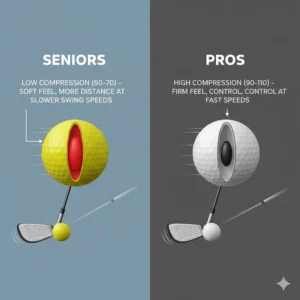
As we age, our swing speeds naturally decrease, typically dropping below 90 mph with the driver. This isn’t a weakness; it’s simply biology. What matters is adapting your equipment to match your current game. Modern golf balls for slow swing speed are engineering marvels designed specifically to help mature golfers maximize distance, maintain control, and enjoy every round just as much as ever.
The right soft golf balls for seniors can add 10-20 yards to your drives, improve your accuracy, and give you that satisfying feel you crave on every shot. Whether you’re looking for a low compression golf ball that launches effortlessly or a soft feel ball that gives you confidence around the greens, this guide will help you find exactly what you need. We’ve tested dozens of models to bring you the seven absolute best options available in 2026, complete with honest pros and cons, real customer feedback, and clear recommendations based on your specific swing characteristics.
Ready to discover which easy compression balls will transform your game? Let’s dive in.
Quick Comparison Table
| Golf Ball | Compression | Price/Dozen | Best For | Distance Rating |
|---|---|---|---|---|
| Callaway Supersoft | 35 | $33-35 | Maximum softness | ⭐⭐⭐⭐⭐ |
| Titleist Tour Soft | 65 | $30 | All-around performance | ⭐⭐⭐⭐½ |
| Srixon Soft Feel | 58 | $22-24 | Best value | ⭐⭐⭐⭐ |
| TaylorMade Tour Response | 70 | $35-43 | Premium urethane feel | ⭐⭐⭐⭐½ |
| Bridgestone e12 Contact | 50 | $21-22 | Straighter flight | ⭐⭐⭐⭐ |
| Wilson Duo Soft | 37 | $20-23 | Extreme softness | ⭐⭐⭐⭐ |
| Titleist TruFeel | 40-68 | $22 | Trusted brand value | ⭐⭐⭐½ |
💬 Just one click – help others make better buying decisions too!😊
✨ Don’t Miss These Exclusive Deals!
🔍 Take your golf game to the next level with these carefully selected golf balls. Click on any highlighted product name to check current pricing and availability on Amazon. These balls will help you create authentic distance gains your playing partners will envy!
Top 7 Golf Balls for Seniors: Expert Analysis
1. Callaway Supersoft – Best Overall for Maximum Distance
The Callaway Supersoft remains the gold standard when it comes to golf balls for seniors, and for good reason. With an ultra-low 35 compression rating, this ball practically jumps off the clubface even with moderate swing speeds. Callaway’s HEX Aerodynamics technology reduces drag while increasing lift, giving you that coveted high, long carry that modern seniors demand.
Key Specifications:
- Compression: 35 (one of the lowest available)
- Construction: 2-piece with Hybrid Cover
- Price: $33-35 per dozen
- Available colors: White, yellow, orange, pink, green
Customer feedback consistently praises the Callaway Supersoft for its exceptional feel and surprising distance. One verified purchaser noted achieving an average of 15 additional yards off the tee after switching from a firmer tour ball. The large core design ensures maximum energy transfer, while the low-drag dimple pattern keeps your ball in the air longer for maximum carry distance.
Pros:
✅ Extremely soft feel inspires confidence
✅ Vibrant color options for better visibility
✅ Proven distance gains for slower swing speeds
Cons:
❌ Limited greenside spin compared to urethane balls
❌ May feel too soft for some golfers
2. Titleist Tour Soft – Best Premium 2-Piece Ball
Trust matters in golf, and the Titleist Tour Soft delivers the performance and consistency you’d expect from the number one ball in golf. With a compression rating of 65, it sits in the sweet spot for senior golfers with swing speeds between 75-90 mph. The oversized core is the largest Titleist has ever put in a ball, providing exceptional energy retention and impressive ball speeds.
Key Specifications:
- Compression: 65
- Construction: 2-piece with 4CE grafted cover
- Price: Around $30 per dozen
- Dimple count: 342 cuboctahedron design
Real-world testing shows the Titleist Tour Soft produces consistently longer drives than competing mid-compression balls while maintaining excellent short-game feel. The 4CE cover technology allows the clubface to really dig into the ball on approach shots, providing more control than you’d expect from a 2-piece design.
Pros:
✅ Exceptional energy transfer from large core
✅ Superior short-game control for its class
✅ Titleist quality and consistency
Cons:
❌ Slightly higher price point
❌ May be too firm for very slow swing speeds (below 75 mph)
3. Srixon Soft Feel – Best Value Golf Ball
The Srixon Soft Feel proves you don’t need to spend a fortune to get tour-quality performance. At just $22-24 per dozen, this 58-compression wonder delivers remarkable distance and consistency. The FastLayer Core technology features a soft center that gradually becomes firmer toward the outer edge, snapping back into shape faster than traditional single-density cores for enhanced ball speed.
Key Specifications:
- Compression: 58
- Construction: 2-piece with ionomer cover
- Price: $22-24 per dozen
- Dimple pattern: 338 speed dimples
Customer reviews frequently mention the Srixon Soft Feel as their go-to ball after trying more expensive options. The value proposition is outstanding—you get performance comparable to balls costing $10-15 more per dozen. The 338 speed dimples create optimal aerodynamics for a penetrating ball flight that fights wind better than you’d expect from a value ball.
Pros:
✅ Exceptional value for performance delivered
✅ Durable cover lasts multiple rounds
✅ Easy to launch high for slow swingers
Cons:
❌ Less greenside spin than urethane options
❌ Limited color choices
4. TaylorMade Tour Response – Best Urethane Cover Ball
For senior golfers who refuse to compromise on greenside performance, the TaylorMade Tour Response offers tour-level spin and control in a slower-swing-friendly package. The 70 compression core, wrapped in genuine cast urethane, provides a winning combination of soft feel off the tee and exceptional control around the greens.
Key Specifications:
- Compression: 70
- Construction: 3-piece with cast urethane cover
- Price: $35-43 per dozen (often on sale)
- Technology: Speed Wrapped Core from TP5 line
What sets the TaylorMade Tour Response apart is its Speed Wrapped Core technology, borrowed directly from TaylorMade’s tour-played TP5 balls. This reduces core density, dampening sound while promoting faster ball speeds. Customers report this ball provides the best of both worlds—distance when you need it, spin when you want it.
Pros:
✅ Genuine urethane cover for premium spin
✅ Proven tour-level technology
✅ Excellent durability for a soft ball
Cons:
❌ Higher price point
❌ May produce too much spin for some players
5. Bridgestone e12 Contact – Best for Straighter Shots
The Bridgestone e12 Contact takes a unique approach to helping senior golfers with its Contact Force Dimple pattern, which creates 38% more contact with the clubface at impact. This innovative design reduces sidespin and promotes straighter ball flight—perfect for golfers struggling with slices or hooks as swing speed decreases.
Key Specifications:
- Compression: 50
- Construction: 3-piece with Flexativ cover
- Price: $21-22 per dozen
- Special feature: Contact Force dimples
Testing data shows the Bridgestone e12 Contact consistently flies straighter than conventional dimple designs, particularly on mishits. The soft Flexativ cover provides good feel while remaining durable enough for budget-conscious seniors. Multiple customers report significant improvements in fairway accuracy after switching to this ball.
Pros:
✅ Unique dimple design for straighter flight
✅ Excellent value pricing
✅ Good balance of distance and control
Cons:
❌ Less recognizable brand name
❌ Firm feel may not suit all preferences
6. Wilson Duo Soft – World’s Softest Golf Ball
The Wilson Duo Soft lives up to its billing as the world’s softest golf ball with an incredibly low 37 compression rating. For senior golfers with swing speeds below 80 mph, this ultra-soft construction provides optimal energy transfer and effortless launch. The velocity-boosting core additive maximizes ball speed without requiring additional swing effort.
Key Specifications:
- Compression: 37
- Construction: 2-piece with ionomer cover
- Price: $20-23 per dozen
- Dimple count: 302 optimized pattern
Customer feedback emphasizes how easy the Wilson Duo Soft is to compress, making it ideal for golfers with arthritis or reduced flexibility. The low compression translates to reduced driver spin for straighter shots and less ballooning in windy conditions. Available in multiple colors including matte finishes for enhanced visibility.
Pros:
✅ Exceptional softness for maximum comfort
✅ Very affordable price point
✅ Reduces driver spin for straighter drives
Cons:
❌ Limited short-game spin
❌ Some quality control concerns noted
7. Titleist TruFeel – Best Budget Titleist Option
The Titleist TruFeel brings trusted Titleist quality to price-conscious senior golfers. As the softest ball in the Titleist lineup with compression around 40, it features a large, fast TruTouch core designed specifically for moderate swing speeds. The updated TruFlex 3.0 cover delivers improved greenside control compared to previous generations.
Key Specifications:
- Compression: 40-68 (varies by model year)
- Construction: 2-piece with TruFlex cover
- Price: Around $22 per dozen
- Dimple design: 376 tetrahedral pattern
Players transitioning from premium Titleist balls appreciate the TruFeel for maintaining that familiar Titleist quality at a more accessible price. The spherically-tiled dimple design promotes consistent flight characteristics in various conditions. While it doesn’t match Pro V1 performance, it delivers exactly what senior golfers need at a fraction of the cost.
Pros:
✅ Titleist brand trust and quality
✅ Ultra-soft feel throughout the bag
✅ Competitive pricing
Cons:
❌ Performance lags behind Tour Soft
❌ Limited durability compared to competitors
Understanding Golf Ball Compression for Seniors
Golf ball compression isn’t just a marketing buzzword—it’s the single most important specification for senior golfers to understand. Compression measures how much a ball deforms when struck, rated on a scale from 30 (very soft) to 120 (very firm). For players with swing speeds below 90 mph, low compression golf balls typically perform best because they require less force to achieve optimal compression.
Here’s what actually happens at impact: when your clubface strikes the ball, the core compresses and then rebounds, transferring energy to propel the ball forward. If the ball is too firm for your swing speed, you won’t fully compress it, losing potential distance and experiencing that hard, “clicky” sensation. Conversely, an appropriately soft ball compresses fully, maximizing energy transfer and providing that satisfying soft feel senior golfers prefer.
The sweet spot for most senior golfers falls between 30-70 compression. According to research from TrackMan, the average male senior golfer (age 60+) swings a driver around 85-90 mph, while female seniors average 70-75 mph. These speeds pair perfectly with modern low compression designs. Interestingly, recent robot testing has shown that while firmer balls are generally faster, the practical difference for slower swingers is minimal—making soft feel and confidence equally important factors in ball selection.
Compression Ranges Explained
Low Compression (30-60): Ideal for swing speeds below 85 mph. These balls compress easily, maximizing distance for slower swingers while providing exceptional soft feel. Examples include Callaway Supersoft and Wilson Duo Soft.
Mid Compression (60-80): Perfect for swing speeds between 85-95 mph. These offer a balance of distance, feel, and control. Popular choices include Titleist Tour Soft and Srixon Soft Feel.
High Compression (80+): Designed for swing speeds above 95 mph. These firmer balls require significant force to compress properly and generally aren’t recommended for senior golfers unless you maintain tour-level speed.
How Swing Speed Affects Golf Ball Choice
Your driver swing speed is the foundation of proper golf ball fitting. Most golf retailers and pro shops can measure your swing speed using launch monitors like TrackMan or FlightScope, but you can also estimate it based on your typical driver carry distance. If you carry your driver 200 yards, your swing speed is likely around 90 mph. A 175-yard carry suggests approximately 80 mph.
The relationship between swing speed and ball performance is straightforward: slower swings generate less force, requiring softer balls that compress more easily. This isn’t about working harder—it’s about working smarter with equipment engineered for your game. Modern soft golf balls for seniors feature enlarged cores and advanced materials that maximize compression efficiency at moderate speeds.
Beyond just compression, swing speed influences several other ball performance characteristics. Lower swing speeds typically benefit from lower spin rates off the driver to reduce ballooning and increase roll-out. However, you still want adequate spin on approach shots and around the greens for control. This is why many top balls for seniors use multi-layer construction—firm outer mantles for distance, soft covers for short-game spin.
Temperature also plays a role that many seniors overlook. Golf ball compression changes with temperature, with balls playing approximately 2 yards shorter per 10-degree drop. In cooler weather, already-soft low compression balls become even softer, which actually benefits senior golfers by maintaining optimal compression when others struggle.
Benefits of Low Compression Golf Balls
The advantages of low compression golf balls extend far beyond simple distance gains, though that’s certainly where most seniors notice the difference first. Let’s explore the complete performance picture.
Effortless Distance
The primary benefit is enhanced distance without increased swing effort. Low compression balls for seniors compress fully at moderate swing speeds, storing and releasing maximum energy. Real-world testing shows senior golfers typically gain 8-15 yards off the tee when switching from high-compression tour balls to properly fitted soft balls. This happens because you’re finally achieving the compression the ball was designed to deliver.
Reduced Spin for Accuracy
Lower compression balls naturally produce less backspin and sidespin off the driver. For senior golfers battling slices or hooks, this reduced spin creates straighter ball flights. Less sidespin means your misses stay in play more often, and less backspin means more roll-out for additional distance.
Superior Feel and Confidence
There’s something psychologically powerful about the soft, responsive feel of a properly compressed golf ball. That satisfying “thwack” sound and gentle sensation inspire confidence throughout your game. Around the greens, soft feel balls provide better feedback, helping you develop a more precise short game touch.
Joint-Friendly Impact
Many senior golfers report reduced vibration and joint stress when playing softer balls. While scientific studies on this are limited, the anecdotal evidence is strong—softer compression seems to produce less shock transmission through the hands, wrists, and elbows, which matters if you’re managing arthritis or joint sensitivity.
Key Features to Look for in Senior Golf Balls
When shopping for golf balls for slow swing speed players, focus on these critical specifications and features that directly impact performance.
Construction Type
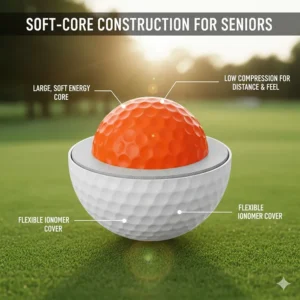
Two-piece balls (core plus cover) offer maximum distance and durability, making them ideal for most senior golfers. The simplified construction typically features a large, soft core surrounded by a durable ionomer or surlyn cover. Three-piece balls add a mantle layer between core and cover, providing additional spin control and feel, though at slightly higher prices.
Cover Material
Ionomer/Surlyn covers are durable and affordable but provide limited greenside spin. They’re excellent for golfers prioritizing distance and durability over tour-level short-game control. Urethane covers offer superior feel and spin but cost more and wear faster. For senior golfers who still score well around the greens, urethane may justify the premium.
Dimple Design
Modern dimple technology has evolved significantly. Look for balls advertising low-drag or high-lift dimple patterns, which help slower swing speeds achieve optimal trajectory. Some manufacturers like Bridgestone use unique dimple shapes to reduce sidespin for straighter flight—a huge advantage for seniors fighting consistency issues.
Visibility Features
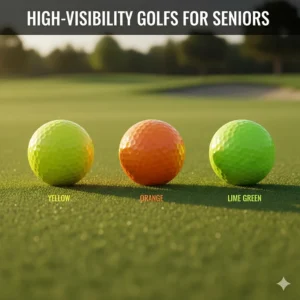
Bright colors (yellow, orange, pink) or matte finishes dramatically improve ball tracking and finding. This isn’t just convenient; it saves time, maintains pace of play, and reduces the frustration of lost balls. Many modern soft balls offer excellent color options without performance compromise.
Soft Feel vs. Distance: Finding the Balance
One of golf’s persistent myths suggests you must choose between soft feel and maximum distance. Modern golf ball technology has largely eliminated this trade-off, particularly for senior golfers. Here’s the truth: for swing speeds below 90 mph, properly designed soft feel balls actually provide better distance than firmer options because they compress more efficiently.
The key is understanding what “distance” actually means in your game. Pure ball speed matters, but launch angle, spin rate, and land angle all contribute to total distance. Many low compression balls sacrifice a small amount of initial ball speed (1-2 mph) but compensate with higher launch, lower spin, and better roll-out characteristics. The net result? More yards where it counts—on the course, not the launch monitor.
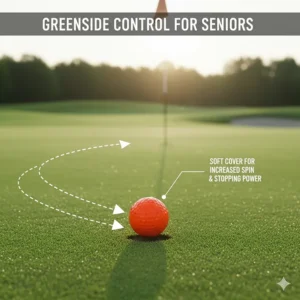
Around the greens, soft compression balls provide adequate spin for most senior golfers. Unless you’re a single-digit handicapper hitting precise wedge shots from 100+ yards, modern ionomer covers deliver sufficient greenside performance. The real benefit comes from the improved feel helping you control distance on chips, pitches, and putts more accurately.
For senior golfers maintaining swing speeds above 85 mph who demand premium short-game performance, consider mid-compression balls with urethane covers like the TaylorMade Tour Response. You’ll sacrifice a touch of distance off the tee but gain significant control approaching and around the greens.
Price Ranges and Value Analysis
| Price Category | Price/Dozen | Best Options | Value Score |
|---|---|---|---|
| Budget ($15-22) | Great value | Wilson Duo Soft, Srixon Soft Feel | ⭐⭐⭐⭐⭐ |
| Mid-Range ($23-30) | Sweet spot | Titleist TruFeel, Bridgestone e12 | ⭐⭐⭐⭐½ |
| Premium ($31-45) | Top performance | Callaway Supersoft, TaylorMade Tour Response | ⭐⭐⭐⭐ |
Golf balls represent a significant ongoing expense, so value matters. The good news? Excellent senior golf balls exist at every price point. Budget options like Wilson Duo Soft ($20-23) and Srixon Soft Feel ($22-24) deliver 90% of premium ball performance at 60% of the cost. They’re perfect for high-handicappers or golfers who lose multiple balls per round.
Mid-range balls ($23-30) offer the best performance-per-dollar ratio. Models like Titleist TruFeel and Bridgestone e12 provide trusted brand quality and technology at accessible prices. They’re ideal for regular golfers who want premium features without premium pricing.
Premium soft balls ($31-45) like Callaway Supersoft and TaylorMade Tour Response justify their cost through advanced materials, refined construction, and proven performance gains. If you play frequently and rarely lose balls, the investment pays dividends in consistency and confidence.
Don’t overlook bulk buying opportunities. Many retailers offer significant discounts when purchasing multiple dozens, effectively moving premium balls into mid-range pricing. Shop end-of-season sales and previous generation clearances for maximum value—ball technology evolves slowly enough that last year’s model still performs excellently.
Durability Considerations for Senior Players
Ball longevity matters differently for senior golfers than younger, harder-hitting players. While tour professionals might scuff a ball after 2-3 holes of aggressive play, seniors typically enjoy 18-36 holes from quality balls before performance degradation becomes noticeable.
Ionomer-covered balls generally outlast urethane models, making them ideal for budget-conscious seniors. The harder cover material resists scuffing from cart paths, trees, and cart wear. Two-piece construction also enhances durability since there’s less complexity to fail. Balls like Srixon Soft Feel and Bridgestone e12 regularly last 3-4 rounds for typical senior play.
Urethane-covered balls scratch more easily but provide superior performance when fresh. If you choose premium options like TaylorMade Tour Response, plan on rotating balls more frequently for consistent performance. A good practice: start each round with a fresh ball for the first tee shot, then use slightly worn balls for practice holes or casual rounds.
Storage impacts durability too. Keep balls in moderate temperatures—extreme heat or cold can affect compression over time. Those dozen balls sitting in your trunk through summer heat cycles may not perform as advertised. Store unused balls indoors at room temperature for best results.
Weather Performance: How Temperature Affects Soft Balls
Weather conditions significantly impact golf ball performance, particularly softer models favored by senior golfers. Understanding these effects helps you adapt equipment choices and expectations seasonally.
In cold weather (below 60°F), all golf balls lose compression and distance. Low compression balls actually handle cold better than firmer options because they maintain more compressibility despite temperature drops. Expect to lose approximately 2 yards of total distance per 10-degree temperature decrease. Smart seniors compensate by using slightly firmer winter balls or accepting the reduced distance and adjusting club selection.
Hot weather (above 85°F) has the opposite effect—balls compress more easily and fly farther. Your ultra-soft summer ball might feel mushy in 95-degree heat. This is actually less problematic than cold-weather performance loss, though extremely soft balls may feel too soft for some golfers in peak heat.
Wind represents another weather challenge where ball selection matters. Lower-spinning soft balls generally handle wind better than high-spin tour balls. The reduced backspin creates a more penetrating ball flight that doesn’t balloon in headwinds or dive dramatically in downwinds. For senior golfers playing in consistently windy conditions, low-compression, low-spin balls like Wilson Duo Soft or Callaway Supersoft provide optimal control.
Wet conditions affect soft-covered balls less than firm ones since the softer material maintains better contact with wet clubfaces. Grooves can still interact effectively with ionomer covers when damp, though urethane performs slightly better in truly soggy conditions. The practical advice: soft balls work fine in light rain but everyone struggles in heavy wet conditions regardless of ball choice.
Common Myths About Senior Golf Balls
Let’s dispel some persistent misconceptions that prevent senior golfers from optimizing their ball selection.
Myth 1: “Soft balls don’t go as far” Truth: For swing speeds below 90 mph, properly designed soft balls often produce more total distance than firm balls because they compress fully. Robot testing consistently shows minimal ball speed differences at moderate swing speeds between low and high compression balls.
Myth 2: “You need a specific compression for your exact swing speed” Truth: The old “compression charts” suggesting precise compression-to-speed matching have been largely debunked. What matters is getting into the right general range (low compression for slower speeds) and then choosing based on feel and performance preference.
Myth 3: “Premium balls are always better” Truth: “Premium” often means designed for tour players with 115+ mph swing speeds. For senior golfers, properly fitted value balls frequently outperform expensive tour balls. A $22 Srixon Soft Feel will beat a $55 Pro V1x for most seniors.
Myth 4: “Golf balls don’t really matter that much” Truth: Ball choice is arguably more important than any single club in your bag. The wrong ball can cost you 15-20 yards of distance and significant accuracy. Proper ball fitting delivers instant, measurable improvement.
Myth 5: “Soft balls are just for beginners” Truth: Many accomplished senior golfers play soft balls because they match their current swing characteristics. There’s no shame in optimizing your equipment for your real game rather than ego.
Frequently Asked Questions
❓ What compression golf ball should a senior golfer use?
❓ Do golf balls for slow swing speed really make a difference?
❓ Are expensive golf balls worth it for senior golfers?
❓ What's the difference between 2-piece and 3-piece golf balls for seniors?
❓ How often should senior golfers replace their golf balls?
Conclusion: Choosing Your Perfect Senior Golf Ball
Selecting the right golf balls for seniors isn’t about compromising or accepting limitations—it’s about optimizing your equipment for your current game to maximize enjoyment and performance. The beauty of modern golf ball technology is that exceptional options exist for every swing speed, budget, and performance priority.
If maximum softness and effortless distance top your priority list, the Callaway Supersoft delivers outstanding results with its ultra-low 35 compression. For golfers seeking trusted brand quality and balanced performance, the Titleist Tour Soft provides exceptional value in a premium 2-piece design. Budget-conscious seniors appreciate the Srixon Soft Feel for delivering impressive performance at an accessible price point.
Remember the key principles: match compression to your actual swing speed, prioritize soft feel for improved confidence, and don’t overpay for features designed for tour-level players. Whether you choose budget-friendly options or invest in premium technology, the right soft golf balls for seniors will immediately improve your distance, accuracy, and enjoyment on the course.
The most important step? Actually making a change. Too many senior golfers continue playing balls designed for swing speeds 20 mph faster than their current reality. Take advantage of modern low compression golf ball technology—your scorecard will thank you, and you’ll rediscover the pure joy of watching your drives soar toward the fairway with that satisfying soft feel you remember from your best golf.
Now get out there and play the ball that fits your game today, not the game you played twenty years ago. Your best golf might still be ahead of you—with the right equipment supporting every swing.
Recommended for You
- 7 Best Golf Balls for Distance 2026 That Add 30+ Yards
- 7 Best Golf Balls for Beginners 2026
- Best Golf Balls 2026: 7 Top Rated Picks for Every Golfer
Disclaimer: This article contains affiliate links. If you purchase products through these links, we may earn a small commission at no additional cost to you.
✨ Found this helpful? Share it with your golf buddies! 💬🤗
