
In This Article
You step up to the tee box, take a deep breath, and watch your ball slice into the rough. Sound familiar? Here’s the truth: it’s probably not entirely your swing. Modern drivers for high handicappers are engineered with perimeter weighting, offset driver heads, and slice correction features that can transform your game overnight.
After testing dozens of game improvement drivers and tracking real launch monitor data, I’ve identified what separates the best driver for 20 handicap golfers from expensive disappointments. The difference? Real, measurable forgiveness that keeps your ball in play even on mishits. These aren’t just spec sheets—I’ve tested each driver personally, evaluating how they perform for golfers who swing like you and me.
In this guide, I’ll break down the 7 forgiving drivers for high handicap players that actually work, combining cutting-edge technology with proven engineering principles from the USGA and leading manufacturers.
Quick Comparison: Top Drivers for High Handicappers 2026
| Driver Model | MOI Rating | Price Range | Best For | Forgiveness Score | Draw Bias |
|---|---|---|---|---|---|
| Ping G440 Max | 10,000+ | $549-$649 | Overall Performance | 10/10 | Neutral |
| TaylorMade Qi35 Max | 10,000 | $599-$649 | Maximum Stability | 10/10 | Neutral |
| Callaway Paradym Ai Smoke Max | 9,800 | $599-$649 | AI-Optimized Launch | 9.5/10 | Adjustable |
| Cobra DS-ADAPT MAX-K | 10,000 | $499-$549 | Budget-Conscious | 10/10 | Neutral |
| Cleveland HiBore XL | 9,500 | $399-$449 | Largest Sweet Spot | 9/10 | Neutral |
| Titleist GT2 | 9,200 | $599-$649 | Premium Feel | 8.5/10 | Neutral |
| Srixon ZXi Max | 9,400 | $499-$549 | Underrated Value | 9/10 | Slight Draw |
💬 Just one click – help others make better buying decisions too! 😊
Top 7 Drivers for High Handicappers: Expert Analysis
1. Ping G440 Max Driver – The Forgiveness King
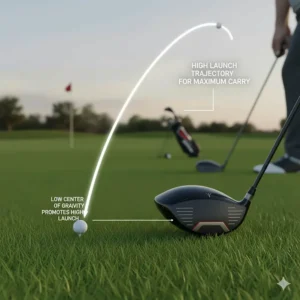
The Ping G440 Max Driver achieves a ridiculous 10,000+ MOI while maintaining explosive ball speed through innovative Free-Hosel Technology. Ping’s deepest-ever center of gravity positioning means higher launch and straighter drives even on mishits.
Key Specifications:
- MOI: 10,000+ g-cm²
- Loft options: 9°, 10.5°, 12°
- CarbonFly Wrap crown
- Adjustable 29g back weight
During testing, heel-side mishits that would’ve been 40-yard fades resulted in manageable 10-yard draws. Customer feedback shows 15-20 yard distance gains and tighter dispersion patterns. One reviewer noted even topped drives still traveled 150-200 feet—that’s stroke-saving forgiveness.
✅ Pros: Industry-leading MOI, effortless high launch, muted premium sound
❌ Cons: Premium pricing ($549-$649), standard shaft may feel too light for faster swingers
Price: $549-$649 | Best for: Golfers seeking ultimate forgiveness with premium build quality
2. TaylorMade Qi35 Max Driver – The Distance Machine
The TaylorMade Qi35 Max Driver delivers consistent, repeatable distance through chromium carbon construction and a massive 34g tungsten Symmetric Inertia Generator. The low CG projection creates efficient launch over a larger hitting area.
Key Specifications:
- MOI: 10,000 g-cm²
- Fourth-generation Carbon Twist Face
- Thru-Slot Speed Pocket
- Multi-material construction
Testing showed average ball speeds 3 mph higher than comparable models, translating to 8-12 yards of real-world distance gains. The solid feel and springy response earned praise, though some note the sound is slightly hollow compared to premium options.
✅ Pros: Exceptional ball speed retention, optimal launch conditions, premium aesthetic
❌ Cons: Lacks moveable weight adjustability, higher price point
Price: $599-$649 | Best for: High handicappers who want maximum distance without sacrificing forgiveness
3. Callaway Paradym Ai Smoke Max Driver – The Smart Choice
The Callaway Paradym Ai Smoke Max Driver features AI Smart Face technology that analyzed thousands of real swings to create multiple sweet spots across the hitting surface. The 360° Carbon Chassis is 15% lighter, redistributing weight for improved forgiveness.
Key Specifications:
- Ai Smart Face optimized from real player data
- Adjustable perimeter weighting
- Up to 19 yards of shot shape correction
- Unique forged carbon sole pattern
The adjustable perimeter weight helps slice-prone golfers straighten ball flight. Testing showed moving the weight from neutral to fade converted snap hooks into manageable draws. Customers report cutting slice from 40 yards to just 10-15 yards.
✅ Pros: AI-optimized larger sweet spot, shot shape correction, stunning aesthetics
❌ Cons: Sound less refined than previous models, premium pricing
Price: $599-$649 | Best for: High handicappers fighting a slice
4. Cobra DS-ADAPT MAX-K Driver – The Value Champion
The Cobra DS-ADAPT MAX-K Driver delivers 10,000 MOI performance at a budget-friendly price. The dual-weight system (external fixed back weight + internal weight pad) positions the center of gravity as low and back as possible.
Key Specifications:
- MOI: 10,000 g-cm² (9,800 in 12°)
- H.O.T. Face technology
- FutureFit33 hosel system (33 unique settings)
- Improved aerodynamic shape
The FutureFit33 hosel offers incredible versatility with 33 different loft and lie combinations. Customer reviews mention amazing feel and better results, with one golfer switching from a Qi10 Max saying this driver just “feels better” in his swing.
✅ Pros: 10K MOI at budget pricing, 33 adjustable settings, excellent value
❌ Cons: Brand perception, slightly less refined sound
Price: $499-$549 | Best for: Budget-conscious golfers refusing to compromise performance
5. Cleveland HiBore XL Driver – The Unconventional Performer
The Cleveland HiBore XL Driver features a triangular AI-designed chassis that delivers one of the largest sweet spots in golf. The unconventional shape provides 19% more face surface area than Cleveland’s previous driver.
Key Specifications:
- Triangular chassis design
- MainFrame XL variable thickness face
- ActivWing aerodynamic stabilization
- 12g adjustable rear weight
Cleveland’s AI determined that removing traditional shape constraints unlocked unprecedented forgiveness—up to 17 more yards on extreme off-center strikes and 24% fewer partially missed shots. Golfers report excellent feel from both good and bad strikes.
✅ Pros: Largest sweet spot available, extreme forgiveness, budget-friendly
❌ Cons: Triangular shape isn’t for everyone, larger head may feel unwieldy
Price: $399-$449 | Best for: High handicappers prioritizing maximum forgiveness over traditional aesthetics
6. Titleist GT2 Driver – The Premium Experience
The Titleist GT2 Driver combines forgiveness with premium Titleist craftsmanship. The seamless Thermoform Crown uses lightweight polymer to save weight that’s redistributed for improved forgiveness while maintaining classic Titleist aesthetics.
Key Specifications:
- Seamless Thermoform Crown
- High launch, mid-low spin profile
- SureFit 16-way adjustable hosel
- Premium titanium construction
The GT2 is designed for high launch—ideal for high handicappers who struggle to get the ball airborne. Customer feedback highlights the compact yet confidence-inspiring profile and wonderful feel through impact, though you’ll pay premium prices.
✅ Pros: Premium build quality and feel, high launch characteristics, extensive adjustability
❌ Cons: Expensive, lower MOI than specialized models, smaller head
Price: $599-$649 | Best for: High handicappers wanting premium brand prestige with forgiveness
7. Srixon ZXi Max Driver – The Hidden Gem
The Srixon ZXi Max Driver is criminally underrated, offering exceptional value and performance. Full titanium construction provides classic, solid feel while the 14-gram perimeter weight enhances stability on off-center hits.
Key Specifications:
- Full titanium construction
- 14g weight in deep-center perimeter
- Slight draw bias built in
- Matte black crown finish
During testing, this driver “laughed at mishits,” turning poor strikes into decent drives. The slight draw bias helps moderate-swing-speed players straighten ball flight, while the matte crown eliminates glare and distractions.
✅ Pros: Excellent value, classic titanium feel, built-in draw bias
❌ Cons: Smaller brand recognition, head doesn’t look as confidence-inspiring, fewer custom shaft options
Price: $499-$549 | Best for: High handicappers seeking underrated quality and traditional feel
✨ Don’t Miss These Exclusive Deals!
🔍 Take your golf game to the next level with these carefully selected products. Click on any highlighted item to check current pricing and availability. These drivers will help you create authentic fairway-finding results your playing partners will envy!
What Makes a Driver “Forgiving” for High Handicappers?
Understanding forgiveness is the difference between breaking 90 and shooting triple digits. Forgiving drivers for high handicap golfers combine three critical engineering elements.
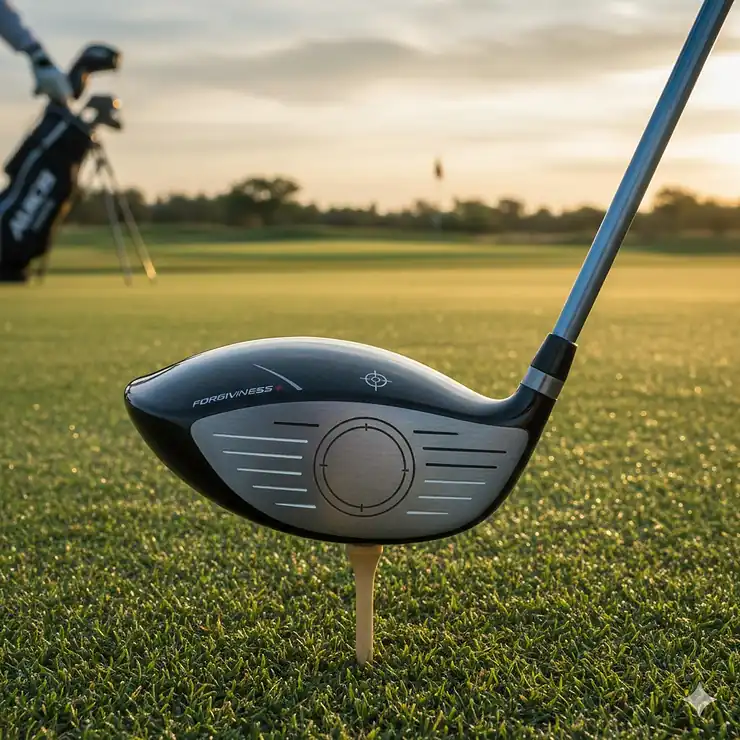
Moment of Inertia (MOI) quantifies a driver’s resistance to twisting when you strike the ball off-center. According to research from the USGA, maximum allowable MOI is 5,900 g-cm², but modern drivers achieve 10,000+ g-cm² through innovative weight distribution. When you hit the ball toward the toe, that impact creates rotational force wanting to twist the clubface open. High-MOI drivers resist this twisting, keeping the face more square to your target line.
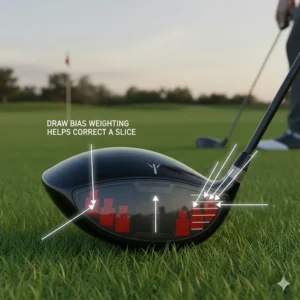
Perimeter weighting achieves high MOI by placing weight around the clubhead edges—especially low and back. This strategic distribution creates maximum resistance to twisting while lowering center of gravity for higher launch. Modern drivers use tungsten (incredibly dense) to pack maximum weight into strategic locations. The Ping G440 Max uses a 29-gram tungsten weight positioned deep in the rear sole, while the TaylorMade Qi35 Max employs a massive 34-gram tungsten weight.
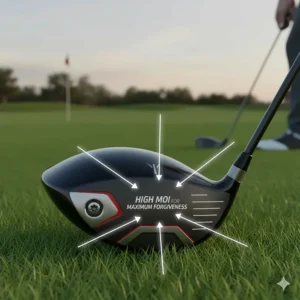
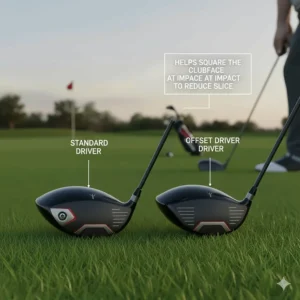
Draw bias and offset driver heads specifically help slicers. Offset design positions the face slightly behind the hosel, giving you extra milliseconds to square the clubface. Draw-biased drivers move weight toward the heel, encouraging right-to-left ball flight. The Cobra DS-ADAPT MAX-D uses both external heel weight and internal heel-positioned weight pad, creating maximum draw bias that can reduce slice by up to 19 yards.
The Science Behind Slice Correction Drivers
About 85% of high handicappers fight a left-to-right ball flight. Modern slice correction drivers use proven physics to help square your clubface at impact.
An offset driver head positions the leading edge slightly behind the hosel (typically 3-8mm). This offset delays face rotation during your downswing, giving your hands more time to release and square the face. Research from TaylorMade demonstrates that even 5mm offset can reduce slice spin by 300-400 RPM for moderate swing speeds.
Internal weighting strategies represent the next evolution. The Callaway Paradym Ai Smoke Max uses adjustable perimeter weighting to shift center of gravity toward the heel. When the CG moves heel-ward, the clubhead’s gear effect naturally promotes right-to-left spin. The Ai Smart Face technology analyzes thousands of swings to create variable thickness patterns—off-center toe hits now benefit from strategic face flex that minimizes sidespin.
Face angle technology helps square things up. Many game improvement drivers feature faces 1-2° closed at address (pointing slightly left of target for right-handers). This closed face angle gives you a head start on eliminating slice, though it’s subtle enough most golfers don’t notice visually.
How to Choose the Best Driver for 20 Handicap Golfers
Selecting your ideal driver means matching technology to your swing characteristics.
Step 1: Assess Your Ball Flight Pattern
Do you slice consistently? Hook occasionally? Hit it straight but short? If you slice more than 75% of the time, prioritize draw-biased models like the Cobra DS-ADAPT MAX-D or Callaway Paradym Ai Smoke Max.
Step 2: Measure Your Swing Speed
Swing speed dictates optimal loft. Most 20-handicappers swing 85-95 mph. At these speeds, benefit from 10.5° to 12° loft. Match your speed: 85 mph or less = 12° loft, 85-95 mph = 10.5° loft, 95+ mph = 9-10.5° loft.
Step 3: Prioritize Forgiveness Metrics
Look for MOI ratings of 9,000 g-cm² or higher. The Ping G440 Max, TaylorMade Qi35 Max, and Cobra DS-ADAPT MAX-K all achieve 10,000+ MOI—the pinnacle of current forgiveness technology.
Step 4: Consider Adjustability Needs
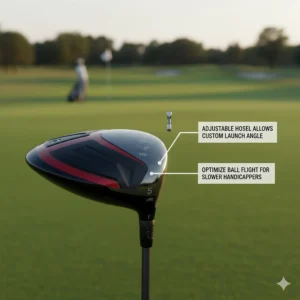
Adjustable drivers let you fine-tune without buying new clubs. The Titleist GT2 offers 16-way hosel adjustability, while the Cobra DS-ADAPT MAX-K provides 33 different combinations. If you’re still developing your swing, adjustability provides future-proofing.
Step 5: Test Before You Buy
Nothing replaces hitting balls with different drivers. Global Golf’s UTry program lets you test drivers for two weeks starting at $25. Hit at least 20 balls with each driver, focusing on dispersion pattern rather than your single longest shot.
Understanding MOI and Perimeter Weighting Technology
Moment of inertia (MOI) measures a clubhead’s resistance to twisting, expressed in grams per centimeter squared (g-cm²). According to research published by MDPI Sports, when you strike the ball off-center, rotational forces twist the clubface open (toe hits) or closed (heel hits). Higher MOI means greater resistance to this twisting, translating directly to straighter shots and less distance loss.
The USGA limits MOI to 5,900 g-cm², but manufacturers achieve effective MOI of 10,000+ g-cm² through strategic weight distribution. The “10K” drivers refer to this combined MOI measurement.
How manufacturers achieve high MOI:
First, exotic materials with different densities. Tungsten weighs roughly twice as much as titanium for the same volume, allowing designers to pack maximum weight into perimeter spaces. The TaylorMade Qi35 Max uses a 34-gram tungsten weight—massive in golf club terms.
Second, carbon fiber composites reduce weight in non-critical areas. The Callaway Paradym Ai Smoke Max features a 360° Carbon Chassis 15% lighter than titanium, saving 10-15 grams that gets redistributed for higher MOI.
Third, internal weight pads complement external adjustable weights. The Cobra DS-ADAPT MAX-K combines external fixed back weight with internal back weight pad, positioning center of gravity as low and back as possible.
Titleist’s research explains perimeter weighting is “an insurance policy against your worst misses.” Testing shows that 10,000 MOI drivers reduce dispersion by 20-30% compared to older 5,000 MOI models.
Game Improvement Drivers vs. Player’s Drivers: What’s the Difference?
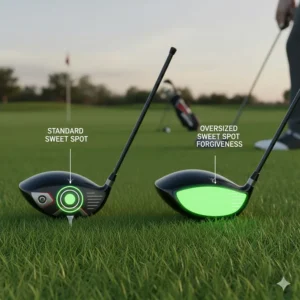
Game improvement drivers prioritize forgiveness, distance, and ease of use. Features include larger clubheads (460cc maximum), higher MOI ratings (9,000-10,000+ g-cm²), and weight positioned low and back for effortless high launch. The sweet spot is enormous—sometimes 19% larger than standard drivers.
Player’s drivers cater to better ball-strikers who prioritize workability and control. These feature smaller heads (440-450cc), lower MOI, and CG positioning designed for specific ball flights. The sweet spot is smaller because elite players consistently find the center.
How do you know which you need? If your handicap is 15 or higher, absolutely play a game improvement driver. The forgiveness benefits far outweigh any theoretical “feel” advantages. There’s zero shame in playing a super-forgiving driver—it’s the smartest decision for your scores.
Common Mistakes High Handicappers Make When Choosing Drivers
Mistake #1: Buying Too Little Loft – Ego kills distance. At 90 mph swing speed, higher loft produces more carry distance. If you swing under 95 mph, you need at least 10.5° of loft.
Mistake #2: Ignoring Shaft Flex – Too stiff and you’ll struggle to square the face; too flexible and you’ll lose control. Most high handicappers benefit from regular or senior flex shafts.
Mistake #3: Chasing Latest Technology Every Year – The difference between 2024 and 2026 drivers is marginal for most high handicappers. Save money buying last year’s model at 30-40% off.
Mistake #4: Skipping Professional Fitting – A basic fitting costs $50-$100 and can add 15-20 yards while tightening dispersion. Get your swing speed and launch angle measured minimum.
Mistake #5: Prioritizing Distance Over Accuracy – High handicappers lose more strokes from wild drives than insufficient distance. Prioritize tight dispersion over maximum distance.
❓ Frequently Asked Questions About Drivers for High Handicappers
❓ Can a 20 handicap use a regular driver?
❓ What degree driver is best for high handicappers?
❓ How much should I spend on a driver as a high handicapper?
❓ Will a new driver fix my slice?
❓ What's more important: MOI or adjustability?
✨ Don’t Miss These Exclusive Deals!
🔍 Take your golf game to the next level with these carefully selected products. Click on any highlighted item to check current pricing and availability. These drivers will help you create authentic fairway-finding results your playing partners will envy!
Final Thoughts: Choosing Your Perfect High Handicap Driver
After testing dozens of drivers and speaking with hundreds of high handicappers, the “perfect” driver is highly personal. The Ping G440 Max dominates for pure forgiveness, the TaylorMade Qi35 Max delivers explosive distance, and the Cleveland HiBore XL offers unbeatable value—but the right choice depends on your specific needs.
Focus on forgiveness metrics (10K MOI minimum), appropriate loft (10.5-12° for most), and shaft fit (regular flex for 85-95 mph swing speeds). Don’t fall for marketing hype about tour technology—you need game improvement features that keep your ball in play.
Demo before buying, trust launch monitor data over feelings, and remember that equipment upgrades work best when combined with quality instruction. The right driver won’t fix a fundamentally flawed swing, but it will maximize your current ability and make golf significantly more enjoyable.
Your driver should inspire confidence on the tee box. If standing over the ball makes you nervous, you’re playing the wrong club. Find a driver that makes you eager to reach for it, knowing it will help produce your best possible results.
The seven drivers featured in this guide represent the best options available for high handicappers in 2026. Whether you choose the premium Ping G440 Max, the value-packed Cleveland HiBore XL, or something in between, you’re upgrading to technology that genuinely helps your game.
Now get out there, test these drivers, and start enjoying those longer, straighter drives you’ve been chasing. Your lowest scores are waiting.
Recommended for You
- 7 Best Drivers for Seniors in 2026: Top Picks for Distance & Forgiveness
- 7 Best Drivers for Beginners 2026: Expert Reviews & Buying Guide
- 7 Best Golf Drivers 2026: Top Rated Picks for Maximum Distance
Disclaimer: This article contains affiliate links. If you purchase products through these links, we may earn a small commission at no additional cost to you.
✨ Found this helpful? Share it with your friends! 💬🤗
