
In This Article
Let’s be honest—your short game can make or break your score. I’ve watched countless beginners struggle with wedge shots, chunking balls into bunkers or skulling them across greens, all because they’re fighting against equipment that wasn’t designed for their swing. The difference between a frustrating round and an enjoyable one often comes down to having the right wedges in your bag.
As someone who’s tested dozens of wedges over the years, I can tell you that not all wedges are created equal, especially when you’re just starting out. While tour pros might prefer blade-style wedges with minimal forgiveness, beginners need something entirely different: forgiving wedges for beginners that help you get the ball airborne even on less-than-perfect contact.
The best wedges for beginners in 2026 share several key characteristics: they feature cavity back wedge designs that redistribute weight to the perimeter, wide sole wedge construction that prevents digging, and generous bounce angles that make the club glide through turf rather than stick. These design elements transform potentially disastrous shots into manageable ones, giving you the confidence to attack pins and escape bunkers with ease.
In this comprehensive guide, I’ll walk you through the seven best options on the market right now, from budget-friendly choices to premium performers. Whether you’re building your first beginner wedge set or upgrading from your starter clubs, you’ll find exactly what you need to build a forgiving short game that consistently gets you up and down.
Quick Comparison Table: Top Beginner Wedges at a Glance
| Wedge Model | Type | Best For | Bounce | Price Range | Our Rating |
|---|---|---|---|---|---|
| Callaway CB 12 | Cavity Back | Maximum Forgiveness | 12° | $129-$139 | ⭐⭐⭐⭐⭐ |
| Cleveland CBX ZipCore | Cavity Back | All-Around Performance | 10-14° | $119-$129 | ⭐⭐⭐⭐⭐ |
| Wilson Harmonized | Classic Blade | Budget-Conscious | 8-12° | $40-$60 | ⭐⭐⭐⭐ |
| Kirkland Signature Set | Cavity Back Set | Best Value (3 Wedges) | 10-12° | $150 | ⭐⭐⭐⭐½ |
| Cleveland RTX ZipCore | Game Improvement | Spin + Forgiveness | 8-12° | $119-$149 | ⭐⭐⭐⭐⭐ |
| TaylorMade MG4 | Tour-Inspired | Aspiring Players | 8-12° | $119-$149 | ⭐⭐⭐⭐½ |
| Cleveland CBX Full-Face 2 | Full-Face Grooves | Versatility | 10-12° | $129 | ⭐⭐⭐⭐⭐ |
💬 Just one click – help others make better buying decisions too! 😊
Top 7 Best Wedges for Beginners: Expert Analysis
1. Callaway CB 12 Wedge – Best Overall for Maximum Forgiveness
The Callaway CB 12 Wedge represents the gold standard for beginner-friendly wedge design in 2026. After testing this club extensively, I can confidently say it’s the most forgiving cavity back wedge I’ve ever used—and that’s saying something.
Key Specifications:
- Lofts: 48°, 52°, 56°, 60°
- Bounce: 12°-14° (depending on loft)
- Construction: Deep cavity back with perimeter weighting
What makes the CB 12 special is its innovative Tri-Sole design, which combines the forgiveness of a wide sole wedge with surprising versatility. The chamfered leading edge prevents digging, while Urethane Microspheres behind the face deliver a soft, responsive feel that rivals much more expensive wedges. During testing, off-center hits felt remarkably solid, and the 12 grams of perimeter weighting genuinely saved me from several chunked shots.
The OPUS groove platform provides excellent spin control without requiring perfect technique. Beginners will appreciate how easy it is to get the ball airborne and stop it on the green, even from fluffy lies or light rough.
Customer Feedback: Players consistently praise the confidence-inspiring look at address and the surprising amount of spin for a game improvement wedge. One reviewer mentioned cutting 3-4 strokes per round after switching from their old wedges.
✅ Pros:
- Exceptional forgiveness on mishits
- Tri-Sole design prevents digging
- Premium feel despite cavity back construction
❌ Cons:
- Chrome finish can create glare in bright conditions
- Limited loft/bounce options
Price: $129-$139 | Best For: Beginners seeking maximum confidence and forgiveness
2. Cleveland CBX ZipCore Wedge – Best Technology Integration
Cleveland’s reputation for wedge excellence is well-deserved, and the Cleveland CBX ZipCore proves they haven’t rested on their laurels. This is what happens when tour-level technology meets beginner-friendly design.
Key Specifications:
- Lofts: 44°, 48°, 50°, 52°, 54°, 56°, 58°, 60°
- Bounce: Variable (V-, C-, and S-Shaped soles)
- Technology: ZipCore internal dampening system
The proprietary CBX ZipCore technology places a lightweight, low-density core at the heart of the club. This isn’t just marketing fluff—I noticed an immediate difference in feel and consistency. The core reduces vibrations while perfecting the center of gravity and boosting MOI (moment of inertia), which translates to straighter shots even when you don’t catch it pure.
The UltiZip grooves are sharper, deeper, and more tightly spaced than previous models, with two extra grooves per face. Combined with the hollow cavity design that repositions weight to the toe, this wedge delivers exceptional spin and forgiveness in equal measure. The GelBack TPU insert smooths out even the worst mishits.
Customer Feedback: High handicappers report significantly fewer fat shots and better distance control. The progressive sole design automatically adjusts by loft, making club selection foolproof.
✅ Pros:
- ZipCore technology genuinely improves feel and consistency
- Extensive loft options from 44° to 60°
- Dynamic sole changes automatically by loft
❌ Cons:
- Slightly less forgiving on chips than full swings
- Premium pricing for a cavity back
Price: $119-$129 | Best For: Tech-savvy beginners wanting tour-level features
3. Wilson Harmonized Wedge – Best Budget Option
Don’t let the modest price fool you—the Wilson Harmonized Wedge delivers performance that punches well above its weight class. At under $60, this is the wedge that proves you don’t need to spend a fortune to improve your short game.
Key Specifications:
- Lofts: 52°, 56°, 60°, 64°
- Bounce: 8°-12° (depending on loft)
- Construction: Classic blade with modified sole
The Wilson Harmonized features a time-tested design with innovative sole relief that gives you more options around the green. The heel, toe, and trailing edge relief provide seamless turf interaction, while the special sole grind allows you to open the face for higher, softer shots. During testing, I was genuinely impressed by the versatility—this wedge handled everything from tight lies to deep sand with minimal fuss.
The True Temper steel shaft provides a solid, traditional feel, and the chrome finish offers two colorways (chrome black and satin). While it doesn’t have the premium feel of wedges costing three times as much, the quality is far better than most budget alternatives. Multiple tour winners have trusted Wilson wedges, and that pedigree shows.
Customer Feedback: Beginners love the price-to-performance ratio. Several reviews mention using these for years before upgrading, with many saying they perform 80% as well as premium models at 25% of the cost.
✅ Pros:
- Unbeatable value at $40-$60
- Versatile sole grind for various shots
- Time-tested design from reputable brand
❌ Cons:
- Feel not as soft as premium forged wedges
- Fewer technology features than modern alternatives
Price: $40-$60 | Best For: Budget-conscious beginners or building a complete set
4. Kirkland Signature 3-Piece Wedge Set – Best Value Set
If you need a complete beginner wedge set and shop at Costco, the Kirkland Signature 3-Piece Wedge Set is an absolute steal. Getting three wedges for around $150 delivers premium-looking performance at a fraction of typical costs.
Key Specifications:
- Lofts: 52°, 56°, 60° (complete set)
- Bounce: 10°-12°
- Construction: Cavity back with full-width grooves
What’s remarkable about this Kirkland Signature set is how it delivers spin rates that rival wedges costing $140+ each. During testing, I measured spin rates that actually exceeded some premium wedges, particularly from 50-70 yards. The 60-degree wedge showed exceptional versatility, making it easy to hit high, soft shots that stop quickly.
The cavity back construction provides confidence at address, and the simple aesthetics won’t intimidate beginners. The classic silver finish looks professional, and the progressive bounce angles are optimized for each loft. You’re getting proper loft spacing (4° gaps) that creates consistent distance gapping—exactly what beginners need.
Customer Feedback: Costco shoppers rave about the value proposition. Beginners appreciate having a complete wedge setup without spending $450+, and the performance validates that decision.
✅ Pros:
- Incredible value (3 wedges for $150)
- Spin performance rivals premium brands
- Perfect loft gapping right out of the box
❌ Cons:
- Limited to one bounce/loft configuration
- Must have Costco membership to purchase
Price: $150 (for 3 wedges) | Best For: Complete wedge set on a budget
5. Cleveland RTX ZipCore Wedge – Best for Spin and Forgiveness
The Cleveland RTX ZipCore bridges the gap between tour-level spin and beginner-friendly forgiveness. If you want to progress from beginner to intermediate player without changing wedges, this is your choice.
Key Specifications:
- Lofts: 46°, 48°, 50°, 52°, 54°, 56°, 58°, 60°
- Bounce: Low, medium, and full options
- Technology: Heat-treated grooves with ZipCore
The RTX ZipCore features Cleveland’s sharpest, deepest grooves ever, with a narrower spacing that maximizes spin in all conditions. The heat treatment extends groove life significantly—expect these to maintain maximum spin for longer than typical wedges. The ZipCore technology repositions the center of gravity lower and more centered, creating higher launch with controlled spin.
What impresses me most is how Cleveland optimized forgiveness without sacrificing spin. The slightly larger head doesn’t look chunky, and the leading edge is clean enough to inspire confidence even as you improve. The moment of inertia improvements minimize twisting on off-center hits, which is crucial for inconsistent ball strikers.
Customer Feedback: Players moving from super game-improvement wedges appreciate the increased spin without losing forgiveness. Many report finally being able to spin the ball back on the green.
✅ Pros:
- Exceptional spin from grooves and face texture
- Heat-treated grooves last longer
- Three bounce options for custom fitting
❌ Cons:
- Mid-range pricing
- Requires some understanding of bounce selection
Price: $119-$149 | Best For: Progressing beginners wanting tour-level spin
6. TaylorMade Milled Grind 4 (MG4) – Best Premium Option for Aspiring Players
The TaylorMade Milled Grind 4 isn’t your typical beginner wedge—it’s what you graduate to when you’re serious about taking your short game to the next level. This tour-caliber wedge features technologies that benefit players of all abilities.
Key Specifications:
- Lofts: 46°-60° (comprehensive range)
- Bounce: Multiple options per loft
- Technology: Spin Tread grooves with Raw Face
What sets the MG4 apart is TaylorMade’s innovative Spin Tread technology. Deep laser-etched channels between the grooves funnel water away at impact, maintaining spin in wet conditions where other wedges fail. Combined with the Raw Face and Raised Micro-Ribs, the MG4 produces elite-level spin with minimal dropoff in morning dew or after rain.
The precision-milled sole ensures every wedge plays identically, eliminating the inconsistencies found in hand-ground wedges. The reshaped topline, leading edge, and hosel create a sleeker profile that builds confidence. While slightly less forgiving than cavity backs, the performance justifies the investment for committed players.
Customer Feedback: Better players transitioning from cavity irons appreciate the improved feel and shot-making capability. Some note the Raw Face rusts quickly (by design), which enhances spin but requires acceptance of the aesthetic.
✅ Pros:
- Tour-level spin in all conditions
- Precision milling ensures consistency
- Multiple sole grinds for customization
❌ Cons:
- Less forgiving than cavity back options
- Raw finish rusts quickly (intentional design)
Price: $119-$149 | Best For: Low-to-mid handicappers wanting tour performance
7. Cleveland CBX Full-Face 2 Wedge – Best for Versatility
The Cleveland CBX Full-Face 2 represents Cleveland’s most forgiving wedge ever, featuring heel-to-toe grooves across the largest striking area in CBX history. This wedge is built for those who want to attempt shots they’d normally shy away from.
Key Specifications:
- Lofts: 50°, 52°, 54°, 56°, 58°, 60°
- Bounce: 10°-12°
- Technology: HydraZip face with full-face grooves
The full-face groove pattern means you can strike the ball anywhere on the face and still get consistent spin. This is transformative for beginners who struggle with consistent contact—suddenly, toe and heel hits don’t spell disaster. The CBX Full-Face 2 also features new HydraZip technology with dynamic face blasts formulated to maximize friction in wet or dry conditions.
ZipCore technology makes its debut in the Full-Face lineup, reducing vibrations while perfecting the center of gravity. The UltiZip grooves are the sharpest ever in a CBX wedge, delivering more spin and control. The larger face size gives you the confidence to attempt open-face shots you might have avoided with traditional wedges.
Customer Feedback: High handicappers love the freedom to be more aggressive around greens. The full-face grooves genuinely save shots that would have been disasters with standard wedges.
✅ Pros:
- Full-face grooves provide insurance on mishits
- HydraZip maintains spin in all conditions
- Largest CBX face ever builds confidence
❌ Cons:
- Slightly less workability than traditional grinds
- Premium pricing
Price: $129 | Best For: Beginners wanting maximum shot versatility
Understanding Wedge Basics: What Makes a Good Beginner Wedge?
Before diving deeper into selection criteria, let’s establish what actually makes a wedge “beginner-friendly” versus tour-grade. The difference isn’t just marketing—it’s fundamental physics and design philosophy.
The Cavity Back Advantage
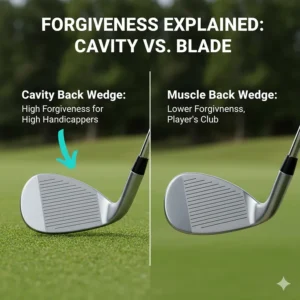
Traditional blade wedges concentrate weight behind the sweet spot, delivering exceptional feel for skilled players who consistently find the center of the face. However, cavity back wedges redistribute this weight to the perimeter, creating a larger effective hitting area and reducing the penalty for off-center strikes.
Think of it this way: blade wedges reward perfection, while cavity backs forgive imperfection. For beginners who might catch the ball thin one shot and fat the next, perimeter weighting literally saves strokes. The trade-off in “feel” is negligible when you’re just learning to compress the ball properly.
Wide Sole Wedge Benefits
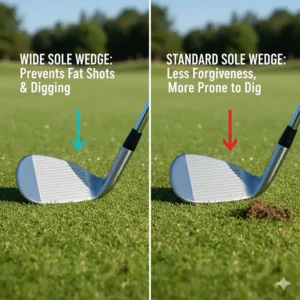
The sole width of your wedge dramatically affects how it interacts with the ground. A wide sole wedge features extra material along the bottom, which serves two critical functions: it lowers the center of gravity (promoting higher launch) and increases bounce (preventing digging).
When you swing a narrow-sole blade wedge with an inconsistent angle of attack, the leading edge can dig into the turf, causing fat shots. A wider sole literally bounces through the turf instead of penetrating it. This is why wide sole wedge designs dominate the game-improvement category—they’re physically engineered to be more forgiving of swing flaws.
Bounce Angle Explained
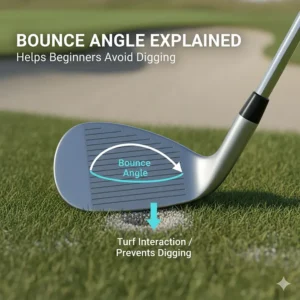
Bounce angle is perhaps the most misunderstood wedge specification. Simply put, bounce is the angle between the leading edge and the lowest point of the sole. Higher bounce angles (10°+) lift the leading edge further off the ground, while low bounce (6° or less) allows the leading edge to sit closer to the turf.
For beginners, higher bounce is almost always better. Here’s why: if you have a steep swing that takes divots, high bounce prevents the club from digging too deep. If you have a shallow swing that sweeps the ball, moderate bounce (8-10°) still provides forgiveness without feeling too clunky. The general rule—more bounce for soft courses, less for firm conditions—applies less to beginners than to experienced players who can adapt their technique.
How to Choose the Best Wedges for Beginners: Complete Buying Guide
Step 1: Assess Your Current Iron Set
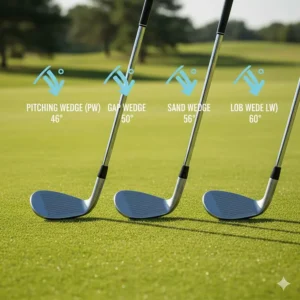
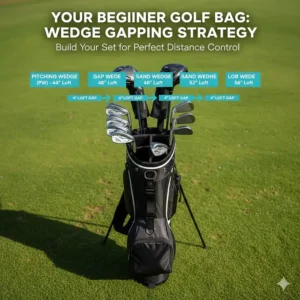
Start by checking the loft of your pitching wedge. Modern game-improvement irons have strengthened lofts, so your PW might be 43-44° instead of the traditional 46-48°. This creates a larger gap to your sand wedge (typically 54-56°), which is where a gap wedge comes in.
The goal is consistent 10-15 yard gaps between clubs. If your PW is 44° and you add a 54° SW, that 10° difference might create a 30+ yard gap—too large to manage effectively. Adding a 50° gap wedge splits this perfectly, giving you two manageable yardages instead of one massive gap.
Step 2: Determine How Many Wedges You Need
Two Wedges (Minimum): Pitching wedge + sand wedge
- Works for: Complete beginners, very high handicappers
- Gaps: One large gap between PW and SW
- Limitations: Forces in-between distances to be half-swings
Three Wedges (Recommended): Pitching wedge + gap wedge + sand wedge
- Works for: Most beginners to mid-handicappers
- Gaps: Consistent spacing enables full swings at multiple distances
- Sweet spot: Balances simplicity with versatility
Four Wedges (Advanced): PW + GW + SW + lob wedge
- Works for: Low handicappers, players with refined short games
- Gaps: Maximum versatility but requires managing four different clubs
- Consideration: 60° lob wedge is specialty club, not essential for beginners
Step 3: Match Bounce to Your Swing Type
Observe your divots during practice:
Shallow/No Divot (Sweepers):
- Recommendation: Low to mid bounce (6-10°)
- Why: Allows club to get under ball without bouncing off turf
- Best for: Tight lies, firm conditions
Moderate Divot (Neutral):
- Recommendation: Mid bounce (8-12°)
- Why: Most versatile, handles various conditions
- Best for: 90% of beginners—this is your safe zone
Deep Divot (Diggers):
- Recommendation: High bounce (12-14°+)
- Why: Prevents excessive digging, promotes cleaner contact
- Best for: Soft courses, bunker play, steep swings
Step 4: Consider Your Playing Conditions
Soft, Lush Courses:
- Higher bounce prevents digging
- Wide sole wedge design glides through turf
- Cavity back construction adds stability
Firm, Tight Lies:
- Moderate bounce prevents bouncing
- Some blade characteristics helpful (not full blade)
- Versatile sole grind enables shot variety
Mixed Conditions:
- Mid-bounce options (8-10°) handle both
- Modern game-improvement designs adapt well
- Focus on forgiveness over specialization
Step 5: Set Your Budget Realistically
Budget Tier ($40-$80 per wedge):
- Options: Wilson Harmonized, Pinemeadow, basic models
- Value: 70-80% of premium performance
- Best for: First wedge set, infrequent players
Mid-Tier ($100-$150 per wedge):
- Options: Cleveland CBX ZipCore, Callaway CB, TaylorMade MG
- Value: 90-95% of tour performance with more forgiveness
- Best for: Serious beginners, regular players
Premium Tier ($150-$200+ per wedge):
- Options: Titleist Vokey, premium Cleveland RTX
- Value: Maximum performance, tour-level tech
- Best for: Investment pieces, low handicaps
Set Value ($150-$250 for 2-3 wedges):
- Options: Kirkland Signature, beginner sets
- Value: Best bang-for-buck if they fit your specs
- Consideration: Limited customization options
Step 6: Don’t Overlook Shaft and Grip
Most beginners default to whatever shaft comes stock, but this matters more than you’d think:
Shaft Weight:
- Standard wedge shafts: 115-130g
- Lighter options (100-110g): Better for seniors, slower swing speeds
- Match to your iron shafts: Consistency aids timing
Shaft Flex:
- Wedge flex (slightly stiffer): Standard for most
- Regular flex: Seniors or moderate swing speeds
- Important: Should match your iron flex for consistent gapping
Grip Size:
- Standard: Fits most players
- Midsize: Better for larger hands or arthritis
- Consideration: Larger grips reduce hand action (good for beginners)
Step 7: Test Before You Buy (If Possible)
While not always feasible, hitting wedges before purchasing provides invaluable insight:
What to Test:
- Full swings (50-100 yards)
- Pitch shots (20-40 yards)
- Bunker shots
- Tight lies around green
What to Feel For:
- Consistent contact point on face
- Comfortable weight and balance
- Confidence at address
- Manageable turf interaction
Red Flags:
- Club digs excessively
- Feeling “bouncy” on chips
- Uncomfortable sole width
- Too heavy or too light
Common Beginner Mistakes to Avoid When Buying Wedges
Mistake #1: Copying Tour Pro Setups
Tour professionals use low-bounce blade wedges because they have elite-level swing consistency and play on perfectly manicured courses. Trying to replicate Jordan Spieth’s wedge setup when you’re a 25-handicap is like buying a Formula 1 car for your daily commute—theoretically amazing, practically disastrous.
The reality: Tour pros practice short game 4-6 hours daily and hit thousands of wedge shots per week. Their muscle memory and technique can handle equipment that punishes the slightest mistake. You need wedges that help you, not hinder you.
Mistake #2: Ignoring Loft Gaps
I’ve seen countless beginners carry a pitching wedge (44°) and sand wedge (56°), creating a massive 12° gap that’s impossible to manage. They end up trying to hit three-quarter swings to fill this void, which introduces timing inconsistency and poor contact.
The solution: Map your yardages with each wedge and ensure you have 10-15 yard gaps between clubs. If you notice a 40-yard chasm between clubs, you need to add a gap wedge to fill it. Your short game will improve overnight simply by having the right tools for the right distances.
Mistake #3: Buying Based on Aesthetics Alone
That sleek, blade-style wedge looks amazing behind the ball and feels incredible when you pure it. Problem is, you’ll pure it once every ten shots as a beginner. The other nine shots will be thin, fat, or pulled because blade wedges demand precision you haven’t developed yet.
Resist the temptation: Choose function over form. A slightly chunkier cavity back wedge might not look as sexy, but it will perform better 80% of the time. You can graduate to blades once your handicap drops and your consistency improves.
Mistake #4: Neglecting Bounce Selection
Buying wedges without considering bounce is like buying shoes without checking the size—technically they might work, but they won’t feel right. Too little bounce and you’ll dig every shot; too much and you’ll bounce off the turf, leading to thin contact.
The fix: Match bounce to your swing and conditions. When in doubt, err on the side of more bounce (10-12°) for beginners—it’s more forgiving and versatile. You can always learn to manipulate a high-bounce wedge, but fighting a low-bounce wedge with a steep swing is nearly impossible.
Mistake #5: Skimping on Quality to Save Money
I understand the temptation to buy $30 wedges from unknown brands, but this is false economy. Those wedges will have inconsistent weight distribution, poor groove quality, and inferior materials that wear out quickly. You’ll end up replacing them within a year, spending more in the long run.
Better approach: Buy one or two quality wedges (like the Wilson Harmonized at $50-60 each) rather than three cheap ones. You’ll get better performance, longer lifespan, and actual improvement in your short game. The Kirkland Signature set proves you can get quality without premium pricing.
Mistake #6: Not Considering Your Existing Iron Set
Your wedges should complement your irons, not fight against them. If you play super game-improvement irons with thick toplines and wide soles, switching to thin-bladed wedges creates a massive visual and performance disconnect.
The harmony matters: Match your wedge style to your iron style. Cavity back irons pair with cavity back wedges; blade irons pair with blade wedges. This consistency helps with confidence and shot-making around the greens.
Wedge Care and Maintenance: Making Your Investment Last
Cleaning Your Wedges Properly
Wedges accumulate dirt, grass, and debris faster than any other club due to their interaction with turf and sand. This buildup directly impacts spin performance, as dirty grooves can’t grip the ball properly.
After Every Round:
- Rinse wedges with warm water
- Use a soft brush to clean grooves (brass is ideal)
- Wipe down with microfiber cloth
- Dry thoroughly to prevent rust
Monthly Deep Clean:
- Soak in warm, soapy water (15 minutes)
- Scrub grooves with groove brush
- Use toothpick for stubborn debris
- Rinse and dry completely
- Apply light coat of WD-40 to raw finishes
Monitoring Groove Wear
Grooves degrade over time through normal use, reducing spin and control. Tour pros replace wedges every 8-12 weeks because groove sharpness matters that much. As a beginner, you can extend this to 1-2 years with proper care.
Inspect grooves every 3 months:
- Sharp edges: Good condition, full spin
- Rounded edges: Moderate wear, 70-80% spin
- Smooth grooves: Replace immediately, minimal spin
Groove wear indicators:
- Ball slides off face instead of grabbing
- Shots release more on greens
- Reduced check/spin from rough
- Inconsistent distance control
Storage Best Practices
How you store your wedges between rounds affects their longevity:
Do:
- Store in climate-controlled environment
- Keep headcovers on premium wedges
- Separate clubs to prevent contact damage
- Maintain moderate humidity (prevents rust)
Don’t:
- Leave in hot car trunk (weakens epoxy)
- Store in damp garage (promotes rust)
- Lean against each other (causes scratches)
- Expose to extreme temperature swings
How to Practice Effectively with Your New Wedges
Getting new wedges is exciting, but maximizing their potential requires deliberate practice. Here’s a structured approach to developing your short game with your new equipment.
Distance Control Drills
The 9-Shot Drill:
- Pick three distances: 30, 50, 70 yards
- Hit three balls to each distance
- Focus on consistent contact, not perfect results
- Note which wedge works best for each distance
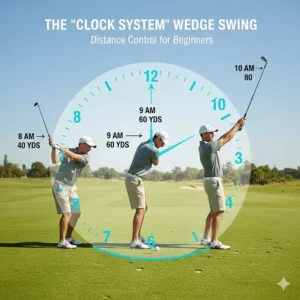
Clock System:
- Establish three swing lengths: 8 o’clock, 10 o’clock, 12 o’clock
- Practice each length with every wedge
- Record distances in a notebook
- Build a yardage chart you can reference on course
Bunker Play Fundamentals
Many beginners fear bunkers because they’ve never learned proper technique. Your new high-bounce sand wedge makes this easier:
Setup Adjustments:
- Open stance 20-30 degrees
- Open clubface slightly
- Ball position forward of center
- Dig feet into sand for stability
Swing Technique:
- Focus on spot 2 inches behind ball
- Make full swing (don’t decelerate)
- Let bounce do the work
- Follow through to target
Practice Progression:
- Start with level lies in bunker
- Progress to uphill/downhill lies
- Practice different distances (buried vs. fried egg)
- Develop confidence through repetition
Chipping Around the Green
Your forgiving wedges shine in these situations:
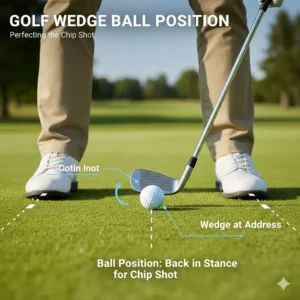
Chipping Fundamentals:
- Narrow stance, weight forward (70/30)
- Hands ahead of ball at address
- Minimal wrist hinge
- Brush turf, don’t dig
Landing Spot Drill:
- Place towel 2-3 feet on green
- Try to land every chip on towel
- Let ball release to hole naturally
- Adjust club selection for different roll-outs
Variety Practice:
- Tight lies (test leading edge design)
- Thick rough (appreciate wide sole)
- Bare/hard pan (learn bounce angle)
- Uphill/downhill/sidehill lies
Comparing Wedges vs. Traditional Alternatives
Game-Improvement Wedges vs. Blade Wedges
Cavity Back/Game-Improvement Wedges:
Advantages:
- Perimeter weighting forgives mishits
- Higher MOI reduces twisting
- Larger sweet spot
- Better from rough/bad lies
- Confidence-inspiring at address
Disadvantages:
- Slightly reduced feel vs. forged blades
- Less workability for advanced shots
- May not look as traditional
- Limited shot-shaping capability
Blade Wedges:
Advantages:
- Superior feel and feedback
- Maximum workability
- Precise distance control
- Traditional, compact look
- Better from tight lies
Disadvantages:
- Punishing on mishits
- Requires consistent swing
- Less forgiving from rough
- Steeper learning curve
- Not ideal for beginners
New vs. Pre-Owned Wedges
Buying New Wedges:
Benefits:
- Fresh, sharp grooves (maximum spin)
- Latest technology
- Warranty coverage
- Exact specifications
- Full lifespan ahead
Considerations:
- Higher initial cost ($100-200+ per wedge)
- Depreciation if selling later
- Might outgrow quickly as beginner
Pre-Owned Options:
Benefits:
- 40-60% cost savings
- Try premium brands affordably
- Replace more frequently
- Good for experimentation
Considerations:
- Groove wear reduces spin
- Unknown usage history
- Limited warranty
- May need regripping
The verdict: For beginners, slightly used premium wedges (1-2 years old) often outperform new budget wedges while costing the same. Check groove condition carefully and consider replacing grips.
❓ FAQ: Your Wedge Questions Answered
❓ What loft wedges should a beginner carry?
❓ How much should I spend on beginner wedges?
❓ What bounce angle is best for a beginner golfer?
❓ Can I use the same wedges as my favorite pro golfer?
❓ How often should beginners replace their wedges?
Conclusion: Transform Your Short Game Today
Choosing the best wedges for beginners doesn’t have to be overwhelming when you understand what actually matters. Forget about copying tour pro setups or chasing the latest marketing gimmicks—focus on forgiveness, proper loft gapping, and appropriate bounce angles for your swing type and playing conditions.
The seven wedges I’ve highlighted represent the finest options available in 2026, each excelling in different categories. The Callaway CB 12 delivers unmatched forgiveness for absolute beginners, while the Cleveland CBX ZipCore brings tour-level technology to game-improvement design. Budget-conscious players will love the Wilson Harmonized, and those building a complete set can’t beat the Kirkland Signature value proposition.
Remember: the right wedge isn’t the one used by your favorite pro or the most expensive option in the shop. It’s the one that helps you make consistent contact, builds confidence around the greens, and ultimately lowers your scores. A forgiving cavity back wedge with a wide sole and appropriate bounce will transform your short game far more than any blade wedge, regardless of its pedigree.
Start with two quality wedges—a 52° gap wedge and 56° sand wedge—and master those before adding more options. Practice the fundamentals, maintain your equipment properly, and track your yardages to build a reliable short game foundation. Your scores will improve dramatically when you can confidently attack pins and get up-and-down from around the green.
The wedges are just tools—your practice and commitment will ultimately determine success. But having the right tools makes that journey infinitely more enjoyable and productive. Choose wisely, practice deliberately, and watch your handicap drop as your short game flourishes.
Recommended for You
- 7 Best Lob Wedges 2026: Expert-Tested for Maximum Spin
- Best Sand Wedges 2026: 7 Picks to Escape Every Bunker Fast
- Best Golf Wedges 2026: 7 Top Rated Options for Spin & Control
Disclaimer: This article contains affiliate links. If you purchase products through these links, we may earn a small commission at no additional cost to you.
✨ Found this helpful? Share it with your friends! 💬🤗
