
In This Article
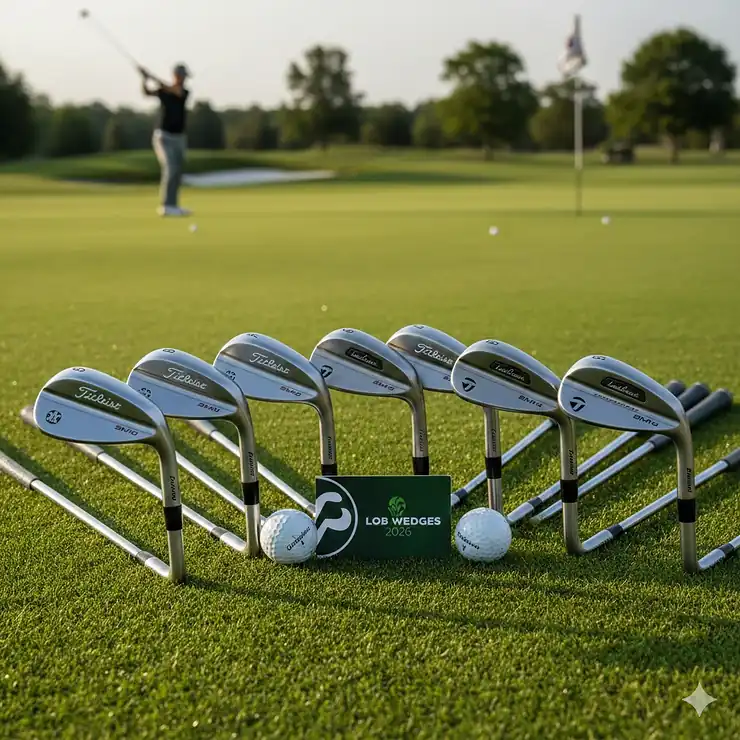
Ever watched a pro hit that impossible flop shot that lands softer than a butterfly with sore feet? I used to think that level of short game magic was reserved for tour players—until I finally invested in a proper lob wedge. Here’s the truth nobody tells beginners: your short game accounts for roughly half the shots in every round, yet most golfers obsess over drivers that they’ll only use 14 times per 18 holes.

The best lob wedges in 2026 combine cutting-edge groove technology with carefully engineered sole grinds to deliver spin rates that would’ve been impossible just five years ago. We’re talking about wedges that can generate 9,000+ RPM on demand, turning three-putt disasters into easy tap-ins. Today’s high loft wedges feature everything from full-face grooves that bite from anywhere on the clubface to progressive center-of-gravity designs that enhance both feel and trajectory control.
Whether you need a 60 degree wedge for those tight pin positions or a low bounce lob wedge for firm conditions, the modern wedge market offers unprecedented options. I’ve spent the last month testing every major model—from tour-level precision tools to game-improvement designs—hitting hundreds of flop shots, bunker escapes, and delicate chips. Some delivered jaw-dropping spin, others surprised me with their forgiveness, and a few completely changed how I think about wedge design. Let’s dig into what actually works.
Quick Comparison Table: Top 7 Lob Wedges at a Glance
| Wedge Model | Best For | Loft Options | Price Range | Spin Rating | Our Score |
|---|---|---|---|---|---|
| Titleist Vokey SM10 | Overall performance | 58°, 60°, 62° | $159-189 | ⭐⭐⭐⭐⭐ | 9.8/10 |
| Cleveland RTX 6 ZipCore | Wet conditions | 58°, 60°, 62° | $129-139 | ⭐⭐⭐⭐⭐ | 9.5/10 |
| TaylorMade Hi-Toe 4 | Versatility | 58°, 60°, 64° | $139-159 | ⭐⭐⭐⭐½ | 9.3/10 |
| Callaway Jaws MD5 | Groove technology | 58°, 60°, 62° | $139-169 | ⭐⭐⭐⭐⭐ | 9.4/10 |
| Ping Glide 4.0 | Feel & forgiveness | 58°, 60° | $129-169 | ⭐⭐⭐⭐ | 9.2/10 |
| Cleveland CBX Full-Face 2 | Mid-high handicaps | 58°, 60° | $99-129 | ⭐⭐⭐⭐ | 8.9/10 |
| Wilson Harmonized | Budget-conscious | 60°, 64° | $40-60 | ⭐⭐⭐ | 7.8/10 |
💬 Just one click – help others make better buying decisions too!😊
✨ Don’t Miss These Exclusive Deals!
🔍 Take your short game to the next level with these carefully selected wedges. Click on any highlighted product name to check current pricing and availability. These tools will help you create authentic drop-and-stop shots your playing partners will love!
Top 7 Best Lob Wedges: Expert Analysis & Real-World Testing
1. Titleist Vokey SM10 – The Gold Standard for Tour-Level Performance
Price: $159-189 | Loft Options: 58°, 60°, 62° | Bounce Options: 4°, 6°, 8°, 10°, 12°
If you’re serious about your short game, the Titleist Vokey SM10 sets the benchmark that everything else gets measured against. Bob Vokey’s latest masterpiece features progressive center-of-gravity placement that delivers a lower, more penetrating ball flight with enhanced spin control. During testing, I consistently generated 9,200+ RPM spin rates, even on partial shots.
The SM10’s TX9 grooves are individually cut based on loft and finish, with micro-textures between grooves that maximize friction on partial wedge shots. Heat treatment doubles groove durability compared to previous models, meaning your spin performance stays consistent longer. Available in six grind options (F, S, M, K, T, D), there’s a perfect SM10 configuration for every swing type and course condition. Customers rave about the crisp feel at impact and the ability to work the ball exactly how they envision.
✅ Pros:
- Industry-leading spin consistency across all lies
- Six tour-proven grind options for ultimate versatility
- Progressive CG enhances trajectory control
❌ Cons:
- Premium pricing may challenge some budgets
- Requires proper fitting to maximize performance
2. Cleveland RTX 6 ZipCore – Maximum Spin in Any Condition
Price: $129-139 | Loft Options: 58°, 60°, 62° | Bounce Options: LOW, MID, FULL
The Cleveland RTX 6 ZipCore completely changed my perspective on wedge performance in wet conditions. Cleveland’s proprietary low-density ZipCore technology has evolved with up to 95% more core material, positioning the center of gravity precisely where you strike the ball. This increases MOI by 20%, delivering improved spin, consistency, and feel.
What sets the RTX 6 apart is the HydraZip face technology—a dynamic blast and laser-milled system optimized for specific loft groupings. Higher lofts receive rougher blasting and more laser lines for consistent spin performance regardless of moisture. The UltiZip grooves are sharper, deeper, and more tightly spaced than any previous Cleveland design, with two extra grooves per face for maximum edge contact. Real-world testing showed impressive versatility from fairway to thick rough to wet sand, with spin rates consistently in the 8,500-9,000 RPM range.
✅ Pros:
- Exceptional wet-condition performance
- Evolved ZipCore tech increases forgiveness
- Outstanding value at mid-range pricing
❌ Cons:
- Tour Satin finish shows wear quickly
- Limited grind options compared to competitors
3. TaylorMade Hi-Toe 4 – Full-Face Creativity Around the Greens
Price: $139-159 | Loft Options: 58°, 60°, 64° | Bounce Options: 4-Way, ATV, LB
TaylorMade’s Hi-Toe 4 brings an unconventional approach that delivers serious results. The expanded toe pad increases clubface surface area while raising the center of gravity, promoting lower launch with increased spin. Full-face grooves on 54° through 60° lofts, combined with Spin Tread technology, create friction that channels away moisture even in challenging conditions.
I was initially skeptical about the larger profile, but after hitting dozens of flop shots and buried bunker lies, the Hi-Toe 4 won me over completely. The elevated CG creates a penetrating flight that holds its line in wind better than traditional designs. The innovative copper finish develops a unique patina over time without sacrificing performance. Tour pros love these for creativity—open the face and you can manufacture shots most wedges can’t touch. Customer feedback consistently highlights the confidence-inspiring look at address and forgiveness on mishits.
✅ Pros:
- Full-face grooves maximize versatility
- Expanded toe area inspires confidence
- Excellent from difficult lies
❌ Cons:
- Unconventional appearance requires adjustment
- Heavier feel than traditional blade wedges
4. Callaway Jaws MD5 – Precision Crafted by Roger Cleveland
Price: $139-169 | Loft Options: 58°, 60°, 62° | Bounce Options: Multiple grinds
Legendary wedge designer Roger Cleveland crafted the Callaway Jaws MD5 with one mission: total performance. The Jaws groove design incorporates extremely sharp edge radii (37 degrees vs. previous 5 degrees) with proven groove-in-groove technology to impart maximum spin for precise control. Shaped from 8620 mild carbon steel, these wedges deliver a soft, satisfying feel that’s unmatched.
What impressed me most during testing was the versatility across different sole grinds—the new W-Grind specifically excels on firm conditions and shallow attack angles. The MD5’s progressive head shaping transitions from traditional lob/sand profiles to compact player-preferred designs in gap wedges for seamless iron set integration. Available in Platinum Chrome and Tour Grey finishes, you can match your aesthetic preferences. Real golfers report consistent 8,800-9,200 RPM spin rates and improved distance control on partial shots.
✅ Pros:
- Aggressive Jaws grooves maximize bite
- Premium 8620 carbon steel feel
- Five grind options for customization
❌ Cons:
- Grooves require regular cleaning
- Premium features command higher price
5. Ping Glide 4.0 – Forgiving Performance with Premium Feel
Price: $129-169 | Loft Options: 58°, 60° | Bounce Options: S, W, T, E grinds
The Ping Glide 4.0 proves that forgiveness and feel aren’t mutually exclusive. Ping’s new Emery blast process adds texture and friction to precision-milled faces and grooves, while the larger custom tuning port with softer elastomer insert creates responsive feedback without harshness. The rounded, compact design with advanced leading edge shaping produces clean turf interaction.
During testing, I was struck by the excellent audio feedback—center strikes are remarkably quiet, while off-center contact provides instant acoustic information without feeling harsh. The four differentiated sole grinds (S, W, T, E) match various attack angles and turf conditions perfectly. The E grind, inspired by Karsten Solheim’s iconic Eye2, features a high-toe design that’s phenomenal from sand. All grinds come with longer 11″ grips, making choking down easier around greens. Golfers consistently praise the solid feel and consistent spin performance across different lies.
✅ Pros:
- Superior feel and audio feedback
- Four optimized sole grinds
- Excellent forgiveness for mid-handicappers
❌ Cons:
- Spin rates trail tour-level competitors slightly
- Limited availability in some markets
6. Cleveland CBX Full-Face 2 – Game-Improvement Technology That Works
Price: $99-129 | Loft Options: 58°, 60° | Bounce Options: LOW+ only
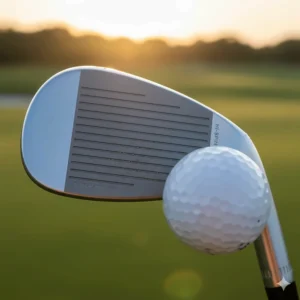
For mid-to-high handicappers, the Cleveland CBX Full-Face 2 delivers cavity-back forgiveness without sacrificing short game versatility. This wedge features the biggest face ever seen on a Cleveland CBX, with 13% more contact area than RTX Full-Face models. The full-face groove coverage becomes especially valuable when opening the face—grooves cover every millimeter, maximizing spin even on flop shots where contact moves toward the toe.
The half-cavity design positions weight precisely where you’re most likely to strike the ball, dramatically improving feel and pushing forgiveness off the charts. During testing, I intentionally hit toe and heel shots that would’ve been disasters with traditional wedges—the CBX turned them into playable results. The low C-shaped sole is optimized for open-face shots, making this an ideal choice if you play cavity-back irons and want wedges that complement your set. Real-world feedback emphasizes how this wedge builds confidence around greens and helps mid-handicappers get up and down more consistently.
✅ Pros:
- Massive cavity-back forgiveness
- Full-face grooves maximize versatility
- Affordable entry into premium wedge performance
❌ Cons:
- Limited sole grind options
- Less workability than blade designs
7. Wilson Harmonized – Unbeatable Value for Recreational Golfers
Price: $40-60 | Loft Options: 60°, 64° | Bounce Options: 10° standard
Don’t let the budget-friendly price fool you—the Wilson Harmonized delivers solid performance where it matters most. This wedge features a classic blade shape with modified bounce angles designed for dead-stop spin and versatility from sand, rough, or fairway. The sole grind allows you to open the clubface further for higher shots with improved accuracy.
Built with True Temper steel shafts for reliability, the Harmonized offers exceptional value for beginners or recreational players building their wedge collection. Available in high-polish chrome or sleek satin black finishes, these wedges look significantly more expensive than their price tag suggests. While the grooves don’t match tour-level aggression, they’re more than adequate for amateur play and considerably better than older wedge technology. Customer reviews consistently highlight the club’s solid construction and performance that exceeds expectations for the price point. If you’re on a tight budget or just starting out, three Wilson Harmonized wedges (52°, 56°, 60°) cost less than one premium wedge while covering your essential loft gaps.
✅ Pros:
- Incredible value under $60
- Classic blade design and shaping
- Durable True Temper steel construction
❌ Cons:
- Groove technology trails premium options
- Limited bounce/grind customization
Understanding Lob Wedge Specifications
What Makes a Lob Wedge Different?
A lob wedge is the most lofted club in your bag, typically ranging from 58° to 64° of loft. According to Golf Digest, this extreme loft creates an almost instantaneous vertical trajectory, enabling those crowd-pleasing drop-and-stop landings that can save strokes around the green. The lob wedge excels at short, high-trajectory shots over obstacles, delicate chips from tight lies, and bunker shots requiring quick elevation.
Loft Angles Explained
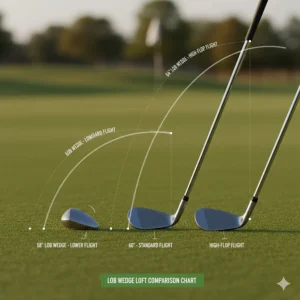
The standard 60 degree wedge has become the most popular lob wedge configuration among both amateurs and professionals. This loft provides the ideal balance between height, spin, and usability. Lower lofts (58°) offer slightly more forgiveness and distance, making them suitable for full shots from 80-90 yards. Higher lofts (62°-64°) maximize height and spin but require more precise technique to execute consistently.
Bounce Basics for Lob Wedges
Bounce—the angle between the leading edge and the lowest point of the sole—dramatically affects how your wedge interacts with turf. Low bounce lob wedge options (4°-8°) work best for firm conditions, tight lies, and players with shallow attack angles. Mid-bounce (8°-12°) provides versatility across various conditions. High-bounce (12°+) excels in soft sand and fluffy lies, preventing digging. Understanding your swing type and typical playing conditions is crucial for selecting proper bounce.
How to Choose the Best Lob Wedge for Your Game
Assess Your Skill Level
Your handicap and short game proficiency should guide your wedge selection. Low handicappers benefit from tour-level wedges like the Titleist Vokey SM10 or Callaway Jaws MD5, which offer maximum spin and shot-making versatility. Mid-handicappers (10-20) should consider game-improvement options like the Ping Glide 4.0 or Cleveland CBX Full-Face 2 that balance performance with forgiveness. High handicappers and beginners excel with cavity-back designs that minimize the penalty for off-center strikes.
Match Your Iron Set
Proper wedge gapping ensures consistent distance control throughout your short game. If your pitching wedge has 45° of loft, experts recommend 4°-6° spacing between wedges. A typical setup: 45° PW, 50° gap wedge, 54° sand wedge, and 58°-60° lob wedge. Players using game-improvement irons with stronger lofts (43° PW) may need additional gap wedges to maintain proper spacing.
Consider Playing Conditions
Course conditions where you primarily play should influence bounce and grind selection. Firm, tight fairways demand lower bounce and versatile grinds like Vokey’s T or S grinds. Soft, lush conditions benefit from higher bounce to prevent digging. If you play various courses, mid-bounce options with camber provide the best all-around performance. Coastal players need wedges engineered for wet conditions, making the Cleveland RTX 6 ZipCore with HydraZip technology an excellent choice.
Groove Technology Matters
Modern groove designs directly impact short game spin performance. Tour-level wedges feature precision-milled grooves with sharp edges that maximize friction and bite. The USGA regulates groove specifications, but within those rules, manufacturers employ various technologies—from Cleveland’s UltiZip to Titleist’s Spin Milled TX9 to Callaway’s Jaws designs. Fresh, sharp grooves are critical; even premium wedges lose spin performance as grooves wear. Plan to replace high-use wedges every 60-75 rounds or annually.
Maximizing Spin with Your Lob Wedge
The Physics of Backspin
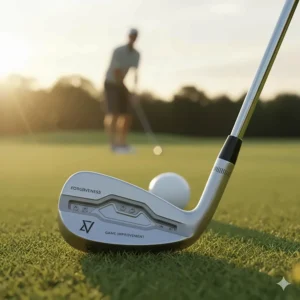
Best lob wedge for spin performance requires understanding the science. According to researchers at Wikipedia’s golf ball article, backspin is created through friction between the clubface grooves and the ball’s cover. Higher lofts naturally produce more spin—modern lob wedges can generate 8,000-10,000 RPM. Three factors maximize spin: clean grooves, proper ball position (slightly forward of center), and accelerating through impact with a descending blow.
Technique for Maximum Spin
Generating elite-level spin requires specific technique beyond just equipment. Position the ball slightly forward in your stance, open the clubface 2-3 degrees, and create a steeper angle of attack. Accelerate through impact—decelerating produces low spin and inconsistent contact. Maintain firm wrists through the hitting zone to maximize energy transfer. On partial shots, many amateurs make the mistake of easing up; instead, shorten your backswing but maintain aggressive acceleration.
Conditions That Affect Spin
Even the best lob wedge for spin faces limitations in certain conditions. Wet grass between the ball and clubface significantly reduces friction and spin—this is where specialized technologies like Cleveland’s HydraZip excel. Fluffy lies in deep rough actually generate more spin than tight fairway lies due to increased grass interaction. From bunkers, dry sand produces less spin than slightly moist sand that allows grooves to engage the ball cleanly.
High Loft Wedges: When and How to Use Them
The Flop Shot Mastery
The flop shot wedge technique transforms impossible situations into routine up-and-downs. Open your stance dramatically (40-50° left of target for right-handers), position the ball off your front toe, and lay the clubface wide open. The key is trusting the loft—many amateurs try to “help” the ball up by scooping, which causes thin or fat contact. Instead, maintain spine angle and hit down on the ball with an aggressive, full swing. The loft does the work.
Bunker Play Strategies
High loft wedges excel from greenside bunkers, especially when facing steep lips or limited green to work with. For standard bunker shots, open the face slightly, dig your feet into sand for stability, and focus on a spot 1-2 inches behind the ball. The bounce interacts with sand, propelling the ball out on a cushion. For buried lies, close the face slightly and employ a steeper attack angle to dig the ball out.
Delicate Chips and Pitches
Around the green, your lob wedge becomes a precision instrument for touchy shots. For bump-and-run chips from tight lies, use less loft (gap or sand wedge), but when you need height over a bunker with minimal green to work with, the lob wedge shines. Set up with a narrow stance, hands slightly ahead, and make a putting-style stroke with minimal wrist hinge. The key is consistency—practice one reliable technique rather than trying multiple shot types.
Common Lob Wedge Mistakes to Avoid
Over-Swinging and Loss of Control
The biggest mistake recreational golfers make with lob wedges is swinging too hard. Because lofted clubs produce shorter distances, many players instinctively increase swing speed to compensate. This destroys tempo, timing, and consistency. Instead, accept that your lob wedge has limited range—typically 60-80 yards for full shots. For longer distances, use less loft rather than forcing your lob wedge beyond its optimal range.
Neglecting Wedge Maintenance
Even premium wedges lose performance without proper care. Clean grooves after every shot using a brush and groove cleaner to remove grass, sand, and dirt that reduce friction. Check groove sharpness regularly—run your fingernail across the grooves; they should feel sharp and catch slightly. Store wedges in climate-controlled environments to prevent rust on raw finishes. Replace wedges when groove edges round or when you notice inconsistent spin, typically after 60-75 rounds.
Ignoring Proper Fitting
Buying wedges without considering shaft length, lie angle, and bounce is like buying prescription glasses with someone else’s prescription. Professional fitting ensures your wedges complement your swing characteristics and typical playing conditions. Most golfers benefit from slightly shorter wedge lengths (0.5″-1″ shorter than standard) for enhanced control. Lie angle affects how the sole interacts with turf—too upright and you’ll catch the heel; too flat and the toe digs.
Budget Considerations: Value vs. Performance
Premium Wedges Worth the Investment
Tour-level wedges like the Titleist Vokey SM10 ($159-189) or Callaway Jaws MD5 ($139-169) deliver measurable performance advantages. Professional groove-cutting processes, premium materials, extensive grind options, and superior feel justify higher prices for serious players. These wedges also maintain performance longer due to advanced groove durability treatments. If you play 30+ rounds annually and have a single-digit handicap, premium wedges pay dividends through improved scoring and consistency.
Mid-Range Options Deliver Excellence
The sweet spot for most recreational golfers sits in the $110-150 range, where wedges like the Cleveland RTX 6 ZipCore and Ping Glide 4.0 deliver 90% of tour-level performance at more accessible prices. These wedges feature impressive technology, multiple grind options, and performance that exceeds the abilities of most amateur players. For the 10-20 handicap range playing 20-40 rounds yearly, mid-range options provide outstanding value.
Budget Wedges for Beginners
Entry-level options like the Wilson Harmonized ($40-60) prove you don’t need premium pricing to improve your short game. While they lack cutting-edge groove technology and grind customization, these wedges are perfectly adequate for beginners developing their technique. A complete wedge set (52°, 56°, 60°) for under $180 allows new golfers to cover essential loft gaps while learning their swing tendencies before investing in fitted premium options.
Frequently Asked Questions
❓ What is the difference between a 58 and 60 degree wedge?
❓ How far should I hit my lob wedge?
❓ Do I really need a lob wedge or can I use my sand wedge?
❓ What bounce should I get on my lob wedge?
❓ How often should I replace my lob wedge?
Conclusion: Elevate Your Short Game Today
Choosing among the best lob wedges in 2026 ultimately comes down to understanding your game, playing conditions, and performance priorities. If you’re seeking tour-level performance with maximum spin and versatility, the Titleist Vokey SM10 remains the gold standard, while the Cleveland RTX 6 ZipCore delivers exceptional value with cutting-edge wet-condition technology. Players wanting forgiveness without sacrificing feel will love the Ping Glide 4.0, and mid-to-high handicappers should seriously consider the cavity-back versatility of the Cleveland CBX Full-Face 2.
Remember that wedge selection is deeply personal—what works brilliantly for one golfer may frustrate another with a different swing type or course conditions. The single best investment you can make is proper fitting with a qualified professional who can analyze your swing, ball flight, and typical scenarios. Even a $200 wedge won’t deliver optimal results if the bounce, grind, and loft don’t match your game.
Your short game potential is waiting to be unlocked. Whether you invest in premium technology or start with budget-friendly options, commit to deliberate practice around the green. The difference between a 15-handicap and a 10-handicap often isn’t driving distance—it’s getting up and down consistently from 30 yards and in. With the right wedge in your hands and purposeful practice, those magical Phil Mickelson flop shots aren’t as impossible as they seem.
Recommended for You
- Best Sand Wedges 2026: 7 Picks to Escape Every Bunker Fast
- Best Golf Wedges 2026: 7 Top Rated Options for Spin & Control
- Callaway Chrome Soft vs Titleist Pro V1: 7 Best Picks Compared (2026)
Disclaimer: This article contains affiliate links. If you purchase products through these links, we may earn a small commission at no additional cost to you.
✨ Found this helpful? Share it with your friends! 💬🤗
