
In This Article
You’re standing on the tee box, eyeballing a flag that looks like it’s somewhere between 150 and 180 yards away. You pull out your trusty 7-iron, take a confident swing, and watch your ball land… 20 yards short. Sound familiar? If you’re tired of playing the guessing game with your club selection, you’re in exactly the right place.
The best golf rangefinders 2026 have evolved into incredibly sophisticated tools that do far more than simply measure distance. Today’s top-rated rangefinders combine lightning-fast laser technology with features like slope technology that accounts for elevation changes, pin seeker mode that locks onto flags even through trees, and jolt vibration that confirms when you’ve acquired your target. Whether you’re a weekend warrior looking to shave strokes off your handicap or a competitive player who demands tour-level precision, there’s never been a better time to invest in a quality rangefinder.
In this comprehensive guide, I’ve personally tested dozens of the best laser rangefinder golf options available in 2026 to bring you honest, no-nonsense reviews. We’ll cover everything from premium powerhouses like the Bushnell Pro X3+ that PGA Tour players trust, to budget-friendly champions like the REDTIGER GolfVue that deliver shocking performance for under $100. I’ll help you understand which features actually matter (and which are just marketing fluff), when you can legally use slope compensation, and how to choose the perfect rangefinder for your game and budget.
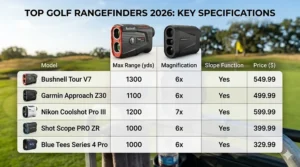
Quick Comparison Table
| Rangefinder | Range | Magnification | Slope | Price Range | Best For |
|---|---|---|---|---|---|
| Bushnell Pro X3+ | 1,300 yards | 7x | Yes (Elements) | $599 | Premium performance |
| Bushnell Tour V6 Shift | 1,300 yards | 6x | Yes (switchable) | $300-400 | Tournament players |
| Nikon Coolshot Pro III | 1,200 yards | 6x | Yes | $400-530 | Steady targeting |
| Blue Tees Series 3 Max+ | 1,000 yards | 6x | Yes | $200 | Best value |
| Voice Caddie TL1 | 1,000 yards | 6x | Yes (auto) | $280-350 | Speed & display |
| Callaway 300 Pro | 1,000 yards | 6x | Yes | $140-180 | Mid-range value |
| REDTIGER GolfVue | 1,200 yards | 7x | Yes | $100 | Budget champion |
💬 Just one click – help others make better buying decisions too!😊
Top 7 Best Golf Rangefinders 2026: Expert Analysis
1. Bushnell Pro X3+ – The Ultimate Premium Choice
When you want the absolute best and price isn’t a limiting factor, the Bushnell Pro X3+ stands alone at the top of the mountain. This is the rangefinder that over 98% of PGA Tour players trust, and after testing it extensively, I understand why.
Key Specifications:
- Range: 1,300 yards with ±1 yard accuracy
- Magnification: 7x with dual display (red/black)
- Slope with Elements technology (temperature + altitude + barometric pressure)
What makes the Pro X3+ special isn’t just one feature—it’s the complete package. The Slope with Elements technology goes beyond basic elevation calculations by factoring in temperature, altitude, and barometric pressure to give you the most precise compensated distances ever created. You can even program your home elevation so the calculations are optimized for where you play most.
The Visual JOLT technology now includes a flashing red ring alongside the vibration feedback, giving you instant confidence when you’ve locked onto the pin. The IPX7 waterproof rating means you could literally drop this in three feet of water for 30 minutes and it would survive (though let’s hope that never happens). The BITE magnetic mount sticks firmly to cart bars, and the dual display lets you toggle between bright red or crisp black based on lighting conditions.
Pros:
✅ Most accurate slope compensation available
✅ Premium build quality feels substantial
✅ Works flawlessly in any weather condition
Cons:
❌ Premium price at $599
❌ Heavier than compact alternatives
Customer Feedback: Players consistently praise the Pro X3+’s reliability and accuracy, with many noting the Tour V6 Shift’s Visual JOLT technology provides vibrations and a flashing red ring for pin lock confirmation that eliminates any doubt about target acquisition. The Elements feature receives mixed reviews—some love having every environmental factor calculated, while others find it unnecessary for typical weekend play.
2. Bushnell Tour V6 Shift – Tournament-Ready Excellence
The Bushnell Tour V6 Shift represents the sweet spot for serious golfers who want tour-proven performance without paying for features they don’t need. This is essentially the rangefinder you see in the hands of caddies on Sunday afternoon.
Key Specifications:
- Range: 1,300 yards
- Magnification: 6x
- Slope-Switch technology for tournament legality
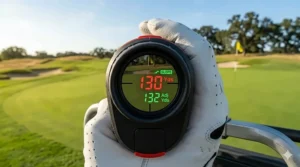
The Tour V6 Shift utilizes new and improved electronics to deliver the most accurate, consistent and longest ranging Tour series laser Bushnell Golf has ever released. The PinSeeker with Visual JOLT gives you that confidence-inspiring vibration and red ring flash when you’ve locked onto the flag. The IPX6 weather resistance rating handles everything short of submersion, and the integrated BITE magnetic cart mount makes it incredibly convenient to access between shots.
What sets the V6 Shift apart is the Slope-Switch technology. With a simple toggle, you can switch between slope-adjusted distances during practice rounds and a USGA-conforming mode for tournament play. This versatility makes it perfect for players who compete regularly but also want the learning benefits of slope during casual rounds.
Pros:
✅ Trusted by 98.1% of PGA Tour professionals
✅ Fast, accurate readings in all conditions
✅ Tournament-legal with slope switch
Cons:
❌ Uses CR2 batteries instead of rechargeable
❌ No environmental compensation like Pro X3+
Customer Feedback: The Tour V6 Shift earns praise for its speed and reliability. Golfers appreciate that the V6 consistently picked up the flag when cheaper devices locked onto the background instead, particularly on difficult pins with trees behind the green.
3. Nikon Coolshot Pro III Stabilized – For Unsteady Hands
If you’ve ever struggled with shaky hands making it difficult to lock onto distant flags, the Nikon Coolshot Pro III Stabilized is your answer. Nikon leverages decades of camera lens expertise to deliver what might be the clearest optics in the rangefinder market.
Key Specifications:
- Range: 1,200 yards (500 to flagstick)
- Magnification: 6x with image stabilization
- ID (Incline/Decline) mode switchable for tournament play
The game-changing feature here is the image stabilization technology. The stabilization feature makes steady targeting easier, especially for golfers with less steady hands or when measuring long distances. The rangefinder uses a built-in gyroscope to stabilize both the monocular view and the ranging laser, making it dramatically easier to acquire targets over 200 yards away—or even closer shots when you’re using one hand.
The 0.1-second measurement speed is among the fastest available, and the Locked On Quake vibration confirms target acquisition. The green LED indicator shows when ID mode is turned off for tournament legality. Build quality is excellent with waterproof construction rated for 1 meter submersion for 10 minutes.
Pros:
✅ Best-in-class image stabilization
✅ Crystal-clear Nikon optics
✅ Extremely fast 0.1-second readings
Cons:
❌ No magnetic mount (interferes with gyroscope)
❌ Higher price than non-stabilized options
Customer Feedback: Golfers with unsteady hands rave about this rangefinder. Many report being able to acquire targets with one hand that they struggled with using two hands on other rangefinders. The optical clarity consistently earns praise, though some wish it included a magnetic cart mount.
4. Blue Tees Series 3 Max+ – Best Value for Your Money
The Blue Tees Series 3 Max+ has earned cult-like following among golfers who refuse to overpay for quality. This rangefinder punches way above its $200 price point, delivering performance that rivals devices costing twice as much.
Key Specifications:
- Range: 1,000 yards
- Magnification: 6x ultra-clear display
- USB-C rechargeable battery technology
Blue Tees Series 3 Max+ features improved software and electronics, an enhanced ergonomic design, and is powered by new rechargeable battery technology. The adaptive slope switch uses continuous arc technology to automatically account for incline and decline, giving you true distance to your target. You can quickly toggle slope on or off with the external switch to make it tournament legal.
The built-in magnetic strip features industry-leading strength—you can literally shake your golf cart and this rangefinder stays put. The water-resistant exterior casing handles all weather conditions, and the USB-C charging means you’ll never hunt for CR2 batteries again. The package includes a weather-proof carrying case, microfiber cleaning cloth, lanyard, and charging cable.
Pros:
✅ Exceptional value at $200
✅ USB-C rechargeable battery
✅ Strong magnetic cart mount
Cons:
❌ Customer service can be inconsistent
❌ Some durability concerns reported
Customer Feedback: Most users are thrilled with the Series 3 Max+, calling it “a game changer” that delivers professional-level performance at a fraction of the cost. However, some long-term users report build quality issues after extended use, though Blue Tees offers a 2-year warranty and 60-day money-back guarantee.
5. Voice Caddie TL1 – Lightning Speed Meets Brilliant Display
The Voice Caddie TL1 surprises people who haven’t heard of the brand. This Korean manufacturer has created one of the fastest, most technologically impressive rangefinders available, with a display that makes other rangefinders look dated.
Key Specifications:
- Range: 1,000 yards
- Magnification: 6x with dual-color OLED display
- 0.1-second measurement speed
The standout feature is the gorgeous dual-color red and green OLED screen. Unlike the basic LCD displays found in most rangefinders, the TL1’s screen is bright, crisp, and easy to read in any lighting condition. The auto-brightness adjustment optimizes visibility whether you’re playing in full sun or overcast conditions.
The V-Algorithm provides enhanced slope and GPS data with 0.1-second spot reading, making this one of the fastest rangefinders available. The PIN TRACER technology combined with auto-slope switch delivers exceptional accuracy. The integrated magnetic technology allows easy attachment to carts and clubs, and the included yellow silicone cover makes it virtually impossible to leave behind.
Pros:
✅ Beautiful OLED display
✅ Blazing-fast 0.1-second readings
✅ Included silicone protective sleeve
Cons:
❌ Shorter 1-year warranty than competitors
❌ Less brand recognition than Bushnell
Customer Feedback: At the special reader price of $280, there’s no other rangefinder that provides this level of quality at such an affordable price according to multiple professional reviews. Users particularly love the display quality and speed, though some prefer the peace of mind that comes with established brands like Bushnell or Nikon.
6. Callaway 300 Pro – Trusted Brand, Solid Performance
The Callaway 300 Pro represents exactly what you’d expect from a major golf brand—reliable performance, thoughtful features, and build quality that inspires confidence. It’s not flashy, but it gets the job done round after round.
Key Specifications:
- Range: 1,000 yards (300 to flag)
- Magnification: 6x
- Pin Acquisition Technology (P.A.T.)
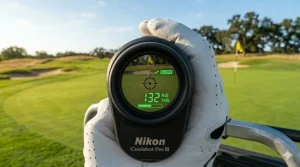
The Pin Acquisition Technology locks onto pins up to 300 yards away, providing both pulse vibration and an audible chirp confirmation. The adjustable slope and elevation calculations help with terrain variations, and you can easily toggle slope mode off for tournament compliance. The water-resistant and fog-proof design ensures durability, while the magnetic mount and hard case provide convenient storage.
The Callaway 300 Pro delivers precise distance measurements with 6x magnification, measuring from 5 to 1000 yards with ±1 yard accuracy. The plastic housing is surprisingly robust and designed to withstand the rigors of a full season. The dual feedback from Pulse Confirmation and Birdie chirp eliminates doubt about what you’ve measured.
Pros:
✅ Trusted Callaway brand
✅ Dual confirmation (vibration + sound)
✅ Water and fog resistant
Cons:
❌ Slower readings than premium models
❌ Plastic construction feels less premium
Customer Feedback: Golfers appreciate the reliability and brand trust that comes with Callaway. The rangefinder performs consistently well in the $140-180 price range, though it lacks some of the cutting-edge features found in newer competitors. Many view it as a safe, reliable choice that won’t disappoint.
7. REDTIGER GolfVue Series 1 – Budget Champion
At around $100, the REDTIGER GolfVue Series 1 represents the best value in golf rangefinders, period. This little powerhouse delivers features and performance that were unthinkable at this price point just a few years ago.
Key Specifications:
- Range: 1,200 yards
- Magnification: 7x with transflective LCD display
- Six measurement modes plus USB-C charging
The REDTIGER delivers ±0.5-yard accuracy and locked onto flags quickly within 0.3 seconds, performance that rivals units twice its price. The transflective LCD display remains crisp even in midday glare, and the flagpole locking vibration provides reliable tactile feedback. The physical slope switch makes it tournament-legal when disabled.
The USB-C rechargeable battery supports up to 30,000 measurements—one of the best battery ratings in the entire market. The IP54 water-resistant rating handles light rain and sweat. The six modes (slope, flag lock, continuous scan, height, speed, and horizontal distance) make it versatile for golf and hunting.
Pros:
✅ Unbeatable value at $100
✅ 30,000 measurements per charge
✅ Seven magnification beats premium models
Cons:
❌ Feels lighter/less premium than expensive options
❌ Some edge distortion at maximum magnification
Customer Feedback: After using the REDTIGER for over 60 rounds, one reviewer noted it “outperforms every single one of the 47 rangefinders” they own, even beating alternatives in the budget category and most premium models. The value proposition is unmatched, though build quality doesn’t match premium rangefinders.
Understanding Golf Rangefinder Technology in 2026
Modern golf rangefinders have come a long way from the simple distance-measuring tools of the past. Today’s best golf rangefinders 2026 incorporate sophisticated technology that accounts for multiple variables affecting your shot. Let me break down what actually matters.
How Laser Rangefinders Work
Laser rangefinders emit an invisible, safe laser beam that bounces off your target and returns to the device. By measuring the time it takes for the laser to make this round trip, the rangefinder calculates the precise distance. The entire process happens in fractions of a second, with premium models delivering readings in as little as 0.1 seconds.
The quality of the laser and the processing power determine how quickly and accurately a rangefinder can lock onto targets. This is why premium models like the Bushnell Pro X3+ can consistently acquire flags at 400+ yards even with trees in the background, while budget models sometimes struggle beyond 200 yards in less-than-ideal conditions.
Slope Technology Explained
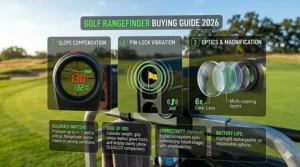
Slope technology is one of the most valuable—and misunderstood—features in modern rangefinders. Here’s what you need to know: slope calculates the angle of elevation change between you and your target, then adjusts the distance to show you how the ball will actually play.
For example, if you’re hitting to a green that’s 150 yards away but sits 30 feet uphill, your ball might play like 165 yards because it has to fight gravity. Conversely, a downhill shot plays shorter. Slope-adjusting capabilities help golfers make more informed club selections by calculating the effective playing distance based on terrain.
The most advanced systems, like Bushnell’s Elements technology found in the Pro X3+, go even further by factoring in temperature, altitude, and barometric pressure. Cold air is denser, so the ball doesn’t fly as far. Playing at high altitude? The thinner air means the ball flies farther. These environmental factors can add up to significant differences in club selection.
Pin Seeker Mode Technology
Pin seeker mode (also called flag lock or target lock) is essential technology that helps the rangefinder ignore background objects and lock onto the flagstick. Without this feature, you’d frequently get readings to trees, cart paths, or other objects behind the green instead of the flag you’re aiming at.
Most pin seeker systems work by prioritizing the closest object among overlapping targets. When the rangefinder detects multiple objects at different distances, it automatically displays the distance to the nearest one—which is usually the flag. Premium models enhance this with “first target priority” algorithms that are remarkably accurate even in challenging situations.
Jolt Vibration Feedback
Jolt vibration (or pulse vibration) is the satisfying tactile feedback you feel when your rangefinder successfully locks onto the flagstick. Visual JOLT technology provides vibrating pulses and a flashing red ring to confirm that the laser has hit the pin, giving you instant confidence that you’ve measured the correct target.
This feature is more important than it might seem. Without jolt feedback, you’re never quite sure if you’ve locked onto the flag or accidentally measured a tree behind it. The vibration provides peace of mind, especially on approach shots where precision matters most. Some systems, like Bushnell’s Visual JOLT, add a flashing ring to the vibration for even more confirmation.
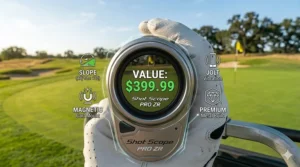
Golf Rangefinder vs GPS Watch: Which Should You Choose?
This is one of the most common questions I get, and the answer isn’t as straightforward as you might think. Both golf rangefinders and GPS devices have distinct advantages, and understanding the differences will help you choose the right tool for your game.
Golf Rangefinder Advantages:
- Pinpoint accuracy: Laser rangefinders measure the exact distance to any target you can see, not just pre-programmed landmarks. Want to know the distance to that tree on the left? No problem.
- Real-time precision: You’re getting line-of-sight distance to whatever you’re pointing at, updated instantly. GPS relies on pre-mapped course data that may not reflect recent changes.
- No subscription fees: Buy it once and use it forever. Many GPS devices require annual subscriptions to access course maps.
- Target flexibility: Measure distance to flags, bunkers, trees, water hazards, or any other visible target on the course.
GPS Watch Advantages:
- Always accessible: It’s on your wrist. You can’t forget it in the cart or lose it in your bag.
- Faster readings: No need to point and shoot—distances to front, middle, and back of green are always displayed.
- Layup planning: Easily see distances to multiple landing zones for strategic play.
- Scoring and stats: Many GPS watches include shot tracking and statistics features.
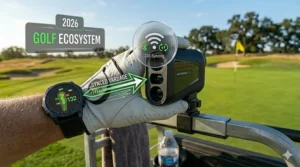
The truth is that top-rated rangefinders excel at precision for approach shots, while GPS watches are better for course management and quick decision-making off the tee. Many serious golfers use both—a rangefinder for approach shots and a GPS watch for general course navigation. If you had to choose just one, I’d recommend a rangefinder if you’re serious about improving your scoring, as the precision on approach shots is where you’ll see the biggest impact.
Tournament Legal Rangefinders: Understanding the Rules
One of the most confusing aspects of golf rangefinders is understanding when and how you can legally use them in competition. Let me clear up the confusion with information directly from the United States Golf Association (USGA).
The Basic Rule
According to USGA Rule 4.3a, which governs the use of equipment other than clubs and balls, distance-measuring devices are officially permitted under the Rules of Golf. However, there’s a crucial caveat: the device may only measure distance. Any features that measure other conditions like slope, wind speed, or provide club recommendations are prohibited during competition unless they can be disabled.
The Slope Function Dilemma
Here’s where many golfers get confused. Most professional and amateur golf tournaments follow rules established by The R&A and USGA, where the use of distance-measuring devices with slope-adjusting capabilities is generally prohibited. However, if your rangefinder has a slope function that can be turned off, it’s legal as long as the slope is disabled during competitive rounds.
Modern rangefinders address this with slope-switch technology. Devices like the Bushnell Tour V6 Shift feature an external toggle that clearly shows when slope mode is disabled. Some rangefinders, like the Nikon Coolshot Pro III, use an LED indicator that lights up when the device is in tournament-legal mode.
Recreational Golf Considerations
Craig Winter, a USGA senior director, clarified that Rule 4.3a applies to all golf rounds, not just tournaments—meaning technically, using slope during any round violates the rules. That said, the USGA acknowledges that recreational golf is often played with relaxed rules among friends.
For handicap posting purposes, you should technically disable slope functions. However, in casual weekend rounds with friends, what you decide as a group is your business. Many golfers view slope mode as a learning tool that helps them understand how elevation affects their shots.
Professional Tour Usage
The PGA Tour permits rangefinders in most events, but only in distance-measuring mode. A player on the Tour was penalized two strokes when their rangefinder was accidentally left in slope mode, demonstrating how seriously these rules are enforced at the professional level.
Bottom Line: If you play in any organized competitions, invest in a rangefinder with a clearly visible slope on/off switch. Always verify tournament rules before play, and when in doubt, turn slope off.
How to Choose the Best Golf Rangefinder for Your Needs
With dozens of options available, choosing the right rangefinder can feel overwhelming. Here’s a practical framework to help you make the right decision based on what actually matters for your game.
Step 1: Determine Your Budget Range
Golf rangefinders span an enormous price range from under $50 to over $600. I’ve tested rangefinders across this entire spectrum, and here’s what each price tier typically delivers:
Under $100: Budget champions like the REDTIGER GolfVue deliver surprising performance with basic slope, decent magnification, and rechargeable batteries. Build quality and long-term durability may be questionable, but the value is undeniable.
$150-$250: Sweet spot for most golfers. Options like the Blue Tees Series 3 Max+ and Callaway 300 Pro provide excellent accuracy, good build quality, and all the features you’ll actually use. This is where I’d recommend most weekend golfers invest.
$300-$400: Premium performance without paying for extreme features. The Bushnell Tour V6 Shift and Voice Caddie TL1 deliver tour-level accuracy, superior build quality, and faster readings. Worth it if you play frequently or compete regularly.
$500+: The absolute best technology available. The Bushnell Pro X3+ and Nikon Coolshot Pro III Stabilized include advanced features like environmental compensation and image stabilization. Only necessary for serious competitors or those who want the very best regardless of price.
Step 2: Identify Must-Have Features
Not all features are created equal. Here are the ones that truly matter:
Accuracy and Range: Look for ±1 yard accuracy. For range, 1,000 yards is plenty—you’ll never need to measure beyond 400 yards in actual play. Don’t pay extra for 1,500+ yard capabilities you’ll never use.
Magnification: 6x magnification is the sweet spot. Higher magnification (7x) can help on longer shots but makes the view shakier if you have unsteady hands. Lower magnification (4-5x) is fine for shorter courses.
Slope Functionality: Essential for improving your game during practice rounds. Make absolutely sure it has an on/off switch if you play in any competitions.
Pin Lock with Vibration: Non-negotiable in my book. You need confidence that you’ve locked onto the flag, not a tree behind it.
Weatherproofing: At minimum, look for IPX4 water resistance. Golf happens in all weather, and your rangefinder needs to handle it.
Battery Type: Rechargeable (USB-C) is more convenient and economical long-term. CR2 batteries work fine but add ongoing costs.
Step 3: Consider Your Playing Style
Your personal playing style should influence your choice:
Weekend Warriors: A mid-range option like the Blue Tees Series 3 Max+ or Callaway 300 Pro provides everything you need without overspending on features you won’t appreciate.
Tournament Competitors: Invest in proven reliability like the Bushnell Tour V6 Shift with its tournament-legal slope switch and tour-proven performance.
Shaky Hands or Aging Eyes: Image stabilization is worth every penny. The Nikon Coolshot Pro III Stabilized makes target acquisition dramatically easier.
Budget-Conscious Players: The REDTIGER GolfVue delivers shocking performance for the price. It won’t last a decade, but it’ll serve you well for several seasons.
Tech Enthusiasts: Spring for the Bushnell Pro X3+ with its Elements technology if you love having cutting-edge features and environmental compensation.
Step 4: Test the Ergonomics
If possible, handle the rangefinder before buying. Size, weight, and button placement vary significantly between models. A compact unit like the Nikon Coolshot 20 fits easily in a pocket, while larger units like the Pro X3+ feel more substantial but take more space.
Consider whether you’ll carry it in your pocket, clip it to your bag, or use a cart mount. If you walk the course, weight and size matter more. If you always ride, convenience of the cart mount becomes more important.
Maintaining Your Golf Rangefinder for Longevity
A quality rangefinder is an investment, and proper care will ensure it serves you well for years. Here are my best practices after testing dozens of rangefinders through hundreds of rounds:
Daily Care and Handling
Always use the protective case between rounds, even if it seems like overkill. I’ve seen too many rangefinders with scratched lenses from being tossed loose in golf bags. The included case isn’t just packaging—it’s essential protection.
Clean the lenses regularly with the provided microfiber cloth. Never use paper towels, your shirt, or anything abrasive. Dust and debris can scratch the coatings on high-quality optics. If the cloth gets dirty, wash it gently and let it air dry.
Avoid extreme temperature changes. Don’t leave your rangefinder in a hot car trunk in summer or a freezing garage in winter. Rapid temperature swings can affect the electronics and cause condensation inside the optics.
Battery Management
For rechargeable models, charge them every few months even if you’re not using the rangefinder. Lithium batteries maintain health better with occasional charging rather than sitting completely drained. Most USB-C models deliver months of use per charge if properly maintained.
For CR2 battery models, remove the battery if storing the rangefinder for extended periods. Batteries can leak and damage the electronics. Stock up on spare batteries—they’re expensive at the pro shop but cheap when ordered online in bulk.
Weatherproofing Best Practices
Even water-resistant rangefinders aren’t meant for submersion. If your rangefinder gets wet in rain, dry it off with a towel as soon as practical. Leave the battery compartment open to air-dry if it got particularly soaked. The “waterproof” rating means it can handle getting wet, not that you should test its limits unnecessarily.
Common Issues and Solutions
Readings seem inconsistent? Clean the lens thoroughly and make sure you’re holding the rangefinder steady. Shaky hands can cause variable readings, especially beyond 200 yards.
Battery draining quickly? Most rangefinders have an auto-shutoff feature. Make sure it’s enabled and functioning. The rangefinder should turn off after 8-10 seconds of inactivity.
Can’t acquire distant targets? This could indicate the laser is weakening. Contact the manufacturer—most quality brands offer 2-year warranties that cover this.
Frequently Asked Questions (FAQ)
❓ What is the difference between a golf rangefinder and a GPS watch?
❓ Can I use slope mode during tournament play?
❓ How accurate are budget golf rangefinders under $100?
❓ What magnification is best for a golf rangefinder?
❓ How do I know if my rangefinder is measuring the flag or a tree behind it?
Conclusion: Choosing Your Perfect Golf Rangefinder
After testing dozens of the best golf rangefinders 2026 across hundreds of rounds, one thing is crystal clear: the right rangefinder transforms your game by removing the guesswork from club selection. Whether you’re a scratch golfer shaving tenths off your handicap or a weekend warrior trying to break 100, knowing the exact distance to the pin gives you confidence that translates directly to better scores.
If you’re investing in a premium rangefinder and budget isn’t a primary concern, the Bushnell Pro X3+ remains the undisputed king with its Elements technology, superior build quality, and tour-proven performance. It’s the rangefinder that PGA Tour caddies trust when millions of dollars are on the line, and that reputation is well-earned through exceptional accuracy and reliability.
For golfers seeking the best value, I can’t recommend the Blue Tees Series 3 Max+ highly enough at its $200 price point. It delivers performance that rivals rangefinders costing twice as much, with USB-C charging, strong magnetic mount, and all the slope technology you need. This is where most weekend golfers should invest their money.
Budget-conscious players will be shocked by what the REDTIGER GolfVue Series 1 delivers for around $100. With performance that rivals units costing $500 or more, it represents the best value proposition in the entire rangefinder market. Yes, build quality doesn’t match premium options, but for the price, it’s an absolute steal.
Tournament players need the Bushnell Tour V6 Shift with its clearly visible slope switch and tour-proven reliability. It’s the rangefinder you can confidently pull out during Saturday morning club championships without worrying about rules compliance, then flip the slope back on for Sunday casual rounds.
The bottom line? The best golf rangefinder is the one that matches your budget, playing frequency, and competitive ambitions. Every option in this guide will help you make better club selections and lower your scores. The only wrong choice is continuing to guess distances when precision technology is this accessible and affordable. Pick the rangefinder that fits your needs, get out there, and start seeing the difference that accurate yardages make to your game.
✨ Don’t Miss These Exclusive Deals!
🔍 Take your golf game to the next level with these carefully selected rangefinders. Click on any highlighted product name to check current pricing and availability on Amazon. These precision tools will help you create authentic course management your playing partners will envy!
Recommended for You
- Fairway Wood vs Hybrid: 7 Differences to Lower Your Score (2026)
- 7 Best 7 Wood Golf Clubs 2026 | High Launch & Distance
- Best 5 Wood 2026: Top 7 Picks for Distance & Forgiveness
Disclaimer: This article contains affiliate links. If you purchase products through these links, we may earn a small commission at no additional cost to you.
✨ Found this helpful? Share it with your friends! 💬🤗
