
In This Article
Choosing the right fairway wood can feel like searching for a needle in a haystack, especially when you’re staring at walls of shiny new clubs promising miracle shots. I’ve spent countless hours on driving ranges and courses testing every major fairway wood released in 2026, and let me tell you—the technology gap between brands has never been tighter, yet the differences in how they perform for different golfers have never been more important.
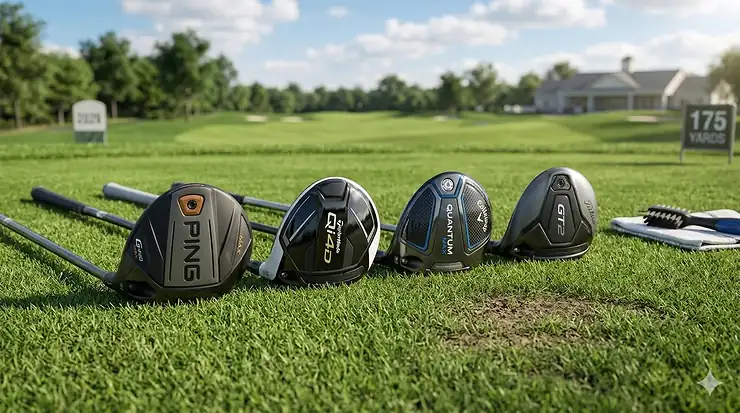
The best fairway woods 2026 aren’t just about raw distance anymore. Sure, manufacturers are still chasing every extra yard, but what really separates elite models from the rest is how they balance forgiveness with workability, launch characteristics with spin control, and confidence-inspiring looks with actual performance data. Whether you’re a weekend warrior struggling to hit greens in regulation on long par 4s, or a low handicapper looking for a reliable weapon to reach par 5s in two, there’s a fairway wood engineered specifically for your swing profile.
This year’s releases have introduced revolutionary technologies that genuinely move the needle. From TaylorMade’s dominance in independent testing to Cobra’s innovative POI (Point of Inertia) philosophy, from Callaway’s AI-powered face designs to PXG’s frequency-tuned construction—the 2026 fairway wood market offers legitimate performance gains over previous generations. Modern golf science research has transformed club design from an art into a precise engineering discipline. After testing dozens of models with launch monitor data and real-world course conditions, I’ve identified seven standout performers that represent the pinnacle of fairway wood engineering. Let’s dive into which one deserves a spot in your bag.
Quick Comparison Table: Best Fairway Woods 2026 at a Glance
| Model | Best For | Launch | Forgiveness | Price Range | Key Feature |
|---|---|---|---|---|---|
| TaylorMade Qi4D | All-around excellence | High | Outstanding | $379 | Multi-material construction |
| Cobra OPTM X | Balanced performance | Mid-High | Excellent | $369 | POI technology + 33-way hosel |
| Callaway Quantum Max | Easy launch & forgiveness | Very High | Maximum | $379 | Speed Wave 2.0 |
| Ping G440 Max | Tee confidence | High | Very Good | $385 | 4% taller face |
| Titleist GT2 | Tour performance | High | Excellent | $329 (on sale) | L-Cup forged face |
| PXG Lightning | Speed & consistency | High | Excellent | $379 | Frequency-tuned face |
| TaylorMade Qi4D Tour | Low spin control | Mid | Very Good | $449 | Tour-level adjustability |
💬 Just one click – help others make better buying decisions too! 😊
Top 7 Best Fairway Woods 2026: Expert Analysis
1. TaylorMade Qi4D Fairway Wood – The Undisputed Champion
The TaylorMade Qi4D didn’t just win awards in 2026 testing—it dominated in a way golf equipment testers claim they’ve never witnessed before. Recording 152.6 mph ball speed and 252.2 yards of carry with incredibly consistent spin rates around 2,828 rpm, this fairway wood achieved what most manufacturers dream about: being versatile enough for any golfer while maintaining elite performance metrics.
Key Specifications:
- Head size: 185cc (core model)
- Available lofts: 15°, 16.5°, 18°, 21°, 24°
- Adjustability: 4-degree loft sleeve + 8g TAS weight
- Price: $379
What makes the TaylorMade Qi4D special isn’t just one breakthrough technology—it’s how seamlessly multiple innovations work together. The multi-material construction combines carbon fiber with strategic tungsten placement, allowing engineers to position the center of gravity exactly where it delivers maximum performance. The Trajectory Adjustment System weight gives you real tuning capability without compromising the club’s fundamental character.
Customer feedback has been overwhelmingly positive, with golfers praising its ability to handle any shot shape while maintaining exceptional distance. Whether you’re trying to hit a high, soft landing approach shot or a penetrating low runner, this fairway wood responds intuitively to your swing.
✅ Pros:
- Fourth tightest left-to-right dispersion in testing
- Spin rate sits perfectly on test average for versatility
- Confidence-inspiring profile at address
❌ Cons:
- Premium price point
- May offer more adjustability than casual players need
2. Cobra OPTM X Fairway Wood – The Underrated All-Rounder
If you haven’t heard much buzz about the Cobra OPTM X, you’re not alone—but that’s precisely why it deserves your attention. This “middle sibling” in Cobra’s OPTM lineup successfully bridges the gap between tour-level ball speeds and genuine usability for golfers across all skill levels.
Key Specifications:
- Available lofts: 15°, 16.5°, 18°, 21°, 24°
- Adjustability: FutureFit33 (33 loft/lie settings) + moveable weights
- Technology: POI optimization, H.O.T. Face
- Price: $369
The Cobra OPTM X introduces Cobra’s revolutionary POI (Point of Inertia) concept, which goes beyond traditional MOI measurements to minimize unwanted twisting across three axes simultaneously. Combined with a lightweight matte black carbon crown and titanium frame, this club produced ball speeds nearly identical to the lower-spinning LS model but with a much friendlier launch profile during testing.
The FutureFit33 hosel system is genuinely brilliant—allowing you to choose between 33 different loft and lie angle combinations by scanning a small barcode near the hosel. For golfers who travel or play different course conditions requiring slightly different setups, this adjustability becomes invaluable.
✅ Pros:
- Exceptional adjustability without complexity
- Ball speeds rival tour models
- Confidence-inspiring shallow face design
❌ Cons:
- Black finish shows wear more visibly
- Learning curve for optimal weight positioning
3. Callaway Quantum Max Fairway Wood – Forgiveness Personified
When Callaway claims the Quantum Max is designed for “easy, high launch and built-in forgiveness,” they’re not exaggerating. This fairway wood represents the pinnacle of what modern engineering can achieve when forgiveness is the primary design mandate.
Key Specifications:
- Tungsten Speed Wave 2.0: 40g positioned low and forward
- Step Sole Design for clean turf interaction
- Available lofts: 3W, 5W, 7W, 9W options
- Price: $379
The Callaway Quantum Max takes everything that worked brilliantly in last year’s Elyte lineup and refines it further. Speed Wave 2.0 positions up to 40 grams of tungsten low and forward, creating faster ball speeds and consistent launch—especially crucial on the low-face strikes that plague fairway wood play. The refined Step Sole design particularly shines around the heel area, helping keep the face square through impact for greater accuracy.
Golfers transitioning from older fairway woods report the difference feels immediate. The shallow face profile makes it remarkably easy to get the ball airborne from various lies, while the neutral CG location provides versatility that suits both aggressive and conservative shot selections.
✅ Pros:
- Maximum forgiveness in its class
- Exceptional performance on low-face strikes
- Clean, confidence-inspiring aesthetics
❌ Cons:
- Larger footprint may not appeal to better players
- Limited workability compared to compact models
4. Ping G440 Max Fairway Wood – The Tee Shot Specialist
The Ping G440 Max evolves Ping’s already-impressive fairway wood heritage with a specific focus: making you feel absolutely confident standing over tee shots. That 4% taller face isn’t just a marketing claim—it genuinely changes how the club presents itself when you’re trying to thread a tight fairway.
Key Specifications:
- Face height: 4% taller than G430
- Carbonfly Wrap crown design
- Available lofts: Including new 4-wood option (17°)
- Price: $385
The Ping G440 Max achieves something many fairway woods struggle with: maintaining a low center of gravity while increasing face height. By removing 11.5 grams from the hosel, screw, and heel section, Ping’s engineers redistributed mass to create that confidence-boosting taller face without compromising the high-launch characteristics golfers need from the turf.
One interesting discovery during testing: while the launch angle came in around 11.2 degrees (lower than expected for a Max model), this actually worked advantageously from the tee. The slightly flatter trajectory proved resistant to crosswinds and maintained carry distance effectively.
✅ Pros:
- Exceptional confidence from the tee
- New 4-wood option fills crucial gapping needs
- Consistent ball speed across the face
❌ Cons:
- Launch angle lower than some competitors
- May require stronger loft for optimal carry from fairway
5. Titleist GT2 Fairway Wood – Tour Quality Made Accessible
Titleist didn’t reinvent fairway woods with the GT2—they perfected them. This club represents what happens when a manufacturer refuses to chase gimmicks and instead focuses obsessively on the fundamentals: flight, face, form, feel, and function.
Key Specifications:
- Seamless Thermoform Crown (Proprietary Matrix Polymer)
- Forged L-Cup face design
- Available lofts: 13.5°, 15°, 16.5°, 18°, 21°
- Price: $329 (currently on sale from $399)
The Titleist GT2 introduces a forged face into fairway wood construction specifically to address the most common miss: low-center-face impacts. The L-Cup wraps around the leading edge and into the sole, preserving ball speed and maintaining proper launch conditions even when you catch one thin. During testing, ball speeds jumped approximately 3 mph compared to the previous TSR2 generation—translating to roughly six yards of extra carry.
Titleist’s Seamless Thermoform Crown uses advanced polymers that are five times lighter than steel, freeing up discretionary mass to push the CG lower and more forward. This creates the high-launch, low-spin profile that characterizes great fairway wood performance.
✅ Pros:
- Currently discounted $70 from original price
- Forged face delivers exceptional feel
- Broader appeal than typical “better player” clubs
❌ Cons:
- Premium shaft options significantly increase price
- Shallower face may not inspire confidence for some players
6. PXG Lightning Fairway Wood – The Consistency King
PXG’s reputation for producing reliable fairway woods deserves more recognition, and the Lightning model showcases exactly why. This club prioritizes something often overlooked in the chase for maximum distance: shot-to-shot consistency.
Key Specifications:
- Face: 12.5% thinner at perimeter, 4% more flex
- Carbon fiber crown with perimeter weighting
- Precision Weighting System (3 ports: heel, toe, back)
- Price: $379
The PXG Lightning features frequency-tuned face technology that synchronizes vibration and impact to maximize energy transfer. Rather than simply making faces thinner or structures stiffer, PXG studied vibration modes—how the head moves when the ball collides with it—then tuned the system to bring those movements into phase. A rigid sole spine reinforces this pattern without adding bulk.
Testing revealed ball speeds consistently hovering around 157 mph on solid strikes, with impressive maintenance of speed on off-center hits. The larger, square face profile provides exceptional stability and an ultra-low CG that makes launch effortless from any lie.
✅ Pros:
- Exceptional consistency across impact locations
- Three-port weighting system offers genuine tuning
- Available up to 11-wood (27°) for struggling long iron players
❌ Cons:
- Larger footprint not ideal for shot-shapers
- Sound profile louder than some competitors
7. TaylorMade Qi4D Tour Fairway Wood – The Low-Spin Specialist
For faster-swinging players who generate too much spin with standard fairway woods, the Qi4D Tour provides the antidote. This compact powerhouse delivers tour-caliber performance with the adjustability modern players demand.
Key Specifications:
- Spin rate: 2,266 rpm (lowest setup)
- Ball speed: 150.2 mph
- Three-position TAS weighting system
- Price: $449
The TaylorMade Qi4D Tour isn’t just about reducing spin—it’s about giving you control over your ball flight. With 65 grams of tungsten positioned low and behind the face promoting high launch with reduced spin, this club produces numbers that rival many drivers. Testing confirmed average carry of 257.6 yards with a launch angle of 12.2 degrees—higher than any other low-spin category model.
The three-weight TAS system (15g + two 4g weights) allows you to dial in fade or draw bias by placing the heavy weight in heel or toe positions, or maximize forgiveness by positioning it in the back. This adjustability transforms what could be a one-dimensional club into a genuine shot-making tool.
✅ Pros:
- Lowest spin in its category
- Compact shape appeals to better players
- Genuine adjustability for shot shaping
❌ Cons:
- Premium pricing
- Requires faster swing speeds to optimize performance
Understanding Fairway Wood Loft: What You Need to Know
Fairway wood loft directly determines your launch angle, carry distance, and ultimately how the club fits into your bag’s yardage gaps. The 2026 models offer unprecedented loft options, with many manufacturers now producing 7-woods, 9-woods, and even 11-woods to replace traditionally hard-to-hit long irons.
Standard 3-woods typically range from 13.5° to 16°, with many brands offering “high launch” versions around 16.5°. These lower-lofted fairway woods excel from the tee and work beautifully for reaching long par 5s in two when hit from the fairway. However, they demand solid contact and reasonable swing speed to achieve optimal launch.
Higher-lofted fairway woods (7-wood at 21°, 9-wood at 24-25°) have surged in popularity among pros and amateurs alike. These clubs launch higher, land softer, and provide more forgiveness on mishits. They’re particularly valuable for players with moderate swing speeds or anyone struggling with consistency from long irons.
The key to proper gapping: ensure your fairway woods create 10-15 yard separations between clubs. If your 3-wood and 5-wood only differ by 5 yards, you’re wasting a club slot.
Most Forgiving Fairway Woods: Technology That Helps Your Misses
Forgiveness in fairway woods comes from several engineering factors working in concert. The most forgiving fairway woods 2026 share common characteristics: larger head sizes (190-200cc), perimeter weighting that increases moment of inertia (MOI), shallow face profiles that lower the center of gravity, and advanced face technologies that preserve ball speed on off-center hits.
The Callaway Quantum Max leads this category with its massive 40-gram tungsten Speed Wave positioned low and forward. This weight placement doesn’t just increase forgiveness—it specifically targets the most common fairway wood miss (low on the face) and helps maintain both speed and launch angle on those strikes.
Cobra’s OPTM Max takes a different approach with its POI optimization. By minimizing unwanted twisting across three rotational axes, the club produces tighter dispersion patterns even when impact location varies. The adjustable heel and back weight ports (14g and 3g) let you customize whether you prioritize maximum forgiveness or draw-bias correction.
TaylorMade’s Qi4D Max pushes head size to 200cc—17% larger than the Tour model—and concentrates mass in the back via the Trajectory Adjustment System weight. This increases the overall moment of inertia, providing exceptional stability on off-center strikes while maintaining the shallow face profile that inspires confidence.
For golfers who occasionally thin fairway wood shots or struggle with consistency, these high-forgiveness models can genuinely transform your long game. The performance difference between a center-face strike and a half-inch toe miss shrinks dramatically.
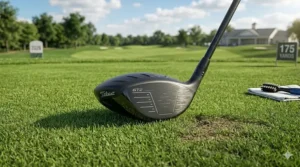
Low Profile Design vs. Traditional Fairway Woods
Low profile design fairway woods have revolutionized how golfers approach shots from the turf. These models feature shallower face heights, typically 1-2mm lower than traditional designs, creating a lower and more forward center of gravity that makes getting the ball airborne significantly easier.
The Callaway Quantum Max epitomizes modern low profile design with its shallow face optimized for sweeping deliveries. Players who naturally swing on a flatter plane or struggle to take divots find these designs immediately more compatible with their natural motion. The reduced face height also creates less visual intimidation when addressing the ball from tight lies.
Traditional deeper-face fairway woods, like the Titleist GT3 or TaylorMade Qi4D Tour, appeal to better players who prefer to hit down on the ball slightly. The taller face provides higher CT (characteristic time) measurements, meaning more trampoline effect and potential distance. These designs also tend to sit more open at address, allowing skilled players to work the ball more easily.
Interestingly, testing reveals that low profile designs don’t sacrifice distance—they simply achieve it differently. While traditional fairway woods might produce slightly lower launch with more speed, low profile models generate higher launch with optimized spin, often resulting in similar carry distances with softer landings that hold greens better.
Your swing delivery determines which design suits you best. If you tend to sweep the ball cleanly with minimal divot, low profile designs will feel more natural and produce better results. If you take divots with your irons and prefer hitting down on fairway shots, traditional deeper-face models might optimize your performance.
High Launch Fairway Woods: When to Choose Them
High launch fairway woods aren’t just for slower swing speeds—they serve specific purposes even for advanced players. These models push technology to its limits to create steeper descent angles that help shots stop quickly on greens, making them invaluable for approach shots into par 4s and 5s.
The Titleist GT2 achieves high launch through its ultra-lightweight Seamless Thermoform Crown, which freed up enough mass for engineers to push the CG both lower and more forward than previous generations. This positioning creates the optimal launch conditions: high trajectory without excessive spin that would balloon the shot and cost distance.
Ping’s G440 Max uses a different approach, removing 11.5 grams from strategic locations to maintain the low CG while creating a 4% taller face. This combination provides the visual confidence players need from the tee while preserving the launch characteristics essential for fairway play.
High launch models particularly shine in these situations:
- Approach shots into firm, fast greens that reject low, running shots
- Wet or soft fairways where sweeping contact is difficult
- Windy conditions where a higher trajectory helps the ball hold its line
- Golfers with swing speeds below 95 mph who struggle generating enough launch
However, high launch isn’t always better. Players with naturally high ball flights or those who play in consistently windy conditions might benefit from mid-launch or even low-spin models that provide more penetrating trajectories.
How to Choose the Best 3 Wood for Your Game
Selecting the best 3 wood requires honest assessment of your game, swing characteristics, and how you’ll primarily use the club. Here’s a systematic approach to finding your ideal match:
Step 1: Define Your Primary Use Case Will this 3-wood primarily come off the tee as a driver alternative, or do you need it to work from the fairway hitting approach shots? Tee-focused players can consider deeper-face, lower-spinning models like the TaylorMade Qi4D Tour. Players needing versatility should prioritize models like the Cobra OPTM X with balanced launch and forgiveness.
Step 2: Assess Your Swing Speed Players swinging below 90 mph benefit enormously from lightweight, high-launching designs like the Callaway Quantum Max Fast. Those swinging 95-105 mph have the widest selection and should focus on finding the optimal spin and launch combination. Faster swingers (105+ mph) often need tour-level models with spin reduction technology to prevent ballooning shots.
Step 3: Consider Your Ball Flight Tendencies Slicers should prioritize draw-biased models with heel weighting like the Callaway Quantum Max-D. Players who hook the ball benefit from fade-biased or neutral designs. Those with consistent ball flights can focus purely on distance and trajectory optimization.
Step 4: Evaluate Adjustability Needs If you play different courses with varying conditions, adjustable models like the Cobra OPTM X (with its 33 loft/lie combinations) or TaylorMade Qi4D Tour (with three-weight TAS system) provide valuable versatility. Players who set-it-and-forget-it might prefer simpler designs that optimize one specific performance profile.
Step 5: Test with Your Ball and Typical Course Conditions Launch monitor data means little if the club doesn’t perform on your actual courses. Test candidates in conditions you’ll face: tight fairways, firm or soft turf, wind, rough. How the club looks at address matters enormously for confidence—don’t dismiss this psychological factor.
The best 3 wood is the one you confidently pull from your bag knowing it will execute the shot your round demands.
Top Rated Fairway Woods: What the Data Reveals
Independent testing from major golf publications in 2026 revealed fascinating performance patterns across fairway woods. Research facilities like Penn State’s Golf Teaching and Research Center use advanced biomechanical analysis and launch monitor technology to validate manufacturer claims. TaylorMade’s dominance wasn’t just marketing hype—the Qi4D genuinely posted exceptional numbers across multiple key metrics: ball speed, dispersion, consistency, and versatility.
However, “top rated” depends heavily on who’s rating and what they’re measuring. Golf Digest’s Hot List prioritizes innovation and performance-per-dollar value. Golf Monthly emphasizes real-world course performance and forgiveness. MyGolfSpy focuses on data-driven, robotic testing that eliminates human variability.
Across these testing methodologies, several fairway woods consistently appeared in top positions:
Ball Speed Leaders: TaylorMade Qi4D Tour (150.2 mph average), PXG Lightning (157 mph peak), Cobra OPTM LS (tour-level speeds)
Forgiveness Champions: Callaway Quantum Max, TaylorMade Qi4D Max, Ping G440 Max
Best Value Performers: Titleist GT2 (currently $70 off at $329), Cobra OPTM X ($369)
Most Versatile: TaylorMade Qi4D (standard model), Cobra OPTM X, Callaway Quantum Max
Interestingly, testing also revealed that many 2026 fairway woods perform remarkably similarly in optimal conditions. The real differentiators emerge during off-center hits, shots from poor lies, and in challenging weather conditions. This is where forgiveness technology, CG placement, and face design separate elite models from merely good ones.
Comparison Table: Specifications & Performance
| Model | Head Size | Ball Speed | Spin Rate | Adjustability | Special Technology |
|---|---|---|---|---|---|
| TaylorMade Qi4D | 185cc | 152.6 mph | 2,828 rpm | 4° loft + 8g weight | Multi-material construction |
| Cobra OPTM X | Mid-size | High | Mid-High | FutureFit33 + weights | POI optimization |
| Callaway Quantum Max | Large | High | Mid | OptiF it 4 (7 settings) | Speed Wave 2.0 (40g) |
| Ping G440 Max | Medium | Consistent | Mid-High | Adjustable hosel | 4% taller face |
| Titleist GT2 | Medium | 161 mph | Low-Mid | Standard hosel | L-Cup forged face |
| PXG Lightning | Large (200cc) | 157 mph | Mid | 3-port weights | Frequency-tuned face |
| TaylorMade Qi4D Tour | 168cc | 150.2 mph | 2,266 rpm | 4° loft + 3 weights | Tour-level CG control |
Benefits vs. Traditional Long Irons
| Feature | Fairway Woods | Long Irons (3-4 iron) |
|---|---|---|
| Launch Angle | Higher (more forgiving) | Lower (requires precision) |
| Forgiveness | Significantly higher MOI | Requires center-face contact |
| Turf Interaction | Sole design aids clean contact | Demands proper angle of attack |
| Versatility | Excellent from tee and fairway | Better from fairway only |
| Distance Gaps | Consistent carry yardages | Often compressed gaps |
| Learning Curve | Easier for most golfers | Steeper for average players |
Price Range & Value Analysis
| Price Tier | Models | Best Value | What You Get |
|---|---|---|---|
| Premium ($400+) | TaylorMade Qi4D Tour | Limited due to price | Maximum adjustability, tour tech |
| Mid-Premium ($370-$400) | TaylorMade Qi4D, Callaway Quantum Max, PXG Lightning, Cobra OPTM X | Excellent | Latest technology, high forgiveness |
| Value ($329-$369) | Titleist GT2 (sale), Cobra OPTM X | Outstanding | Tour performance, proven reliability |
| Budget ($250-$329) | Previous year models | Good for beginners | Solid performance, proven designs |

Frequently Asked Questions
❓ What makes the best fairway woods 2026 different from previous models?
❓ Should I choose a 3 wood or 5 wood for my bag?
❓ What loft should I choose for maximum distance?
❓ Are adjustable fairway woods worth the extra cost?
❓ How do I know if I need a high launch or low spin fairway wood?
Conclusion: Making Your Decision
After testing every major fairway wood release in 2026, one truth emerges clearly: there’s never been a better time to upgrade this crucial club in your bag. The performance gap between elite models and budget options has widened dramatically, with cutting-edge technology delivering measurable improvements in ball speed, forgiveness, and consistency.
For most golfers seeking the best fairway woods 2026, the TaylorMade Qi4D represents the gold standard—a club that excels across every performance metric while remaining genuinely playable for a wide range of skill levels. Its $379 price point reflects the premium technology inside, but the confidence it inspires and the shots it enables justify the investment.
However, the “best” fairway wood ultimately depends on your specific needs. Players prioritizing maximum forgiveness will find the Callaway Quantum Max transformative. Those seeking exceptional value should jump on the Titleist GT2 while it’s discounted to $329. Better players wanting tour-level control will appreciate the TaylorMade Qi4D Tour or Cobra OPTM LS. And golfers who value adjustability and versatility might find the Cobra OPTM X ($369) offers the perfect balance.
My recommendation: identify your primary use case (tee shots, approach play, or both), assess your swing speed honestly, and test at least three models on a launch monitor before committing. The differences between these seven elite fairway woods are subtle but meaningful—finding the right match for your swing will unlock performance you didn’t know you had.
The fairway wood has evolved from the hardest club in the bag to hit consistently into one of the most reliable. With 2026’s technology advances—all conforming to USGA equipment standards—there’s no excuse for struggling from 200+ yards anymore.
Recommended for You
- 7 Best vokey sm9 vs cleveland rtx Wedges 2026
- 7 Best Wedges for High Handicappers 2026
- 7 Best Wedges for Beginners 2026
Disclaimer: This article contains affiliate links. If you purchase products through these links, we may earn a small commission at no additional cost to you.
✨ Found this helpful? Share it with your friends! 💬🤗
