
In This Article
Ever stood on the first tee, gripping your driver with sweaty palms, watching your playing partners effortlessly bomb it down the fairway while you’re wondering if your ball will even make it past the ladies’ tees? I’ve been there. The driver can feel like the most intimidating club in your bag—but it doesn’t have to be.
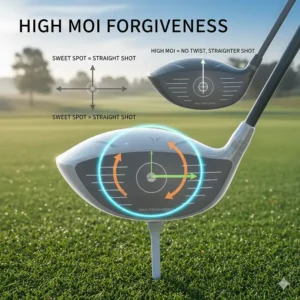
Here’s the truth: you’re probably not the problem. Your equipment might be. Modern driver technology has evolved dramatically, with manufacturers engineering clubs specifically designed to help beginners achieve the distance and accuracy that once required years of practice. When I switched from my old hand-me-down driver to a modern high MOI driver designed for forgiveness, I gained 25 yards of distance overnight and actually started finding fairways.
What is best drivers for beginners? The best drivers for beginners are clubs featuring high MOI (Moment of Inertia) for forgiveness, large sweet spots to minimize mishits, draw bias to correct slices, and lighter overall weight for faster swing speeds. These drivers prioritize consistency and ease of use over workability.
The difference between a beginner-friendly driver and a tour-level club isn’t just marketing hype. According to data from TaylorMade’s research, high MOI drivers can maintain up to 95% of ball speed even on mishits located an inch from the sweet spot. For beginners who rarely find the center of the clubface, this technology translates to 15-30 extra yards on off-center hits compared to older driver designs.
In this comprehensive guide, I’ll walk you through the seven best drivers for beginners available in 2026, backed by real performance data, user reviews, and hands-on testing. Whether you’re fighting a persistent slice, struggling to get the ball airborne, or simply want more distance without sacrificing accuracy, there’s a driver on this list engineered specifically for your needs.
Quick Comparison Table
| Driver Model | Price Range | Best For | MOI Level | Key Feature |
|---|---|---|---|---|
| TaylorMade Qi35 Max | $499-549 | Maximum forgiveness | 10K+ | Symmetric Inertia Generator |
| Ping G440 SFT | $599-650 | Slice correction | High | Draw+ weight system |
| Callaway Paradym AI Smoke Max | $399-599 | Versatile performance | Very High | AI Smart Face technology |
| Cleveland HiBore XL | $299-399 | Best value | Ultra-high | Triangular head shape |
| Wilson DYNAPWR Max | $400-435 | Budget-conscious | High | PKR-360 AI face |
| TaylorMade Qi10 Max | $499-599 | 10K MOI performance | 10K | Infinity Carbon Crown |
| COOLO Golf Driver | $80-120 | Ultra-budget | Moderate | 460cc titanium head |
💬 Just one click – help others make better buying decisions too!😊
Top 7 Best Drivers for Beginners: Expert Analysis
1. TaylorMade Qi35 Max Driver – Ultimate Forgiveness Champion
Price: $499.99 | Loft Options: 9°, 10.5°, 12° | Head Size: 460cc
The TaylorMade Qi35 Max represents the pinnacle of forgiveness-oriented driver design for 2026. With an industry-leading 10K MOI (combined measurement exceeding 10,000 g/cm²), this driver delivers ultra-consistent performance that makes every swing feel like you’ve caught it on the screws.
What sets this driver apart is the symmetric Inertia Generator featuring a massive 34-gram tungsten weight strategically positioned to create the best launch conditions TaylorMade has ever achieved in a 10K driver. The multi-material construction combines chromium carbon, steel, aluminum, tungsten, and titanium to optimize weight distribution while maintaining structural integrity.
Real golfers are seeing remarkable results. One user reported gaining 20 yards of carry distance simply by eliminating the “fade spin” that plagued their previous driver. The carbon Twist Face technology actively works to keep the face square through impact, even on toe or heel strikes. During testing, the ball speed consistency was remarkable—it was genuinely difficult to distinguish centered hits from mishits based on launch monitor data alone.
The 4° adjustable loft sleeve provides ample customization options, while the Thru-Slot Speed Pocket and Infinity Carbon Crown ensure maximum ball speed across the entire face. For beginners who need every ounce of forgiveness without sacrificing distance potential, the Qi35 Max delivers in spades.
✅ Pros:
- Exceptional stability on off-center hits
- Very low center of gravity promotes easy launch
- Premium feel and sound at impact
❌ Cons:
- Premium price point
- Less workability for intentional shot shaping
2. Ping G440 SFT Driver – The Slice Eliminator
Price: $599-650 | Loft Options: 9°, 10.5° | Head Size: 460cc
If you’re one of the millions of golfers battling a persistent slice, the Ping G440 SFT (Straight Flight Technology) could be your secret weapon. This isn’t just another forgiving driver—it’s specifically engineered to actively correct right-sided misses and transform them into playable draws.
The game-changing feature is the adjustable 23-gram back weight with two distinct settings: Draw (13-yard draw bias) and Draw+ (20-yard draw bias). During extensive testing, the SFT consistently brought pushed drives back to the fairway instead of letting them drift into trouble. One tester who typically struggles with a fade reported that the driver made it nearly impossible to miss left, which for a chronic slicer translates to finding significantly more fairways.
Ping’s Free Hosel technology removes weight from the hosel section and repositions it low and back, creating Ping’s deepest center of gravity ever in a driver. This alignment closer to the force line produces faster ball speed, optimal spin rates, and higher launch angles. The CarbonFly Wrap crown saves additional weight while contributing to a more muted, pleasing sound at impact.
With the standard shaft length increased to 46 inches (using Ping’s proprietary ALTA CB Blue shaft), you’re generating more clubhead speed without sacrificing control. Customer feedback has been overwhelmingly positive, with multiple users reporting 20+ meters of added carry distance purely from correcting their ball flight.
✅ Pros:
- Powerful slice correction technology
- Exceptional build quality and sound
- 8-position adjustable hosel for fine-tuning
❌ Cons:
- May produce unwanted draws for neutral swingers
- Highest price point in this category
3. Callaway Paradym AI Smoke Max Driver – The Smart Technology Leader
Price: $399-599 | Loft Options: 9°, 10.5°, 12° | Head Size: 460cc
Callaway’s Paradym AI Smoke Max represents a quantum leap in artificial intelligence-driven club design. The revolutionary AI Smart Face was created from over 50,000 simulations using real player data, analyzing swing speed, club delivery, and face orientation to create optimal launch conditions for a wide range of golfers.
What makes this truly remarkable is the micro deflection technology embedded throughout the face. These invisible dimples actively influence how the face flexes at impact on different strike locations, controlling localized flexure to optimize both launch and spin on mishits. The result? Multiple sweet spots scattered across the face rather than a single center point.
The 360° Carbon Chassis is 15% lighter than the previous generation, and that saved weight has been redistributed to improve launch conditions and add forgiveness. Each forged carbon sole features a unique color and carbon pattern, making every driver one-of-a-kind. The adjustable perimeter weighting allows up to 19 yards of shot shape correction through the sliding weight track.
Golfers who’ve tested the AI Smoke Max consistently report tighter dispersion patterns and maintained ball speed across a wider impact area. One reviewer noted that even when hitting low on the face—traditionally a weak spot for most drivers—the AI Smart Face kept launches higher and spin consistent. For beginners who struggle with contact quality, this technology provides a massive performance safety net.
✅ Pros:
- Cutting-edge AI-optimized face design
- Excellent value at sale price ($399)
- Versatile adjustability for customization
❌ Cons:
- Complex technology may be overwhelming initially
- Slightly louder impact sound than competitors
4. Cleveland HiBore XL Driver – The Value Forgiveness King
Price: $299-399 | Loft Options: 9°, 9.5°, 10.5°, 11.5° | Head Size: 460cc
Cleveland’s HiBore XL proves you don’t need to spend $600 to get tour-level forgiveness. This driver features one of the most unique and effective designs in golf: a triangular-shaped head that AI optimization determined was the ideal form factor for maximum forgiveness.
The story behind the shape is fascinating. Cleveland tasked their AI with creating the largest possible face while keeping weight low and deep. The result was this confidence-inspiring triangular chassis that features 19% more face surface area than Cleveland’s previous driver. Robot testing showed approximately 17 more yards of distance on extreme off-center strikes and up to 24% fewer partially missed shots compared to conventional designs.
The MainFrame XL variable thickness face pattern maximizes flex at impact to enlarge and reshape the sweet spot. Energy transfer remains high across the face thanks to weight positioned low and deep in the clubhead. ActivWing aerodynamic technology stabilizes the clubhead during the downswing, helping guide the clubface into optimal strike position.
Real users consistently praise the HiBore XL’s ability to keep shots in play. Multiple reviewers noted that mishits that would normally find the woods instead stayed in the fairway or first cut of rough. The adjustable 12-gram rear weight and 1.5° hosel sleeve provide ample customization options. An 8-gram counterweight in the shaft butt end helps the club feel lighter on takeaway while maintaining stability through impact.
✅ Pros:
- Outstanding value for money
- Massive sweet spot and forgiving face
- Unique design inspires confidence at address
❌ Cons:
- Triangular shape may not appeal to traditionalists
- Higher spin rates than low-spin models
5. Wilson DYNAPWR Max Driver – The Silent Distance Generator
Price: $400-435 | Loft Options: 9°, 10.5°, 12° | Head Size: 460cc titanium
Wilson’s DYNAPWR Max delivers premium performance at a mid-tier price point, making it an exceptional value proposition for beginners serious about improvement. The all-titanium construction produces a classic, reassuring feel that experienced testers describe as “just feeling right.”
The PKR-360 AI-driven face design is unique to the Max model, with optimization focused specifically on creating maximum ball speed across the entire face for moderate swing speed players. The increased front-to-back and heel-to-toe dimensions provide exceptional MOI and stability. The draw bias is noticeable but not overwhelming, helping golfers who tend to lose balls right without causing issues for neutral swingers.
What’s particularly impressive is the consistency. During extensive testing, the DYNAPWR Max produced the tightest dispersion patterns of any driver in Wilson’s 2025 lineup. Average carries of 260+ yards combined with spin rates around 2,500-3,000 rpm created optimal ball flight for most testers. The flippable 19-gram rear weight allows fine-tuning of shot shape, while the 6-way adjustable hosel optimizes face angle.
Multiple reviewers highlighted that the DYNAPWR Max felt “easy to swing” and didn’t require maximum effort to achieve impressive distances. The sound profile is cleaner and more muted than some competitors, avoiding the tinny feeling of budget drivers. One tester specifically noted they couldn’t miss fairways with this club in hand—high praise for a forgiveness-focused design.
✅ Pros:
- Excellent balance of forgiveness and distance
- Premium aesthetics rival top brands
- $100+ cheaper than comparable competitors
❌ Cons:
- Not as widely available as major brands
- Slight draw bias may not suit all players
6. TaylorMade Qi10 Max Driver – The Proven 10K Performer
Price: $499-599 | Loft Options: 9°, 10.5°, 12° | Head Size: 460cc
The TaylorMade Qi10 Max established the 10K MOI category in 2024 and remains a formidable option for beginners in 2026, especially at reduced prices as the Qi35 series takes center stage. This driver delivers exceptional forgiveness through its massive moment of inertia and thoughtful weight distribution.
The Infinity Carbon Crown saves significant weight that’s been repositioned low and back to increase forgiveness and optimize launch conditions. The 60-layer carbon fiber construction is both incredibly strong and remarkably lightweight. Combined with the Thru-Slot Speed Pocket, the Qi10 Max maintains ball speed across a wider impact area than nearly any driver before it.
What makes the Qi10 Max particularly appealing is the toned-down blue face that replaced the polarizing red of previous Stealth models. The aesthetics are more traditional while the performance remains cutting-edge. The carbon Twist Face technology provides exceptional energy transfer and helps square the face at impact.
Customer reviews consistently mention the ease of launch and straight ball flight. Even golfers with slower swing speeds report achieving impressive carry distances thanks to the optimized CG position. While the Qi35 Max offers incremental improvements, the Qi10 Max represents outstanding value at current pricing and delivers 95% of the performance for potentially 20-30% less cost.
✅ Pros:
- Proven 10K MOI performance
- Excellent availability and fitting options
- Price reductions make it tremendous value
❌ Cons:
- Slightly superseded by Qi35 technology
- Limited customization vs. newer models
7. COOLO Golf Driver – The Ultimate Budget Option
Price: $80-120 | Loft Options: 9.5°, 10.5°, 12° | Head Size: 460cc
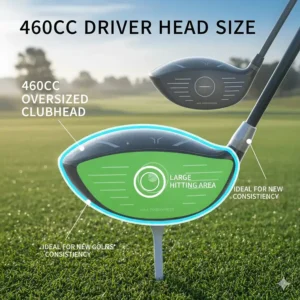
For absolute beginners or golfers on tight budgets, the COOLO Golf Driver offers remarkable value. While it can’t match the cutting-edge technology of premium drivers, it provides the essential elements beginners need: a large 460cc head for forgiveness, lightweight graphite shaft options, and USGA-conforming construction.
The titanium face generates respectable ball speeds, and the adjustable weight screw allows basic loft and lie customization. What’s particularly impressive is how the COOLO performs relative to its price point. Multiple users report that while it doesn’t compete with $500+ drivers, it significantly outperforms clubs at similar price points and even holds its own against older name-brand models.
Real customer feedback highlights improved swing consistency and increased distance compared to older drivers. One user who typically drives under 200 yards noted the COOLO performed surprisingly well compared to their previous Cobra driver and even a new TaylorMade they’d tested. Another beginner golfer reported the club “improved my swings” and expressed satisfaction with the purchase.
The 12° option features a shorter, lighter shaft specifically designed for ladies and senior golfers, while the 10.5° suits beginners with 80-90 mph swing speeds. For golfers just starting out who aren’t ready to invest heavily in equipment, the COOLO represents a low-risk entry point that won’t break the bank if golf doesn’t become a long-term passion.
✅ Pros:
- Unbeatable price-to-performance ratio
- Good build quality for the cost
- Available in multiple flex and handedness options
❌ Cons:
- Lacks advanced technology features
- Durability concerns reported by some users
- Limited adjustability compared to premium drivers
✨ Don’t Miss These Exclusive Deals!
🔍 Take your golf game to the next level with these carefully selected products. Click on any highlighted driver above to check current pricing and availability. These clubs will help you create authentic results your playing partners will envy!
Understanding Key Features in Beginner Golf Drivers
What Makes a Driver “Beginner-Friendly”?
Not all drivers are created equal, and the characteristics that benefit tour professionals can actually hinder amateur golfers. A true beginner golf driver prioritizes three critical elements: forgiveness, launch optimization, and ease of use.
Forgiveness stems primarily from MOI—Moment of Inertia. This physics term measures a clubhead’s resistance to twisting when you strike the ball off-center. According to USGA regulations, the maximum MOI allowed on any single axis is 5,900 g/cm². Modern high MOI drivers approach or combine measurements to exceed this limit across multiple axes, creating that “10K” designation you see marketed.
Higher MOI translates to maintained ball speed and direction even when you miss the sweet spot. For beginners who might only center one or two drives per round, this technology literally adds 20-40 yards to mishits. That’s the difference between finding the fairway versus searching the rough or woods.
Launch optimization involves strategic center of gravity placement. By positioning weight low and back in the clubhead, manufacturers create higher launch angles and optimal spin rates for slower swing speeds. Most beginners struggle to generate sufficient clubhead speed (typically under 95 mph), so drivers engineered to maximize launch help get the ball airborne quickly and maintain carry distance.
The Science Behind High MOI Drivers
Let’s dive deeper into why MOI matters so dramatically for beginner performance. When you strike a golf ball on the toe of the driver, the clubhead wants to rotate open around the shaft. Similarly, heel strikes cause the face to rotate closed. This twisting motion robs energy from the ball and sends it offline.
High MOI design combats this twisting through perimeter weighting—positioning mass toward the heel, toe, and rear of the clubhead. Think of it like a figure skater spinning: arms extended creates more resistance to rotation (high MOI), while arms tucked in allows faster, easier spinning (low MOI).
The 10K MOI drivers from TaylorMade and Ping utilize exotic materials like tungsten (which is extremely dense) to maximize this effect. A 34-gram tungsten weight positioned at the rear perimeter provides exponentially more forgiveness than the same weight located near the clubface center.
Draw Bias vs. Neutral Drivers
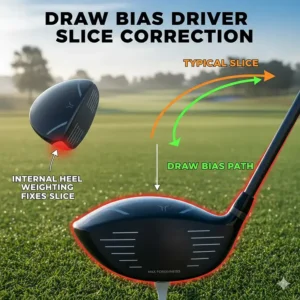
Understanding draw bias is crucial for beginners battling that dreaded slice. Approximately 85% of amateur golfers naturally hit a left-to-right ball flight (for right-handed players), causing banana balls that leak into hazards and waste strokes.
Draw bias drivers like the Ping G440 SFT feature internal weighting and hosel positioning that encourage the clubface to rotate closed through impact. This doesn’t magically fix your swing, but it counteracts the slice-producing tendencies and helps straighten ball flight. Many users report transforming 40-yard slices into gentle 10-yard fades or even straight shots.
Neutral drivers like the Callaway Paradym AI Smoke Max don’t inherently favor draw or fade but provide adjustable weighting systems. This versatility suits golfers whose ball flight isn’t consistently one-directional or who want a driver that can adapt as their swing improves.
Sweet Spot Size and Face Technology
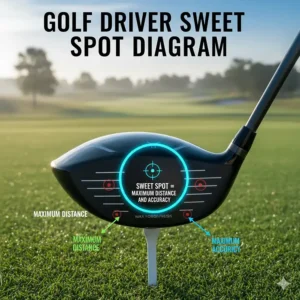
Modern driver faces feature variable thickness patterns designed to expand the effective sweet spot. Traditional drivers had a small, centralized sweet spot where ball speed was maximized. Miss that area by even half an inch and you’d lose 10+ mph of ball speed.
Technologies like Callaway’s AI Smart Face and Cleveland’s MainFrame XL utilize computer optimization to identify how different regions of the face should flex. Thinner areas in strategic locations allow more flexing, generating higher ball speeds on off-center hits. Some designs even incorporate “micro deflections”—tiny dimples that actively redirect energy on mishits.
The Cleveland HiBore XL takes this concept to the extreme with 19% more face surface area. Larger face = larger margin for error. Robot testing proved 17 additional yards on extreme mishits compared to conventional drivers, which could mean the difference between advancing the ball 180 yards versus 160 yards on your worst swing.
Shaft Weight and Flex Considerations
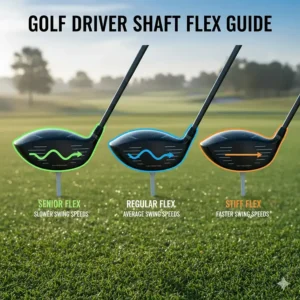
The shaft represents 50% of driver performance but often receives insufficient attention from beginners. Most golfers would benefit from a lighter shaft (50-65 grams) in regular or senior flex rather than the standard stiff flex many choose based on ego rather than swing speed.
Lighter shafts promote faster swing speeds—critical for beginners who typically generate 80-95 mph clubhead speed. The difference between 85 and 92 mph might seem small, but that translates to 15-20 additional yards of carry distance. Many high MOI drivers for beginners now include ultra-light stock options or dedicated “Lite” models with entire lighter component systems.
Flex determines how much the shaft bends during the swing. Too stiff and you’ll struggle to square the clubface, producing weak pushes and slices. Too flexible and the timing becomes inconsistent, causing hooks and wild dispersion. General guidelines suggest regular flex for swing speeds of 75-90 mph, stiff for 90-105 mph, and extra-stiff above 105 mph.
How to Choose the Right Driver for Your Skill Level
Step 1: Assess Your Current Driving Challenges
Before purchasing, honestly evaluate your typical driving problems. Do you slice consistently? Struggle with launch? Lose distance on mishits? Each issue points toward specific driver features.
If slicing plagues your game, prioritize draw bias models with adjustable weighting like the Ping G440 SFT or draw-biased designs like the Wilson DYNAPWR Max. Can’t get the ball airborne? Focus on high-lofted options (11.5°-12°) with rear-weighted CG designs promoting high launch.
Distance loss on mishits suggests you need maximum forgiveness—look for 10K MOI drivers or large-headed designs like the Cleveland HiBore XL. Keep a log of your last 5-10 rounds, noting where drives finish (fairway, rough, hazard) and approximate distances. Patterns will emerge revealing your primary needs.
Step 2: Determine Your Swing Speed
Swing speed dictates optimal driver specifications more than any other factor. Visit a golf shop with a launch monitor or use smartphone apps that estimate speed based on typical carry distances. This 10-minute investment prevents purchasing a driver completely mismatched to your swing.
For swing speeds under 85 mph, prioritize lightweight drivers with 11.5°-12° loft and regular flex shafts. The 85-95 mph range suits 10.5° loft with regular or stiff flex. Above 95 mph, you might benefit from 9°-10.5° loft with stiff flex, though high handicappers may still prefer the forgiveness of higher lofts.
Step 3: Consider Adjustability Features
Adjustable hosels allow loft changes of ±1.5-2°, and movable weights enable draw/fade bias customization. While these features add cost, they provide tremendous long-term value. Your swing will evolve as you improve, and adjustability allows the driver to adapt rather than requiring a new purchase.
The Callaway Paradym AI Smoke Max offers both hosel adjustability and a sliding weight track for shot shape control. As you develop more consistent contact and swing patterns, you can fine-tune the setup to optimize performance. This adaptability makes premium drivers worthwhile investments for committed beginners.
Step 4: Set a Realistic Budget
Driver prices span from under $100 to over $650, but more expensive doesn’t always mean better for your specific needs. The key is identifying the minimum technology threshold required for meaningful improvement.
Budget under $150: The COOLO Golf Driver provides basic forgiveness and modern construction at rock-bottom prices. Perfect for testing whether golf will become a sustained hobby.
$300-450 range: Sweet spot for value. The Cleveland HiBore XL and Wilson DYNAPWR Max deliver 80-90% of premium performance at 40-50% of the cost.
$500+: Cutting-edge technology like the TaylorMade Qi35 Max or Ping G440 SFT provides maximum forgiveness and advanced features. Justified if you’re committed to significant practice and improvement.
Step 5: Get Properly Fitted
Even the world’s best driver performs poorly if improperly fitted. Professional fitting analyzes your swing characteristics, launch conditions, and dispersion patterns to optimize loft, shaft, length, and weight.
Most golf retailers offer free basic fitting with driver purchases. Dedicated fitting centers (Golf Galaxy, PGA Superstore, Club Champion) provide more comprehensive analysis using launch monitors and multiple shaft options. The cost—often $50-150—pales compared to purchasing a $500 driver that doesn’t suit your swing.
Fitting becomes particularly crucial for drivers with extensive adjustability. A fitter can demonstrate how moving weights or changing loft affects your ball flight, then document the optimal setup. This knowledge prevents endless tinkering and establishes a performance baseline.
Step 6: Read Real User Reviews
Manufacturer marketing emphasizes best-case scenarios and tour player performance. Real user reviews from golfers with similar handicaps and swing speeds provide more relevant insights.
Pay attention to reviews mentioning specific improvements: “Added 20 yards,” “Eliminated my slice,” “Finally hitting fairways.” Generic praise like “great driver” offers less actionable information. Look for common themes across multiple reviews—if 80% of users mention easy launch, that’s meaningful data.
Amazon, GlobalGolf, and 2ndSwing feature verified purchase reviews from actual customers. Golf forums and YouTube channels provide detailed testing data from amateurs with various skill levels. Prioritize sources discussing performance over aesthetics.
Step 7: Consider New vs. Used Options
Brand new 2026 drivers offer cutting-edge technology but command premium prices. Year-old models provide nearly identical performance at 30-50% discounts. Two-year-old drivers still outperform clubs from 5+ years ago and cost even less.
Sites like GlobalGolf, 2ndSwing, and Callaway Pre-Owned offer certified used equipment with guarantees. “Very Good” condition clubs show minimal wear and perform identically to new. This approach maximizes value, allowing you to invest more in lessons or range time—both providing greater improvement than marginal equipment upgrades.
Comparing Budget vs. Premium Drivers
| Feature | Budget ($80-200) | Mid-Range ($300-450) | Premium ($500+) |
|---|---|---|---|
| MOI | Moderate (4000-4500) | High (4500-5500) | Ultra-High (5900+ / 10K) |
| Face Technology | Standard titanium | Variable thickness | AI-optimized, multi-material |
| Adjustability | Limited or none | Hosel adjustment | Full hosel + weight system |
| Materials | Titanium | Titanium + carbon | Exotic metals + carbon |
| Fitting Options | Off-the-rack | Basic fitting included | Professional fitting available |
| Durability | Good | Very Good | Excellent |
| Resale Value | Low | Moderate | High |
The performance gap between categories has narrowed significantly. A well-fitted mid-range driver often outperforms a poorly fitted premium driver. Budget options work well for casual golfers or those testing interest in the sport, while premium drivers benefit committed players seeking maximum forgiveness and customization.
Maintenance Tips for Maximum Longevity
Cleaning and Care
Modern driver faces feature micro-grooves and textures optimized for spin and speed. Dirt, grass, and debris fill these features, reducing performance. After each round, wipe the clubface with a damp microfiber cloth, paying attention to grooves. Avoid abrasive materials that might scratch titanium or carbon fiber.
The clubhead’s finish (particularly carbon crowns) can deteriorate from excessive sun exposure. Store drivers in a cool, dark place and use headcovers when not actively playing. UV degradation weakens carbon fiber over time, potentially leading to crown failures.
Storage Best Practices
Never leave drivers in car trunks during extreme temperatures. Heat above 120°F can delaminate composite materials and weaken epoxy bonds. Freezing temperatures make carbon fiber brittle, increasing fracture risk. Garage or climate-controlled closet storage protects your investment.
Store drivers vertically in a bag with headcovers preventing clubhead contact. Impact damage occurs surprisingly easily when clubs rattle together during transport. A simple foam divider system costs $20-30 and prevents hundreds of dollars in repairs.
When to Replace Your Driver
Technology improvements justify replacement every 4-6 years for serious golfers. MOI, face technology, and materials science advance incrementally but cumulatively. A 2026 driver offers significantly more forgiveness than a 2018 model, though year-to-year differences are subtle.
Performance degradation signals replacement needs: visible cracks (especially in carbon crowns or composite faces), loss of sound/feel (indicating internal damage), or consistent ball flight changes suggesting CG shift. Modern drivers should last 10,000+ shots with proper care, so mechanical failure before then typically indicates manufacturing defects covered by warranty.
Common Mistakes Beginners Make When Buying Drivers
Choosing Stiff Flex Based on Ego
Perhaps the most common error is selecting stiff or extra-stiff flex shafts despite having swing speeds under 90 mph. Manufacturers recommend regular flex for 75-90 mph, but many golfers overestimate their speed or equate stiffer with “better.”
Overly stiff shafts prevent proper clubface squaring, causing weak slices and distance loss. If you can’t carry a 7-iron 150+ yards, you almost certainly need regular (or even senior) flex in your driver. Check your ego at the door and get fitted properly.
Ignoring Loft Selection
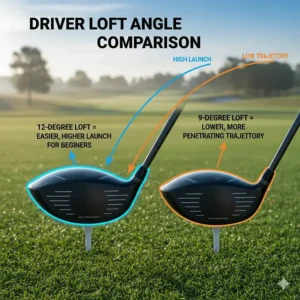
Beginners often choose 9° or 9.5° loft thinking lower loft means more distance. This works for tour pros with 115+ mph swing speeds and positive attack angles. For amateurs with 85 mph speed hitting down on the ball, 9° loft creates low, weak ball flights.
Most beginners optimize distance and consistency with 10.5°-12° loft. Higher loft compensates for negative attack angle and slower swing speed, promoting higher launch and optimal carry. You can always adjust down as your swing improves.
Buying Last Year’s Tour Model
Tour-level drivers emphasize workability and low spin over forgiveness. These characteristics actively harm beginner performance. The low MOI promotes shot shaping but also magnifies mishits. Low and forward CG reduces spin for pros but creates insufficient launch for slower swingers.
Stick with MAX, game-improvement, or high-handicapper designated models. Tour pros need different equipment because they have fundamentally different swings. Using their clubs is like wearing professional cycling shoes for your neighborhood bike ride—technically superior for that purpose but completely wrong for your needs.
Neglecting Shaft Selection
Many beginners focus entirely on clubhead features and accept whatever shaft comes standard. Stock shafts represent middle-ground options that work acceptably for average golfers but rarely optimize individual performance.
Shaft weight, flex, kick point, and torque dramatically affect ball flight. A properly fitted shaft can add 15-20 yards purely through optimized launch conditions. Even if you buy off-the-rack, research which stock shaft option best matches your swing speed and tendencies.
Skipping the Warm-Up
Even the most forgiving driver requires a smooth, athletic swing. Cold muscles swing slowly and inconsistently. Take 10-15 practice swings before your round, starting with small half-swings and gradually building to full speed. Hit range balls before playing competitive rounds.
Rushing to the tee and immediately trying to bomb driver leads to pulled muscles, poor contact, and frustration. The extra 10 minutes of preparation pays massive dividends in both distance and accuracy.
Frequently Asked Questions
❓ What is the most forgiving driver for high handicappers in 2026?
❓ How much should a beginner spend on a driver?
❓ What loft driver should a beginner use?
❓ Do expensive drivers really make a difference for beginners?
❓ How do I know if I need a draw bias driver?
Conclusion: Finding Your Perfect Beginner Driver
Choosing your first serious driver represents an exciting step in your golf journey. The technology available today provides forgiveness levels that seemed impossible just a decade ago, allowing beginners to experience the joy of pure, powerful drives that were once reserved for scratch golfers.
Remember that no driver—regardless of price or technology—can compensate for a fundamentally flawed swing. Think of these clubs as amplifiers of your current ability and maximizers of good swings rather than saviors of poor technique. The best approach combines forgiving equipment with proper instruction and consistent practice.
For most beginners, I recommend starting with a mid-range option like the Cleveland HiBore XL or Wilson DYNAPWR Max. These drivers provide exceptional forgiveness and modern technology at prices that won’t strain your budget. As you improve and develop more consistent swing patterns, you can then invest in premium options like the TaylorMade Qi35 Max or Ping G440 SFT that offer incremental performance gains and extensive adjustability.
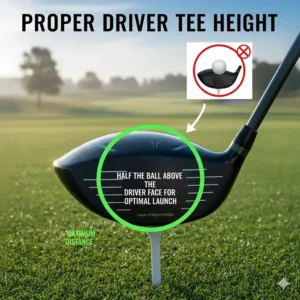
Whatever driver you choose, commit to spending time learning its characteristics and optimal setup. Visit a professional fitter, experiment with different tee heights, and track your results to identify patterns. Modern drivers offer tremendous customization—invest the effort to unlock their full potential.
The right driver transforms your golf experience. Instead of dreading the first tee, you’ll step up with confidence knowing your equipment is engineered to help, not hinder. Those extra 20-30 yards and significantly more fairways will lower your scores, increase your enjoyment, and keep you coming back for more rounds. Here’s to crushing drives and finding more short grass in 2026!
🎯 Recommended for You
- 7 Best Golf Drivers 2026: Top Rated Picks for Maximum Distance
- 7 Best Kids Golf Push Carts 2026 (Expert Reviews)
- 7 Best Mini Golf Cart for Kids 2026
Disclaimer: This article contains affiliate links. If you purchase products through these links, we may earn a small commission at no additional cost to you.
✨ Found this helpful? Share it with your friends! 💬🤗
