

In This Article
Looking to add serious yards to your tee shots? You’re in the right place. Finding the best driver for distance isn’t just about swinging harder—it’s about optimizing ball speed, launch angle, and smash factor with the right equipment. Modern drivers have evolved into precision-engineered distance machines, and 2026’s models push the boundaries further than ever.
I’ve spent countless hours testing the latest drivers on launch monitors, analyzing data, and comparing real-world performance. The difference between a mediocre driver and the best driver for distance can mean 20-30 extra yards down the fairway. That’s the difference between hitting a 7-iron versus a 9-iron into the green—and we all know which shot is easier.
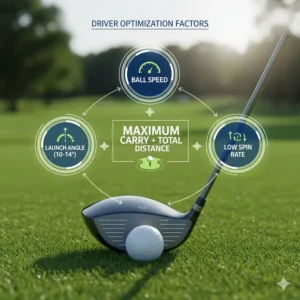
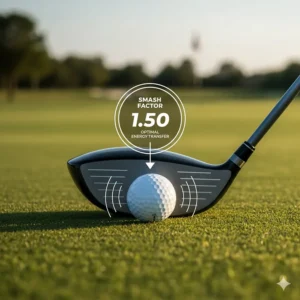
What makes a driver truly excel at distance? It’s a combination of factors: low spin rates that prevent ballooning, optimized launch angles typically between 10-14 degrees, maximum ball speed through advanced face technology, and forgiveness that maintains distance even on off-center hits. According to TrackMan data, achieving a smash factor near 1.50 is critical for maximizing distance, representing optimal energy transfer from club to ball.
In this comprehensive guide, I’ll break down the 7 longest drivers in golf for 2026, covering everything from budget-friendly options to premium tour-level clubs. Whether you’re a high-handicapper seeking forgiveness or a scratch golfer chasing every possible yard, you’ll find your perfect match here.
Quick Comparison Table
| Driver | MOI | Best For | Price Range | Key Distance Tech |
|---|---|---|---|---|
| TaylorMade Qi35 Max | 10K | Max forgiveness | $599-$649 | Low CG, 34g tungsten weight |
| Callaway Elyte Triple Diamond | High | Low spin players | $599-$629 | Ai10x Face, Thermoforged Carbon |
| Titleist GT2 | High MOI | Center-face distance | $649 | Matrix Polymer Crown, VFT |
| Ping G430 Max 10K | 10K+ | Straight distance | $549-$599 | Carbonfly Wrap, 28g weight |
| Cobra Darkspeed LS | Mid-High | High swing speeds | $299-$549 | PWR-Bridge, AI HOT Face |
| Srixon ZX7 Mk II | Mid | Workability + distance | $349-$499 | Rebound Frame, Ti51AF |
| Tour Edge E725 | 10K | Value + forgiveness | $399 | 3D Diamond Face, Flight Tuning |
💬 Just one click – help others make better buying decisions too! 😊
Top 7 Best Driver for Distance: Expert Analysis
1. TaylorMade Qi35 Max Driver
The TaylorMade Qi35 Max Driver represents the pinnacle of forgiveness-meets-distance engineering. With an unprecedented 10,000 g-cm² MOI, this driver delivers ultra-consistent distance even when you miss the sweet spot.
Key Specifications:
- 10K MOI with symmetric Inertia Generator
- 34g tungsten back weight
- Infinity Carbon Crown
- 4° loft sleeve adjustability
- Available lofts: 9°, 10.5°, 12°
The Qi35 Max features TaylorMade’s low CG projection technology, positioning mass strategically to optimize launch conditions across a larger face area. This means more distance from more of the face—critical for golfers who don’t always find the center. TaylorMade claims this delivers their best launch conditions in any 10K driver, backed by player testing showing significant gains versus the Qi10 Max.
Real users praise its “very forgiving” nature with “great distance” and straight ball flight. One tester noted it felt like a “cheat code” for consistent drives. The Twist Face technology corrects gear effect on mishits, while the Thru-Slot Speed Pocket maintains ball speed on low-face strikes.
Price: $599-$649
✅ Pros:
- Exceptional forgiveness across the entire face
- Optimized launch for maximum carry
- Premium sound and feel
❌ Cons:
- Larger profile may not appeal to traditionalists
- Premium price point
Who should buy: Mid-to-high handicappers seeking maximum forgiveness without sacrificing distance, or anyone who wants the confidence of 10K stability.
2. Callaway Elyte Triple Diamond Driver
The Callaway Elyte Triple Diamond Driver is a low-spin distance weapon that’s become the choice of tour professionals worldwide. This driver combines tour-level workability with surprisingly forgiving performance—a rare combination.
Key Specifications:
- Thermoforged Carbon Crown
- Ai10x Face (10x more optimization points)
- Interchangeable front-back weights
- Available lofts: 8°, 9°, 10.5°
- Compact 450cc head shape
Callaway’s Ai10x Face represents their most advanced face technology yet, with 10 times more control points than previous generations. This translates to exceptionally fast ball speeds, tight dispersion, and optimized launch across the entire face. The new Thermoforged Carbon crown is aerospace-grade material that enables optimal CG positioning for low spin and high launch—the perfect recipe for maximum distance.
According to MyGolfSpy testing, the Elyte Triple Diamond ranks in the top three for both accuracy and distance while showing above-average forgiveness—remarkable for a low-spin driver. Testers consistently praised its “effortless launch” and ability to bomb it long while maintaining control.
The gloss black finish and clean topline inspire confidence, though some testers prefer a different crown aesthetic. With interchangeable weights, you can dial in your preferred spin profile—heavy weight forward for even lower spin and maximum distance, or heavy weight back for added stability.
Price: $599-$629
✅ Pros:
- Tour-level distance with exceptional ball speed
- Low spin for penetrating ball flight
- Highly workable for shot shaping
❌ Cons:
- Smaller head may intimidate some players
- Requires solid ball-striking for optimal performance
Who should buy: Better players with faster swing speeds seeking maximum distance through low spin and workability, or anyone ready to step up to tour-level performance.
3. Titleist GT2 Driver
The Titleist GT2 Driver shocked the golf world by winning MyGolfSpy’s 2025 distance testing—beating out several “distance-oriented” competitors. This driver proves that maximum forgiveness and explosive distance can coexist beautifully.
Key Specifications:
- Proprietary Matrix Polymer Seamless Thermoform Crown
- Split Mass Construction
- Upgraded Speed Ring with VFT
- SureFit adjustable hosel
- Available lofts: 8.5°, 9°, 10°, 11°
Titleist revolutionized their driver design with the GT2, introducing a Proprietary Matrix Polymer crown that’s three times lighter than all-titanium construction. This isn’t just weight savings—it’s a complete reimagining of how mass can be distributed. The result? Exceptional speed AND stability in a balanced package.
The Split Mass Construction positions mass both low-forward for speed and rear-back for stability. You get explosive distance on pure strikes while maintaining playable distance on mishits. The upgraded Speed Ring with Variable Face Technology preserves consistently fast ball speeds across the entire face—critical for real-world distance where perfect contact is rare.
User reviews confirm the data: “Explosive when you catch it and merely long otherwise.” Multiple testers reported 278-287 yard drives even on merely “okay” contact. The GT2 doesn’t demand perfection—it quietly delivers solid, playable drives that keep you attacking flags.
The aerodynamic shaping features refined contours and a sharper profile that increases clubhead speed while retaining Titleist’s player-preferred aesthetics. You get modern performance in a classic package.
Price: $649
✅ Pros:
- Wins independent distance testing
- Exceptional forgiveness across the face
- Premium sound, feel, and aesthetics
❌ Cons:
- Premium pricing
- Not a massive upgrade from TSR2 for current owners
Who should buy: Golfers of all skill levels who want explosive distance with high MOI stability and don’t mind paying for proven performance.
4. Ping G430 Max 10K Driver
The Ping G430 Max 10K Driver is Ping’s straightest, most forgiving driver ever—and it backs up those claims with record-setting MOI exceeding 10,000 g-cm². This driver finds fairways while delivering serious distance.
Key Specifications:
- 10,000+ g-cm² combined MOI
- 28g fixed back weight
- Carbonfly Wrap crown (13g installed)
- Spinsistency variable roll radius
- Biggest head profile to date
Ping pushed the USGA’s allowable heel-toe and front-back dimensions to the absolute limit while staying within the 460cc volume restriction. The result is their largest, most stable driver head ever. The fixed 28g back weight drives mass down and back to optimize CG position, lowering spin and ensuring ball speed preservation across the entire face.
The Carbonfly Wrap crown saves 5g compared to previous models, creating discretionary weight that Ping strategically positioned for maximum forgiveness. This isn’t just marketing—the G430 Max 10K won MyGolfSpy’s Most Wanted test in 2024 and continued to excel in 2025 testing, ranking among the best for accuracy, distance, AND forgiveness.
The thinner, shallower forged face optimizes flexing for explosive ball speed, while Spinsistency technology optimizes spin across the face to maximize total distance. Real users report it feels like a “cheat code” where you have to put a bad swing on it to miss.
Sound is slightly louder than the standard G430 Max, providing powerful feedback without being harsh. The Trajectory Tuning 2.0 hosel offers ±1.5° adjustability to dial in your perfect ball flight.
Price: $549-$599
✅ Pros:
- Record-setting forgiveness and stability
- Exceptional accuracy off the tee
- Proven winner in independent testing
❌ Cons:
- Larger head shape may not suit all players
- Fixed back weight limits customization
Who should buy: Golfers of any skill level who prioritize finding fairways while maximizing distance, especially those who struggle with slices or inconsistent contact.
5. Cobra Darkspeed LS Driver
The Cobra Darkspeed LS Driver brings aerospace-inspired aerodynamics to golf, delivering maximum distance through reduced drag and optimized launch conditions. This is low-spin distance engineered for speed seekers.
Key Specifications:
- Refined aerodynamic profile
- PWR-BRIDGE internal weighting
- A.I.-designed H.O.T. Face
- Three-weight adjustability (heel, toe, back)
- Available lofts: 8°, 9°, 10°
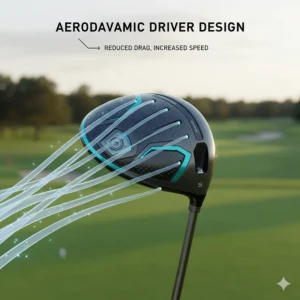
Cobra worked with aerospace engineers to develop the Darkspeed LS’s streamlined design featuring a higher crown peak, raised skirt, and reduced clubface surface area. These aerodynamic improvements maximize swing speed—and more swing speed means more distance. The 10% larger PWRSHELL L-cup face creates robust distance potential.
The repositioned PWR-BRIDGE weight sits lower and more forward than previous models, unleashing faster ball speeds while minimizing spin for a penetrating, distance-maximizing ball flight. The A.I.-designed H.O.T. Face delivers efficient speed and spin across 15 impact zones—not just the sweet spot.
In MyGolfSpy testing, the Darkspeed LS finished 3rd overall for mid-swing speed players, with forgiveness as its best attribute—surprising for a low-spin driver. It produces efficient dispersion and consistent carry distances even on mishits.
The three-weight system (heel, toe, and back) provides unprecedented adjustability for optimizing your spin profile and shot shape. Move weights to dial in your perfect launch conditions for maximum yards.
Price: $299-$549 (significant discounts available)
✅ Pros:
- Exceptional aerodynamics for increased swing speed
- Low spin for maximum distance
- Surprisingly forgiving for a LS model
❌ Cons:
- Some users report “dead” feel compared to Aerojet
- Matte black finish lacks alignment aids
Who should buy: Players with higher swing speeds (100+ mph) seeking low-spin distance with workability, or value shoppers finding discounted pricing.
6. Srixon ZX7 Mk II Driver
The Srixon ZX7 Mk II Driver combines explosive distance with tour-level adjustability in a compact, confidence-inspiring package. This driver rewards good swings with exceptional performance.
Key Specifications:
- Rebound Frame dual-flex design
- Star Frame Crown construction
- Ti51AF titanium face
- Two swappable weights (4g, 8g)
- 12-position adjustable hosel
Srixon’s Rebound Frame technology features dual flex zones that create a “spring within a spring” effect. This design focuses more energy into the golf ball at impact, delivering purer energy transfer that increases ball speed and distance on every strike—especially center-face impacts.
The Star Frame Crown uses a complex series of ridges and latticework to support an ultra-thin titanium crown while freeing up discretionary mass for optimal placement. The variable thickness pattern behind the Ti51AF face expands high COR areas heel-to-toe, maintaining ball speed on off-center hits.
The two swappable weight ports let you adjust swing weight and CG to favor draw or fade bias. With the included 4g and 8g weights, you can adjust horizontal ball flight by 5-6 yards. Purchase additional weights (up to 14g), and you could adjust by 20 yards. Combined with the 12-position hosel, you have complete control over launch conditions.
The compact silhouette appeals to better players while providing meaningful distance gains. Real users appreciate the balance of workability and forgiveness, though MyGolfSpy notes forgiveness ranks in the bottom half compared to max-forgiveness models.
Price: $349-$499
✅ Pros:
- Excellent value pricing
- Exceptional adjustability options
- Dual-flex technology for explosive distance
❌ Cons:
- Less forgiving than game-improvement models
- Compact shape may intimidate higher handicappers
Who should buy: Mid-to-low handicappers who value adjustability and shot-shaping capability while seeking distance gains, especially value-conscious shoppers.
7. Tour Edge Exotics E725 Driver
The Tour Edge Exotics E725 Driver delivers premium 10K performance at a fraction of big-brand prices. This driver proves you don’t need to spend $600+ for exceptional distance and forgiveness.
Key Specifications:
- 10,000+ g-cm² MOI
- Flight Tuning System with 18g weight
- 360° Ridgeback titanium brace
- 3D Diamond Face (61 shapes)
- Eight-position adjustable hosel
Tour Edge’s highest-ever MOI rating matches the Ping G430 Max 10K and TaylorMade Qi35 Max, placing it in elite company. The 10K MOI drastically increases stability, minimizing twisting at impact for tighter dispersion and straighter shots—exactly what most golfers need for distance.
The innovative Flight Tuning System features an 18g weight at the extreme trailing edge that easily moves to Draw, Neutral, or Fade positions. This allows ±7 yards of directional adjustment to dial in your optimal ball flight. The 360° Ridgeback titanium brace wraps the entire perimeter, producing power across the full face while improving feel.
The 3D Diamond Face comprises 61 variable-thickness diamond shapes that act as “mini-trampolines,” creating faster ball speeds and an expanded sweet spot. Off-center hits maintain impressive distance—critical for real-world performance.
Golf Monthly’s review praised it as “very impressive” and questioned what an extra $200 gets you from mainstream manufacturers. Feel is exceptional, ball speed comparable to premium drivers, and forgiveness competes with anything on the market. At $399, it’s arguably the best value in golf.
Price: $399
✅ Pros:
- Exceptional value at $399
- 10K MOI rivals $600+ drivers
- Premium feel and performance
❌ Cons:
- Less brand cachet than major manufacturers
- Hosel design creates slight visual ledge
Who should buy: Smart shoppers who want flagship performance without flagship pricing, or anyone seeking maximum forgiveness and adjustability at tremendous value.
Understanding Ball Speed Optimization
Ball speed is the holy grail of distance. According to TrackMan research, gaining just 1 mph of ball speed can increase driver distance by up to 2 yards. The PGA Tour average is 167 mph, while a scratch amateur averages 161 mph. For reference, a 10-handicapper typically generates 138 mph ball speed.
The relationship between clubhead speed and ball speed is measured by smash factor—the ratio of ball speed to club speed. A perfect strike with a conforming driver produces a smash factor near 1.50 (the USGA limit). Tour professionals consistently achieve 1.49, while a typical 14-handicapper averages 1.44.
Here’s what that means in practical terms: If two golfers both swing 100 mph, but one has a 1.40 smash factor (140 mph ball speed) and another has 1.50 (150 mph ball speed), the difference is approximately 20 yards. Same swing speed, vastly different results.
Modern drivers maximize ball speed through several technologies:
- Variable face thickness that expands the high-speed zone beyond the sweet spot
- Advanced materials like Ti51AF titanium and aerospace carbon fiber
- AI-optimized face patterns that account for real-world strike patterns
- Low CG placement that optimizes launch and spin for your swing
The best driver for distance isn’t just fast on center strikes—it maintains ball speed across the entire face. That’s the difference between occasional bombs and consistently long drives.
Mastering Smash Factor for Maximum Distance
Smash factor measures how efficiently you transfer energy from club to ball. While 1.50 is theoretically maximum for a conforming driver, achieving consistent smash factors above 1.45 requires understanding three critical elements:
1. Centeredness of Contact
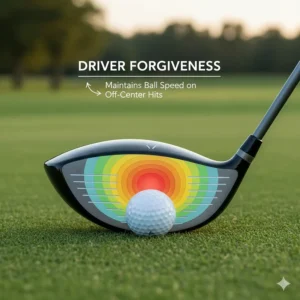
Hitting the sweet spot is fundamental. Modern drivers feature larger sweet spots than ever, but center-face contact still produces the highest ball speeds. The best driver for distance helps by expanding the high-COR (Coefficient of Restitution) zone, maintaining speed even on mishits 3/4 inch from center.
2. Angle of Attack
Your angle of attack—whether you’re hitting up or down on the ball—dramatically affects smash factor. Most amateurs benefit from hitting up on the driver (positive attack angle), which optimizes launch and reduces spin. Tour players average a slight upward attack angle, maximizing efficiency.
3. Face-to-Path Relationship
When your face angle and swing path don’t match, you create sidespin that both curves the ball and reduces efficiency. A square face-to-path relationship at impact maximizes energy transfer straight into the ball rather than creating spin.
Recent PGA Tour data shows the tightest smash factor ranges ever, with top players clustered between 1.495-1.510. The consistency speaks to both perfect equipment fitting and elite ball-striking skills.
For amateur golfers, improving smash factor often provides quicker distance gains than increasing swing speed. Focus on strike quality first, speed second.
Optimizing Launch Angle for Distance
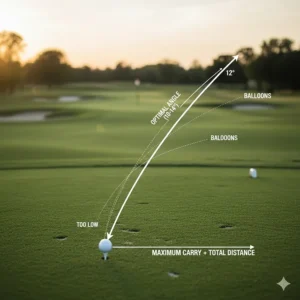
Launch angle is the vertical angle at which the ball leaves the clubface. For maximum distance, you need the optimal launch angle for YOUR swing speed. Higher swing speeds require lower launch angles (around 10-12°), while moderate speeds benefit from higher launch (13-15°).
The relationship between launch angle and distance involves three factors:
1. Peak Height
Your ball needs sufficient height to maximize carry distance. Too low and you’re driving the ball into the ground prematurely. Too high and you’re ballooning shots that hang in the air without going forward.
2. Descent Angle
How the ball comes down affects total distance. Steeper descent angles mean more carry but less roll. Shallower angles provide roll but may sacrifice carry.
3. Spin Rate
Launch angle and spin rate work together. The general rule: higher launch + lower spin = maximum distance. This is why the best driver for distance features low-spin head designs with optimized launch characteristics.
Modern drivers achieve optimal launch through strategic CG placement. Moving weight back and low increases MOI (stability) while promoting higher launch. Moving weight forward reduces spin for a penetrating ball flight.
Most golfers benefit from a driver fitted to their specific swing. A proper fitting considers your swing speed, attack angle, and spin tendencies to identify the perfect loft and shaft combination. The difference between a generic driver and a properly fitted one can be 15-25 yards.
Low Spin Drivers for Distance
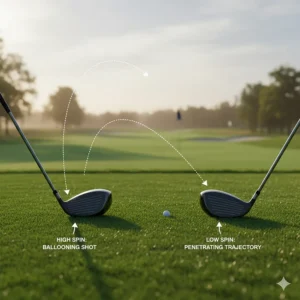
Spin rate might be the most underappreciated distance factor. According to golf biomechanics research, excessive spin robs distance by creating lift that causes the ball to balloon and lose forward velocity. The optimal spin rate for maximum distance is typically 2,000-2,500 RPM for most amateurs, though tour players often prefer even lower rates (1,700-2,200 RPM).
Here’s why low spin matters: Every 400 RPM of excess spin can cost you 10-15 yards. A golfer hitting drives at 2,800 RPM versus their optimal 2,200 RPM is leaving significant yardage on the course.
Low spin drivers achieve reduced spin through:
Forward CG Positioning
Moving the center of gravity forward in the clubhead reduces dynamic loft at impact, decreasing spin. Drivers like the Callaway Elyte Triple Diamond and Cobra Darkspeed LS feature forward-weighted designs specifically for this purpose.
Lower Loft Options
Many low-spin models offer 8° lofts (versus standard 9-10.5°) for players with higher swing speeds who generate plenty of natural launch. Lower loft = lower spin, though you need sufficient speed to get the ball airborne.
Aerodynamic Head Shaping
Streamlined shapes reduce drag, allowing faster swing speeds that can overcome reduced lift from lower spin. The aerodynamic profiles in modern drivers contribute 2-4 mph of clubhead speed gain.
Adjustable Weighting
Many drivers feature movable weights that let you fine-tune spin characteristics. Moving weight forward reduces spin; moving it back increases stability and launch.
The best driver for distance matches YOUR spin profile. Higher handicappers who already struggle with low ball flight shouldn’t chase ultra-low spin. But if you’re currently spinning the ball 3,000+ RPM, a low-spin driver could unlock 20+ yards instantly.
Choosing Between Forgiving and Workable Distance Drivers
The eternal question: Do you prioritize forgiveness or workability? The answer depends on your skill level and priorities.
Forgiving distance drivers feature:
- High MOI (10K+) for stability on mishits
- Larger head profiles (460cc max)
- Draw-biased weighting to reduce slices
- Expanded sweet spots
- Higher launch characteristics
These drivers are perfect for the majority of golfers. Models like the Ping G430 Max 10K, TaylorMade Qi35 Max, and Tour Edge E725 deliver maximum distance even when you don’t hit it pure. If you’re not consistently finding the center of the face, these drivers will give you the best average distance.
Workable distance drivers feature:
- Compact head shapes (450cc or less)
- Neutral weighting for shot shaping
- Lower MOI for faster response
- Tour-preferred aesthetics
- Low spin for control
Better players prefer workable drivers like the Callaway Elyte Triple Diamond or Srixon ZX7 Mk II because they can shape shots on demand while still bombing it long. These drivers reward good swings with exceptional distance but won’t mask poor contact as effectively.
Here’s my rule of thumb: If you’re a 10+ handicap or hit fewer than 50% of fairways, prioritize forgiveness. The extra yards from occasional pure strikes won’t offset the distance lost on mishits. If you’re a single-digit handicap with consistent ball-striking, a workable driver lets you maximize distance while controlling ball flight.
Many golfers make the mistake of choosing workable drivers before they’re ready, costing themselves distance. Be honest about your current ability and choose accordingly.
Distance vs. Accuracy: Finding Your Balance
The longest drive means nothing if it’s in the woods. Smart golfers optimize for usable distance—drives that are both long AND in play.
Consider this scenario: Driver A gives you 280 yards but finds the fairway 40% of the time. Driver B gives you 265 yards but finds the fairway 70% of the time. Which is better? For most golfers, it’s Driver B. You’ll score better hitting from 265 in the fairway than 280 from the rough or trees.
The best driver for distance delivers consistent performance through:
1. Predictable Ball Flight You should know where the ball is going. Erratic shot patterns undermine distance gains. High-MOI drivers provide stability that reduces dispersion, keeping more drives in play.
2. Forgiveness on Mishits The average golfer misses the sweet spot frequently. Drivers that maintain 90%+ ball speed on mishits give you playable distance even on imperfect strikes.
3. Shot-Shape Control Some drivers have built-in draw bias to reduce slices. Others are neutral for working the ball both ways. Match the driver to your typical shot shape for maximum control.
4. Consistent Launch Conditions Modern drivers maintain launch angle and spin rate across a larger face area. This consistency means you can dial in your optimal numbers and trust them hole after hole.
According to PGA Tour statistics, the longest hitters aren’t always the best drivers of the ball. Players who optimize the distance-accuracy balance consistently outperform those who prioritize pure length.
For amateur golfers, a driver that finds the fairway 60%+ of the time while adding 10-15 yards is far more valuable than one adding 25 yards while finding fairways 35% of the time. Your scores will confirm this quickly.
✨ Don’t Miss These Exclusive Deals!
🔍 Take your distance game to the next level with these carefully selected drivers. Click on any highlighted product to check current pricing and availability. These cutting-edge drivers will help you create authentic bomb drives your playing partners will remember!
FAQ
❓ What is the best driver for distance if I have a 90 mph swing speed?
❓ How much distance can I gain from the best driver for distance compared to an older model?
❓ Are low spin drivers better for distance?
❓ What's more important for distance: smash factor or swing speed?
❓ Should I get fitted for the best driver for distance?
Conclusion
Finding the best driver for distance in 2026 means balancing several crucial factors: ball speed optimization through advanced face technology, optimal launch angle matched to your swing speed, spin rates that maximize carry without ballooning, and forgiveness that maintains distance on real-world mishits.
The seven drivers I’ve tested each excel in different ways. The TaylorMade Qi35 Max and Ping G430 Max 10K lead for forgiveness-focused distance, perfect for mid-to-high handicappers. The Callaway Elyte Triple Diamond and Cobra Darkspeed LS deliver low-spin bombs for better players. The Titleist GT2 proves you can have both exceptional forgiveness and elite distance. The Srixon ZX7 Mk II offers tour-level adjustability at a competitive price. And the Tour Edge E725 delivers flagship performance at nearly half the price.
Remember, the longest drivers in golf won’t matter if they don’t match your swing characteristics. A 95 mph swinger won’t benefit from an 8° low-spin driver designed for tour players. Conversely, a skilled player will leave yards on the table with a super-forgiving game-improvement model.
My recommendation? Start with an honest assessment of your swing speed, typical strike pattern, and current spin rates. If possible, get fitted with a launch monitor to see real data. Then match that profile to the driver that optimizes YOUR distance potential.
The difference between your current driver and the best driver for distance could be 20-30 yards—the difference between hitting long irons versus wedges into greens. That’s a game-changer for any golfer serious about lowering scores.
Ready to unleash your distance potential? Choose the driver that matches your game, commit to the process, and watch those drives fly longer than ever before.
Recommended for You
- 7 Best Drivers for High Handicappers 2026 (Game-Changing Results)
- 7 Best Drivers for Seniors in 2026: Top Picks for Distance & Forgiveness
- 7 Best Drivers for Beginners 2026: Expert Reviews & Buying Guide
Disclaimer: This article contains affiliate links. If you purchase products through these links, we may earn a small commission at no additional cost to you.
✨ Found this helpful? Share it with your friends! 💬🤗
