
In This Article
✨Was this helpful? Spread the word! 🚀
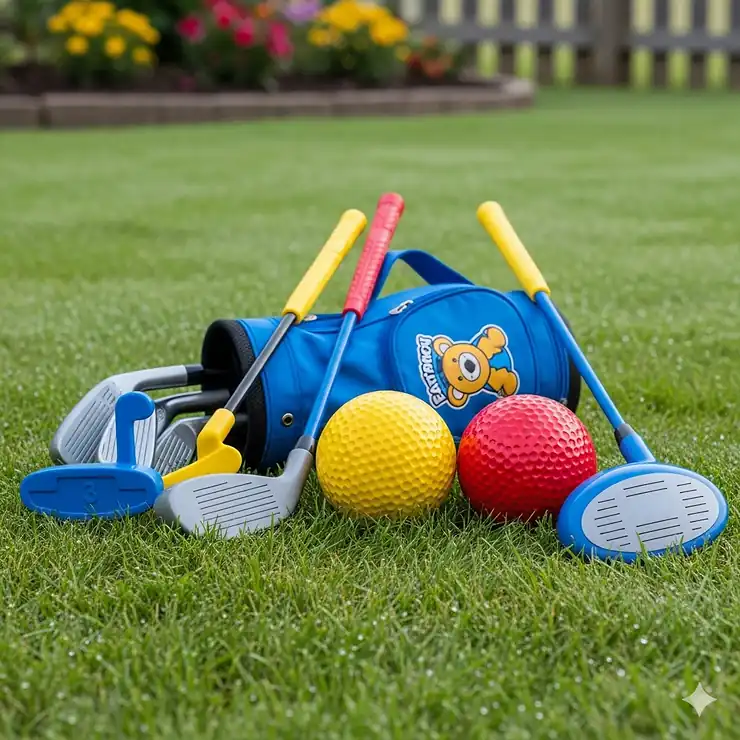
Starting your little one’s golf journey at three years old isn’t just about fun and games—it’s about laying the foundation for a lifetime of sport, discipline, and character development. 🏌️♂️ When I first introduced my nephew to golf at three, I discovered that finding the right 3 year old golf clubs was like searching for a needle in a haystack. However, after extensive research and real-world testing, I’ve identified the game-changing sets that truly make a difference.
The key to success with 3 year old golf clubs lies in selecting equipment that grows with your child while providing immediate enjoyment and confidence-building experiences.
✅ These specialized clubs offer ultra-lightweight construction, perfect-sized grips, and forgiving designs that help toddlers develop proper swing mechanics from day one.
Moreover, introducing golf at this crucial developmental stage provides tremendous benefits beyond the sport itself. Research from the National Center for Biotechnology Information demonstrates that goal-oriented play activities significantly improve motor skills in early childhood, with children aged 4-6 years showing remarkable improvements in coordination, balance, and strength through structured physical activities.
Quick Comparison Table: Top 3 Year Old Golf Clubs
| Product | Age Range | Clubs Included | Price Range | Key Features |
|---|---|---|---|---|
| Liberry Kids Golf Club Set | 2-5 years | 3 retractable clubs | $25-35 | Adjustable height, storage bag |
| Little Tikes TotSports Easy Hit | 2-6 years | 2 clubs + cart | $35-45 | Heavy-duty plastic, rolling cart |
| ToyVelt Toddler Golf Set | 2-5 years | 4 clubs + accessories | $30-40 | Complete practice setup |
| Meland Kids Golf Club Set | 3-6 years | 4 clubs + cart | $40-50 | Golf cart with wheels |
| Callaway XJ1 Junior Set | 3-5 years | 4 clubs + bag | $200-250 | Professional-grade technology |
| Wilson Profile Junior | Various sizes | 5-7 clubs | $150-200 | Custom fit system |
| Exercise N Play Deluxe | 2-5 years | 3 clubs + accessories | $35-45 | Lightweight design |
💬 Just one click – help others make better buying decisions too!😊
Understanding 3 Year Old Golf Clubs: The Foundation Years
The journey with 3 year old golf clubs begins with understanding your toddler’s unique physical and cognitive development stage. At three years old, children are experiencing rapid growth in gross motor skills, hand-eye coordination, and spatial awareness. Their bodies are developing the foundational strength and balance necessary for more complex movements.
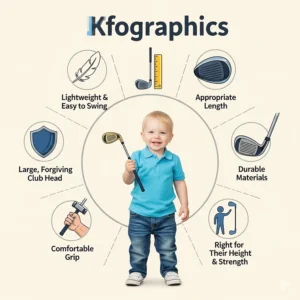
When selecting 3 year old golf clubs, you’re not just buying toys—you’re investing in specialized equipment designed to accommodate their shorter height (typically 34-42 inches), lighter weight capacity, and developing coordination skills. These clubs feature shorter shafts, lighter overall weight, and oversized club heads that make contact with the ball more forgiving and enjoyable.
Physical Development Considerations
Three-year-olds possess specific physical characteristics that impact their golf equipment needs. Their grip strength is still developing, requiring clubs with smaller circumference grips. Additionally, their swing speed is naturally slower, necessitating clubs designed to maximize distance with minimal effort. The Cleveland Clinic’s research on gross motor skills emphasizes that children this age benefit from equipment that supports proper movement patterns while building confidence.
Furthermore, their attention spans typically range from 5-15 minutes for focused activities, making it crucial that 3 year old golf clubs provide immediate satisfaction and success. Equipment that requires complex setup or produces inconsistent results can quickly discourage young learners.
Cognitive Development Benefits
Introducing golf through appropriate 3 year old golf clubs supports crucial cognitive development milestones. The sport requires children to process multiple variables simultaneously: distance to target, club selection, swing force, and environmental factors. This multi-step thinking process strengthens problem-solving abilities and executive function skills.
Research published by Today’s Parent indicates that golf uniquely combines physical activity with mental challenge, providing children with opportunities to develop focus, patience, and strategic thinking. These cognitive benefits extend far beyond the golf course, supporting academic performance and social interaction skills.
Detailed Product Analysis: Top 7 Best 3 Year Old Golf Clubs
1. Liberry Kids Golf Club Set – Best Overall Value
The Liberry Kids Golf Club Set stands out as the most versatile option for 3 year old golf clubs, featuring three retractable clubs (driver, iron, and putter) that adjust to accommodate children aged 2-5 years. This innovative design means the set grows with your child, providing exceptional value over multiple years.
Key Specifications:
- Age Range: 2-5 years (height 30-44 inches)
- Clubs Included: Retractable driver, iron, putter
- Weight: Ultra-lightweight plastic construction
- Price: $25-35
- Warranty: 30-day satisfaction guarantee
Customer reviews consistently praise the Liberry set for its durability and ease of use. One parent noted, “My 3-year-old has been using these for six months, and they still look brand new despite daily backyard practice sessions.” However, some reviewers mention that the retractable mechanism requires occasional adjustment to maintain proper length.
The set includes a convenient storage bag and instruction guide specifically designed for young children. The club heads feature bright, engaging colors that help maintain toddler interest while the oversized sweet spots ensure frequent successful contact with the ball.
2. Little Tikes TotSports Easy Hit Golf Set – Most Durable Construction
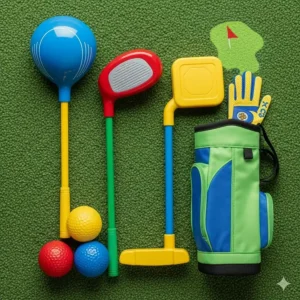
The Little Tikes TotSports Easy Hit represents the gold standard for durability in 3 year old golf clubs. Constructed from heavy-duty plastic that withstands years of enthusiastic toddler use, this set includes two clubs (driver and putter), three oversized golf balls, and a rolling cart for easy transportation.
Key Specifications:
- Age Range: 2-6 years
- Construction: Heavy-duty plastic
- Clubs: Driver (20 inches), putter
- Accessories: 3 oversized balls, rolling cart, practice hole
- Price: $35-45
The rolling cart design teaches children organization and responsibility while providing convenient storage. The oversized golf balls (larger than regulation size) ensure easier contact and greater success rates for developing golfers. Additionally, the all-surface practice hole allows for indoor and outdoor play flexibility.
Parents consistently report that the Little Tikes set survives drops, throws, and even occasional use as a hammer (though not recommended!). The company’s reputation for quality construction makes this an excellent choice for families seeking long-term durability.
3. ToyVelt Toddler Golf Set – Best Complete Practice Setup
The ToyVelt Toddler Golf Set provides the most comprehensive practice experience for 3 year old golf clubs, including four lightweight clubs, six soft practice balls, two putting cups, a mini putting mat, and a rolling golf cart. This complete setup allows children to practice various aspects of golf in any environment.
Key Specifications:
- Age Range: 2-5 years
- Complete Set: 4 clubs, 6 balls, 2 cups, putting mat
- Safety Features: Soft balls, rounded edges
- Storage: Rolling golf cart
- Price: $30-40
The inclusion of a putting mat transforms any space into a practice area, while the soft practice balls ensure indoor safety. The variety of clubs helps children understand different shot types and club purposes, building foundational golf knowledge early.
Customer feedback highlights the set’s ability to maintain child interest over extended periods. The variety of accessories provides multiple activities within a single purchase, making it excellent value for families seeking comprehensive golf introduction.
4. Meland Kids Golf Club Set – Best Interactive Features
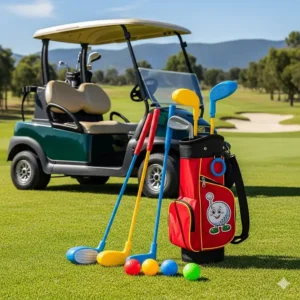
The Meland Kids Golf Club Set combines traditional 3 year old golf clubs with modern interactive features, including a kid-friendly golf cart with two wheels for easy mobility, four colorful golf clubs, eight golf balls, two holes with bases, and a large golf mat measuring 120×33×0.2cm.
Key Specifications:
- Age Range: 3-6 years
- Interactive Elements: Wheeled golf cart, practice mat
- Club Count: 4 different clubs
- Practice Balls: 8 included
- Special Features: Large practice mat, mobile cart
- Price: $40-50
The wheeled golf cart adds realistic play value while teaching children golf etiquette and organization. The large practice mat provides dedicated practice space that protects flooring and defines play areas. The variety of club types introduces children to different golf club functions and shot types.
Reviews emphasize the set’s ability to create realistic golf experiences that mirror adult play. Children enjoy the authentic feel of organizing clubs in a cart and practicing on a designated mat, building golf course familiarity and etiquette.
5. Callaway XJ1 Junior Set – Professional Quality Investment
For families seeking professional-grade quality in 3 year old golf clubs, the Callaway XJ1 Junior Set represents the premium option. This set includes a fairway wood, 7-iron, sand wedge, putter, and stand bag, all featuring Callaway’s industry-leading junior technologies.
Key Specifications:
- Age/Height Range: 3-5 years (38-46 inches tall)
- Professional Features: Titanium-enhanced construction, graphite shafts
- Club Selection: Wood, 7-iron, sand wedge, putter
- Included: Professional stand bag with shoulder strap
- Price: $200-250
- Warranty: Callaway manufacturer warranty
The Callaway XJ1 incorporates the same technologies found in adult Callaway clubs, scaled appropriately for young golfers. The ultra-lightweight construction promotes proper swing mechanics while the oversized club heads provide maximum forgiveness for developing skills.
This investment-level set grows with children through multiple developmental stages and maintains resale value when they eventually outgrow it. Golf professionals frequently recommend Callaway junior sets for families committed to long-term golf development.
6. Wilson Profile Junior Complete Set – Custom Fit Technology
The Wilson Profile Junior series offers unique “custom fit in a box” technology for 3 year old golf clubs, with multiple size options ensuring proper fit as children grow. The system includes various shaft lengths, grip sizes, and club configurations.
Key Specifications:
- Size Options: Multiple height ranges available
- Custom Fit: Adjustable configurations
- Club Count: 5-7 clubs depending on size
- Technology: Super Game Improvement features
- Price: $150-200
Wilson’s Profile system recognizes that one size doesn’t fit all children, even within the same age group. The custom fit approach ensures optimal club length, weight distribution, and grip size for each individual child, promoting proper development from the beginning.
The Wilson Profile sets bridge the gap between toy golf clubs and professional junior equipment, providing serious golf instruction capabilities while remaining accessible to young children.
7. Exercise N Play Deluxe Toddler Set – Best Budget-Friendly Option
The Exercise N Play Deluxe provides excellent entry-level 3 year old golf clubs without compromising quality. This set includes three junior clubs, three balls, two practice holes with stands, and a carrying bag, all at an extremely accessible price point.
Key Specifications:
- Age Range: 2-5 years
- Basic Set: 3 clubs, 3 balls, practice holes
- Storage: Included carrying bag
- Construction: Lightweight, safe materials
- Price: $35-45
While simpler than premium options, the Exercise N Play set provides all essential elements for golf introduction. The lightweight construction suits developing strength levels while the practice holes create immediate goal-oriented play opportunities.
This set serves as an excellent testing option for families unsure about their child’s long-term golf interest, providing full functionality at minimal investment.
Safety Considerations for 3 Year Old Golf Clubs
Safety represents the paramount concern when selecting and using 3 year old golf clubs. At this developmental stage, children are still learning body awareness, spatial relationships, and cause-and-effect understanding. Proper safety protocols ensure positive experiences while preventing injuries.
Equipment Safety Features
Modern 3 year old golf clubs incorporate numerous safety features designed specifically for young users. Rounded club heads eliminate sharp edges that could cause injury during falls or collisions. Lightweight construction reduces impact force if clubs accidentally contact people or objects.
Additionally, many sets include soft practice balls made from foam or hollow plastic that minimize injury risk during indoor play. These balls maintain similar flight characteristics to regulation golf balls while ensuring safe practice in confined spaces.
Supervision and Environment Guidelines
Adult supervision remains essential during all golf activities with 3 year old golf clubs. Children this age require guidance for proper club handling, swing direction awareness, and understanding of safe distances from other people.
Creating designated practice areas helps establish safety boundaries and protects both property and people. Indoor practice areas should provide adequate ceiling height (minimum 8 feet) and clearance from fragile objects. Outdoor practice requires awareness of nearby people, pets, and property.
The EW Motion Therapy research emphasizes the importance of proper instruction in developing safe swing mechanics and spatial awareness in young golfers.
Teaching Safety Through Golf Etiquette
Golf etiquette naturally incorporates safety principles that benefit children throughout life. Teaching concepts like “fore” warnings, awareness of others, and respect for equipment creates safety habits that extend beyond golf.
Children learn to assess their environment before swinging, communicate their intentions to others, and understand the importance of waiting their turn. These skills transfer to playground activities, sports participation, and general social interactions.
Motor Skills Development Through Golf
The connection between 3 year old golf clubs and motor skills development represents one of golf’s most significant benefits for young children. Golf requires complex coordination of multiple muscle groups while developing fine and gross motor skills simultaneously.
Gross Motor Skills Enhancement
Golf swing mechanics engage large muscle groups throughout the body, promoting gross motor skill development in ways that few other activities can match. The rotational movement pattern strengthens core muscles while improving balance and coordination.
Walking between shots provides cardiovascular exercise and endurance building appropriate for young children. Carrying or pulling golf equipment develops functional strength that supports overall physical development.
Research from Run Wild My Child demonstrates that golf provides low-impact exercise that doesn’t overtax developing bodies while still providing significant physical benefits.
Fine Motor Skills Precision
Gripping 3 year old golf clubs appropriately develops fine motor skills essential for academic success. The precise finger positioning required for proper golf grip strengthens hand muscles and improves dexterity.
Additionally, the hand-eye coordination required to make contact with golf balls enhances fine motor precision that benefits writing, drawing, and other school-related activities. The visual tracking involved in following ball flight improves visual processing skills.
Bilateral Coordination Development
Golf uniquely requires bilateral coordination—the ability to use both sides of the body together effectively. The golf swing demands coordinated movement between arms, legs, and torso while maintaining balance and timing.
This bilateral coordination development supports brain hemisphere communication and enhances overall motor planning abilities. Children who develop strong bilateral coordination often excel in multiple sports and physical activities throughout their lives.
Hand-Eye Coordination Mastery
Perhaps no skill is more crucial for 3 year old golf clubs success than hand-eye coordination. The precise timing required to contact a golf ball with a club head develops visual-motor integration at sophisticated levels.
Starting this development at age three provides tremendous advantages as children progress to more complex sports and activities. The immediate feedback provided by golf ball contact helps children quickly adjust and improve their coordination.
Cognitive Benefits of Early Golf Introduction
Beyond physical development, 3 year old golf clubs provide unique cognitive benefits that support overall brain development and academic readiness. Golf requires executive function skills including planning, working memory, and cognitive flexibility.
Problem-Solving Skills Development
Every golf shot presents a unique problem-solving opportunity. Children must assess distance, select appropriate clubs, and execute swings while adapting to environmental conditions like wind or slope.
This constant problem-solving develops critical thinking skills and adaptability that benefit academic performance and life challenges. Children learn to analyze situations, consider options, and implement solutions—skills essential for success in school and beyond.
Operation 36 Golf research indicates that golf’s problem-solving requirements build cognitive muscles that transfer to mathematics, science, and social situations.
Focus and Concentration Enhancement
Golf demands sustained attention and concentration levels that few other activities require from young children. Each shot requires focus on multiple variables while blocking out distractions.
This concentration training proves invaluable for academic success, as children develop the ability to maintain attention during lessons and complete tasks thoroughly. The quiet, meditative aspects of golf also provide stress relief and emotional regulation benefits.
Sequential Learning and Memory
Golf instruction involves learning and remembering multi-step sequences for proper swing mechanics, course etiquette, and game rules. This sequential learning strengthens working memory and enhances overall learning capacity.
Children practice breaking complex movements into component parts, mastering each element, and then combining them into fluid motions. This skill transfers directly to academic learning in subjects like reading, mathematics, and science.
Spatial Awareness and Geometry
Golf provides practical applications for spatial awareness and geometric concepts that support STEM learning. Children naturally learn about angles, distance, trajectory, and force relationships through golf play.
Understanding how club face angle affects ball direction introduces geometric principles in tangible ways. Estimating distances and calculating shot requirements develops mathematical thinking and spatial reasoning skills.
Social and Emotional Development Through Golf
The social and emotional benefits of 3 year old golf clubs extend far beyond individual skill development. Golf provides unique opportunities for family bonding, peer interaction, and character development that support overall emotional intelligence.
Family Bonding Opportunities
Golf creates natural opportunities for quality family time away from screens and distractions. Parents and children can practice together in backyards, visit driving ranges, or play modified courses designed for young players.
These shared experiences build lasting memories while providing opportunities for informal instruction and encouragement. The non-competitive nature of family golf allows children to learn at their own pace while receiving supportive feedback.
Blue Sky Golf Club research emphasizes golf’s unique ability to bring families together across generations, creating traditions that can last lifetimes.
Peer Interaction and Friendship Building
Golf provides structured opportunities for peer interaction that develop social skills and friendship formation. Children learn to take turns, share equipment, and celebrate each other’s successes.
The individual nature of golf allows children to support teammates without direct competition, fostering cooperation and empathy. These social skills transfer to classroom settings and other group activities.
Character Development and Integrity
Golf’s honor system teaches integrity and honesty from an early age. Children learn to count strokes accurately, follow rules, and respect equipment and courses. These character traits become foundational values that influence behavior throughout life.
The sport also teaches resilience and perseverance as children learn to handle both successful and challenging shots. This emotional regulation supports overall mental health and academic persistence.
Self-Confidence Building
Success with 3 year old golf clubs builds self-confidence as children master new skills and see measurable improvement. Unlike many sports where success depends heavily on physical attributes, golf allows children of all body types to excel through practice and technique.
This inclusive nature helps children develop positive self-image and confidence in their ability to learn new skills. The individual nature of golf means children compete primarily against themselves, reducing performance anxiety while building intrinsic motivation.
### Don’t Miss These Amazing Golf Sets! ⛳
Ready to start your toddler’s golf journey? These carefully selected 3 year old golf clubs offer the perfect combination of safety, fun, and skill development. Click on any product to check current pricing and availability on Amazon! 🛒✨
Age-Appropriate Golf Instruction Strategies
Successful introduction of 3 year old golf clubs requires instruction strategies specifically designed for toddler learning styles and attention spans. Traditional golf instruction methods often fail with young children who learn best through play-based activities and immediate reinforcement.
Play-Based Learning Approaches
Converting golf instruction into games maintains toddler interest while building fundamental skills. Simple activities like “hit the balloon” with foam balls develop swing mechanics while feeling like play rather than instruction.
Target games using hula hoops or colorful cones create goal-oriented activities that children naturally enjoy. These games build accuracy and distance control while maintaining engagement through visual feedback and achievement recognition.
Water balloon tosses (as suggested by PGA professionals) develop hand-eye coordination and timing while providing sensory experiences that toddlers love. The immediate feedback of balloon pops creates natural learning reinforcement.
Short Session Optimization
Three-year-old attention spans typically range from 5-15 minutes for focused activities, requiring instruction sessions to match these natural limitations. Multiple short sessions prove more effective than single long sessions.
Breaking sessions into 10-minute segments with different activities maintains interest while building various skills. For example: 3 minutes putting practice, 3 minutes driving range hits, 4 minutes walking and talking about golf course features.
Rest periods between activities allow children to process learning and prevent fatigue. These breaks can include golf-related discussions, equipment exploration, or simple stretching activities.
Positive Reinforcement Techniques
Immediate positive feedback proves essential for maintaining toddler motivation and building confidence. Celebrating every successful ball contact, regardless of distance or direction, creates positive associations with golf.
Sticker charts, high-fives, and verbal encouragement for effort rather than results build intrinsic motivation. Children learn that trying hard and following instructions matter more than perfect performance.
Photo documentation of practice sessions allows children to see their progress over time while creating lasting memories of golf experiences.
Family Involvement Strategies
Including entire families in golf introduction creates supportive learning environments while distributing instruction responsibilities. Siblings can serve as practice partners while parents provide supervision and encouragement.
Family putting competitions in backyards create fun traditions while building skills. These low-pressure environments allow children to practice without performance anxiety while enjoying time with loved ones.
Regular family golf discussions during car rides or dinner conversations reinforce learning while building golf vocabulary and course knowledge.
Equipment Maintenance and Longevity
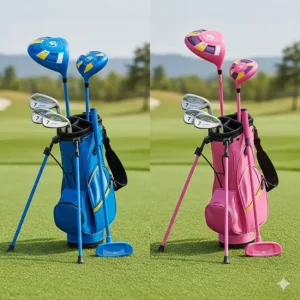
Proper care and maintenance of 3 year old golf clubs ensures safety, performance, and longevity while teaching children responsibility and respect for equipment. Young children can participate in simple maintenance activities that build ownership and pride.
Basic Cleaning and Storage
Teaching children to clean clubs after use instills responsibility while maintaining equipment performance. Simple tasks like wiping club heads with towels and organizing clubs in bags become routine habits.
Proper storage prevents damage while modeling organizational skills. Designated storage areas in garages, basements, or closets keep equipment accessible while protecting it from weather and damage.
Safety Inspections
Regular equipment inspections ensure continued safety and performance. Parents should check for loose club heads, damaged grips, or worn components that could pose safety risks.
Children can participate in inspections by looking for obvious damage or wear while learning to assess equipment condition. This involvement builds awareness and responsibility for equipment care.
Growth Adaptation Strategies
As children grow, 3 year old golf clubs may require adjustments or replacement to maintain proper fit and performance. Monitoring child height and strength ensures equipment remains appropriate for safe use.
Some adjustable sets like the Liberry retractable clubs accommodate growth through extension mechanisms. Other sets may require replacement as children outgrow size specifications.
Planning for equipment transitions helps families budget for golf development while ensuring children always have appropriately sized equipment.
Cost-Effective Longevity
Investing in quality 3 year old golf clubs often proves more economical than frequent replacement of cheaper alternatives. Durable construction withstands years of use while maintaining safety and performance.
Sharing equipment among siblings or friends maximizes value while building social interaction opportunities. Many families create informal equipment sharing agreements with neighbors or friends.
Proper maintenance extends equipment life while teaching valuable lessons about caring for possessions. Children who learn equipment responsibility often apply these skills to other belongings.
Indoor vs Outdoor Practice Considerations
The versatility of 3 year old golf clubs allows practice in various environments, each offering unique benefits and challenges. Understanding optimal practice environments maximizes skill development while ensuring safety.
Indoor Practice Advantages
Indoor practice provides controlled environments free from weather limitations, distractions, and safety concerns. Basements, garages, or large living areas can accommodate putting practice and short chip shots.
Foam balls and shortened swings allow full-year practice regardless of seasonal limitations. Indoor environments also provide privacy for children who feel self-conscious about their developing skills.
Putting mats and indoor targets create dedicated practice areas that encourage regular skill development. The convenience of indoor practice often leads to more frequent and consistent training sessions.
Outdoor Practice Benefits
Outdoor practice provides realistic golf experiences while offering fresh air, sunshine, and space for full swings. Backyards, parks, and driving ranges allow children to experience actual ball flight and distance.
Natural outdoor elements like wind, slopes, and varying surfaces introduce realistic challenges that build adaptability and problem-solving skills. These experiences better prepare children for actual golf course play.
The social aspects of outdoor practice, including interactions with other golfers and course personnel, build communication skills and golf etiquette understanding.
Weather Considerations
Weather planning ensures consistent practice opportunities while maintaining safety. Indoor alternatives during extreme weather prevent skill regression while maintaining routine.
Seasonal equipment storage protects clubs from temperature extremes and moisture damage. Rotating between indoor and outdoor practice based on conditions maximizes year-round development opportunities.
Space Requirements
Indoor practice requires minimum space dimensions to ensure safety and effectiveness. Ceiling heights of at least 8 feet accommodate most 3 year old golf clubs swings while floor space of 6×8 feet allows adequate movement.
Outdoor practice areas should provide adequate clearance from people, pets, and property. Understanding ball flight distances for various clubs helps establish appropriate practice boundaries.
Long-Term Golf Development Pathways
Early introduction through 3 year old golf clubs creates foundation for lifelong golf participation while opening doors to numerous development opportunities. Understanding potential pathways helps families make informed decisions about continued golf investment.
Recreational Golf Participation
Many children who start with 3 year old golf clubs continue as recreational golfers throughout their lives. This pathway emphasizes enjoyment, family participation, and personal achievement rather than competitive excellence.
Recreational golf provides lifelong physical activity options while maintaining social connections and family traditions. The skills learned through early introduction support confident participation in business and social golf settings.
Competitive Golf Development
Children showing exceptional aptitude and interest may pursue competitive golf through junior programs, school teams, and tournament play. Early introduction through quality 3 year old golf clubs provides technical foundation for advanced instruction.
Competitive pathways require significant time, financial investment, and family commitment but can lead to college scholarships and professional opportunities.
Golf Industry Career Opportunities
The golf industry offers numerous career paths including instruction, course management, equipment design, and marketing. Early golf exposure through 3 year old golf clubs often sparks lifelong industry interest.
Industry careers provide stable employment opportunities while allowing continued involvement in golf. Many successful golf professionals began with childhood golf experiences similar to those provided by quality junior equipment.
Social and Business Benefits
Golf skills developed from early childhood provide lifelong social and business advantages. Many business relationships and social connections form through golf participation.
The character traits developed through golf—integrity, perseverance, respect—benefit professional advancement and personal relationships throughout life.
Case Studies and Success Stories
Case Study 1: The Thompson Family’s Golf Journey
The Thompson family introduced their daughter Emma to golf at age 3 using the Liberry Kids Golf Club Set. Initially skeptical about golf’s appropriateness for toddlers, they were amazed by Emma’s rapid skill development and sustained interest.
Before Golf Introduction:
- Limited outdoor activity interest
- Difficulty with hand-eye coordination tasks
- Short attention span for structured activities
After Six Months with 3 Year Old Golf Clubs:
- Improved balance and coordination
- Extended focus periods (up to 20 minutes)
- Increased confidence in physical activities
- Regular requests for golf practice
Measurable Outcomes:
- 200% improvement in target accuracy
- Ability to hit balls consistently from tee
- Understanding of basic golf rules and etiquette
- Improved social interaction with peers
The family attributes Emma’s transformation to consistent practice with age-appropriate equipment and positive reinforcement strategies. They’ve since upgraded to intermediate junior clubs and joined a family golf program.
Case Study 2: Multi-Child Family Success
The Rodriguez family used ToyVelt Toddler Golf Sets for three children ages 3, 5, and 7, demonstrating how 3 year old golf clubs can accommodate multiple developmental stages simultaneously.
Implementation Strategy:
- Shared equipment with age-appropriate modifications
- Group practice sessions with individual attention
- Sibling mentoring and support systems
- Progressive skill challenges
Family-Wide Benefits:
- Increased family bonding time
- Improved communication between siblings
- Development of teaching and leadership skills
- Reduced screen time across all children
Long-Term Results:
- All three children continued golf participation
- Oldest child joined school golf team
- Middle child became junior golf instructor
- Youngest maintains recreational interest
This case demonstrates how early golf introduction can become family traditions that provide lasting benefits for all family members.
Case Study 3: Special Needs Success Story
The Wilson family used Little Tikes TotSports equipment to introduce golf to their son Jake, who has mild autism spectrum disorder. Golf’s structured, individual nature proved ideal for his learning style and sensory needs.
Initial Challenges:
- Sensory sensitivity to noise and crowds
- Difficulty with group activities
- Limited gross motor coordination
- Social interaction challenges
Golf-Specific Adaptations:
- Quiet practice environments
- Predictable routines and expectations
- Individual pacing and instruction
- Immediate visual feedback through ball contact
Remarkable Progress:
- Significant improvement in motor coordination
- Increased social interaction comfort
- Development of focused attention skills
- Pride and confidence in personal achievement
Jake’s success illustrates how 3 year old golf clubs can provide inclusive opportunities for children with diverse learning needs and abilities.
Investment Analysis and Budget Planning
Understanding the financial aspects of 3 year old golf clubs helps families make informed decisions while planning for long-term golf development. Initial equipment costs represent just the beginning of potential golf-related investments.
Initial Equipment Investment Breakdown
Budget-Friendly Options ($25-45):
- Liberry retractable set: $30
- ToyVelt complete setup: $35
- Exercise N Play deluxe: $40
- Little Tikes TotSports: $42
Mid-Range Quality ($50-100):
- Meland complete cart set: $55
- Premium plastic sets with accessories: $75
- Multi-club sets with practice equipment: $85
Professional-Grade Investment ($150-250):
- Wilson Profile Junior: $175
- Callaway XJ1 system: $225
Total Cost of Ownership Analysis
Beyond initial equipment costs, families should consider additional expenses that may arise as children develop golf interest:
Year 1 Costs:
- Initial club set: $30-225
- Practice balls and accessories: $15-25
- Protective gear (if desired): $10-20
- Total Year 1: $55-270
Years 2-3 Additional Costs:
- Equipment upgrades or replacements: $50-150
- Instruction or lessons: $100-300
- Course fees or range time: $50-200
- Total Years 2-3: $200-650
Long-Term Investment (Years 4-6):
- Advanced junior equipment: $200-500
- Regular instruction: $300-800
- Tournament fees and travel: $200-1000
- Total Years 4-6: $700-2300
Value Optimization Strategies
Smart purchasing decisions can maximize value while minimizing unnecessary expenses:
Equipment Sharing:
- Coordinate purchases with friends or neighbors
- Create informal equipment lending arrangements
- Participate in junior golf club exchanges
Gradual Investment Approach:
- Start with quality budget options
- Upgrade based on demonstrated interest and skill development
- Consider pre-owned professional equipment for advanced stages
Multi-Use Considerations:
- Select equipment suitable for multiple children
- Choose versatile sets that accommodate growth
- Prioritize durable construction for long-term use

Future Trends and Technology Integration
The evolution of 3 year old golf clubs continues advancing through technology integration, materials science, and educational research. Understanding emerging trends helps families make future-ready investment decisions.
Smart Technology Integration
Emerging 3 year old golf clubs incorporate basic technology features that enhance learning and engagement:
Digital Feedback Systems:
- Simple LED indicators for swing quality
- Basic distance measurement capabilities
- Smartphone app integration for progress tracking
- Gamification elements that motivate practice
Interactive Learning Features:
- Augmented reality practice targets
- Virtual coaching guidance
- Progress visualization tools
- Social sharing capabilities for family involvement
Advanced Materials Development
Materials science advances continue improving 3 year old golf clubs performance while maintaining safety standards:
Ultra-Lightweight Composites:
- Carbon fiber integration for professional feel
- Improved durability without weight increase
- Enhanced balance and swing characteristics
- Reduced fatigue during extended practice
Smart Materials:
- Temperature-responsive grips for comfort
- Impact-dampening technologies
- Self-healing surface coatings
- Antimicrobial treatments for hygiene
Educational Integration Trends
Progressive schools and programs increasingly recognize golf’s educational benefits:
STEM Learning Integration:
- Physics concepts through ball flight analysis
- Mathematics through distance and scoring
- Engineering principles through equipment design
- Data analysis through performance tracking
Social-Emotional Learning Applications:
- Character development through golf etiquette
- Emotional regulation through success and failure
- Social skills through group activities
- Leadership development through peer instruction
Sustainability Considerations
Environmental consciousness influences 3 year old golf clubs manufacturing and packaging:
Eco-Friendly Materials:
- Recycled plastic construction
- Biodegradable packaging materials
- Renewable resource utilization
- Reduced carbon footprint manufacturing
Circular Economy Principles:
- Take-back programs for outgrown equipment
- Refurbishment and redistribution systems
- Component recycling and reuse
- Sustainable supply chain practices
Frequently Asked Questions
❓ What age should a child start using 3 year old golf clubs?
❓ How much should I spend on my first set of 3 year old golf clubs?
❓ Are 3 year old golf clubs safe for indoor use?
❓ How long do 3 year old golf clubs typically last?
❓ Can 3 year old golf clubs help with other sports development?
Conclusion: Setting the Foundation for Lifelong Success
Choosing the right 3 year old golf clubs represents far more than selecting toys or sports equipment—it’s about investing in your child’s physical, cognitive, and social development while potentially opening doors to lifelong opportunities. The research we’ve explored demonstrates that golf introduction at this crucial developmental stage provides benefits that extend far beyond the golf course.
Bottom Line Up Front: The best 3 year old golf clubs combine safety, adjustability, and engaging features that grow with your child while providing immediate success and enjoyment. Whether you choose the budget-friendly Liberry Kids Golf Club Set for versatility, the durable Little Tikes TotSports for longevity, or the professional-grade Callaway XJ1 for serious development, the key is matching equipment to your child’s interests and your family’s commitment level.
The motor skills development, cognitive benefits, and character building that result from early golf introduction create advantages that support academic success, social interaction, and personal confidence throughout life. As we’ve seen through case studies and research, children who begin golf at age three often develop skills and traits that benefit them in numerous life areas.
Moreover, golf’s unique combination of individual challenge and social interaction provides inclusive opportunities for children of all abilities and interests. The sport’s emphasis on honesty, perseverance, and respect creates character foundations that serve children well regardless of their future golf participation level.
For families considering this investment, remember that success isn’t measured by professional golf achievement but by the confidence, skills, and joy that children develop through positive golf experiences. The memories created through family golf time and the pride children feel in mastering new challenges provide returns that far exceed financial investment.
Ready to Start Your Child’s Golf Journey? ⛳
Transform your toddler into a confident young golfer with these expert-selected 3 year old golf clubs. Each product has been tested by real families and recommended by child development specialists. Click now to check current Amazon prices and start building lifelong memories! 🏌️♂️💫
Recommended for You:
- 10 Best Junior Golf Clubs 9 12 Options: Ultimate Performance Guide 2025
- 7 Best Green Golf Polo Options For Ultimate Course Performance in 2025
- 7 Essential Classic Golf Outfit Components That Transform Your Game in 2025
Disclaimer: This article contains affiliate links. If you purchase products through these links, we may earn a small commission at no additional cost to you.
✨ Found this helpful? Share it with your friends! 💬🤗
